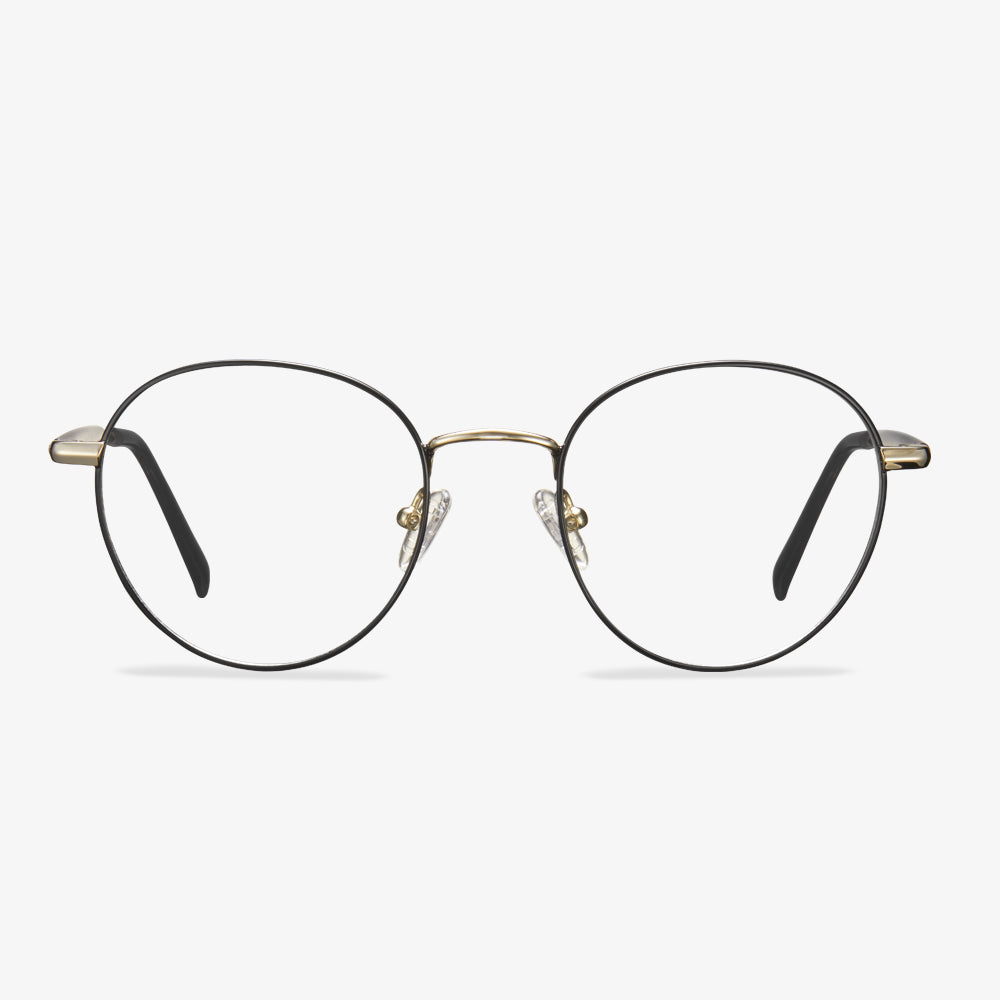





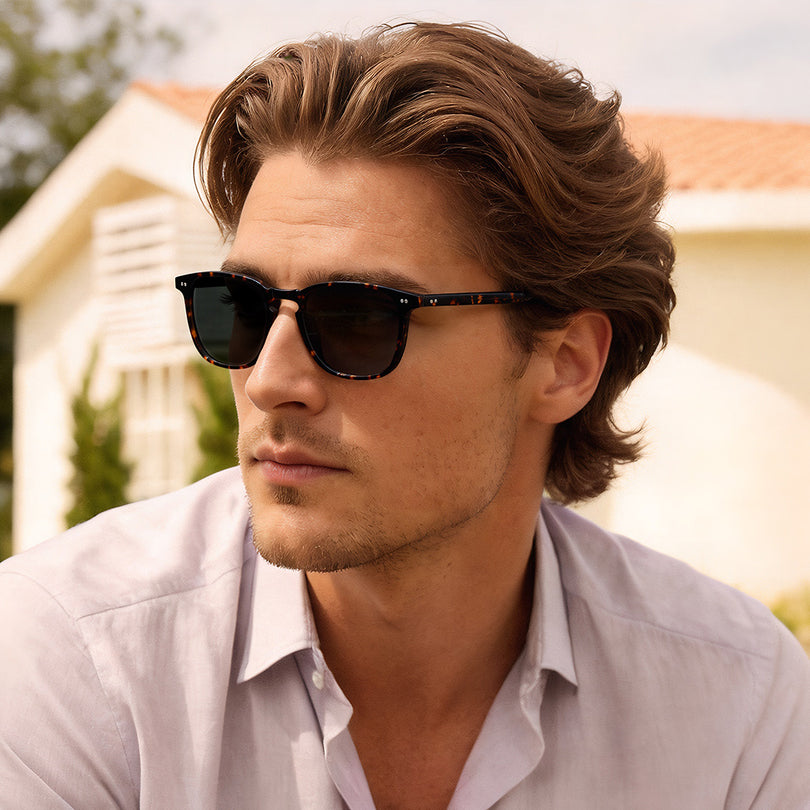
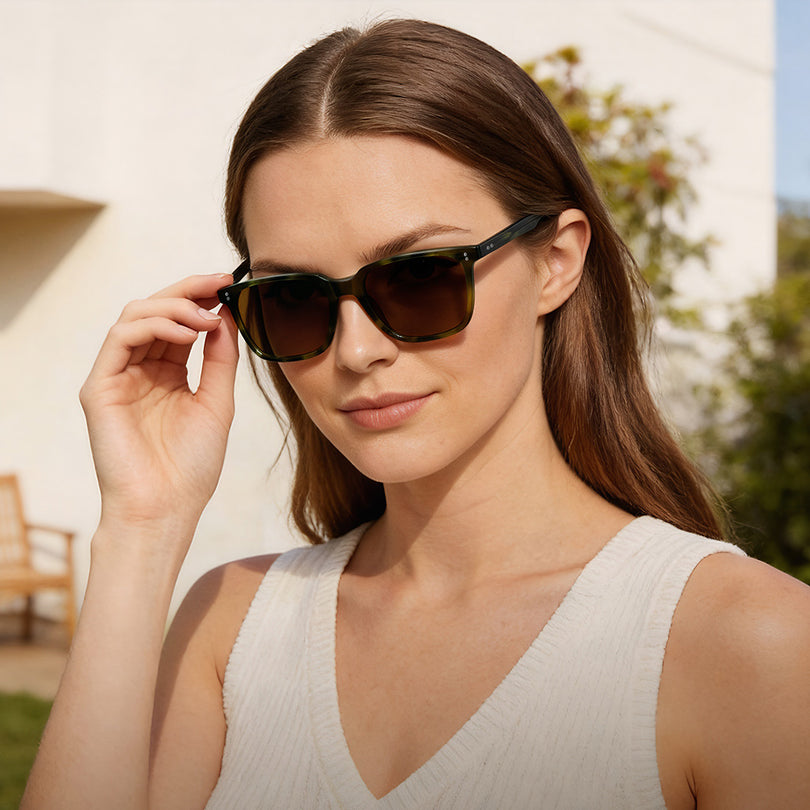
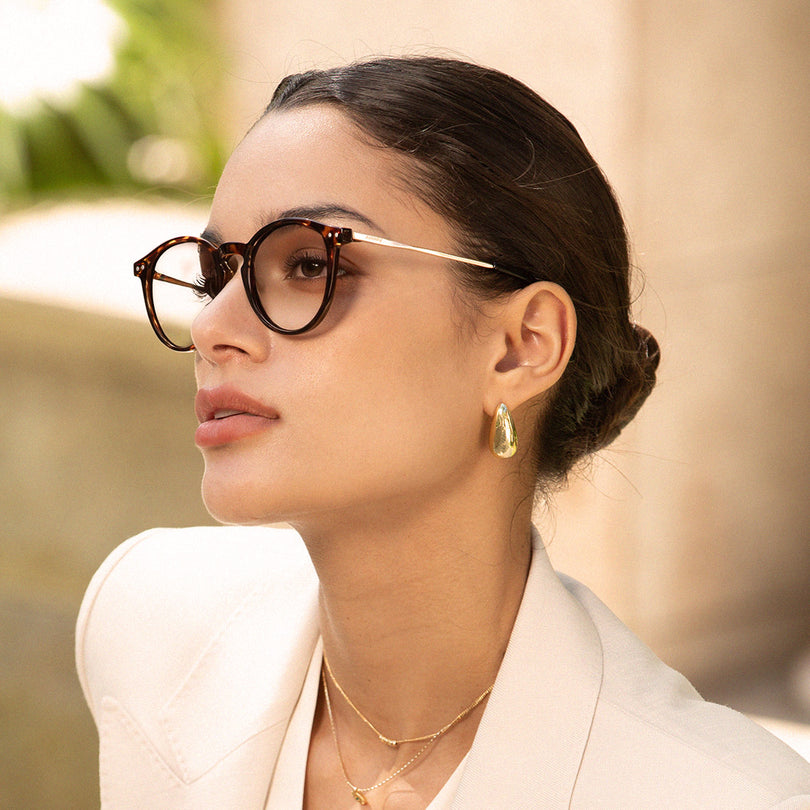


A square frame is the default shape for a reason: it holds a lens steady, it photographs well, and it does not ask anything of your face shape. The problem is width. Most squares are cut between 138 and 142 mm, which is fine until your temples measure more than that — then the frame sits on the side of your head instead of in front of it.
This drop runs from 142 mm to 148 mm in four steps, and the widest of them is the one worth starting with. Simba-C01 is a 148 mm front on a thick acetate block, and it is the only frame in the group built for a genuinely wide head rather than a wide face. The other three fill in the range below it. All four are on the new arrivals page now, and all four are square or near-square.
|
01
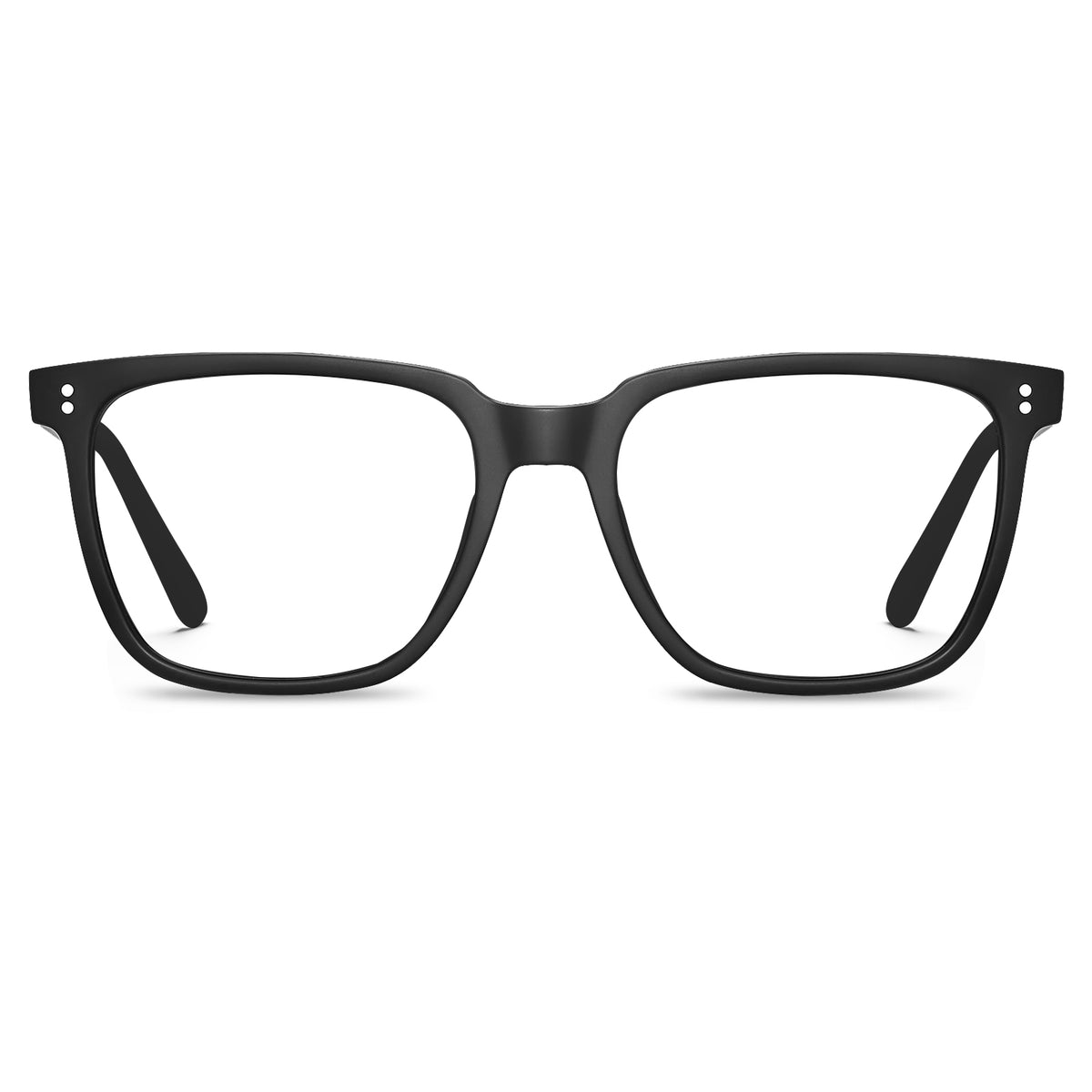
Simba-C01
Square · 148 mm · black
|
02
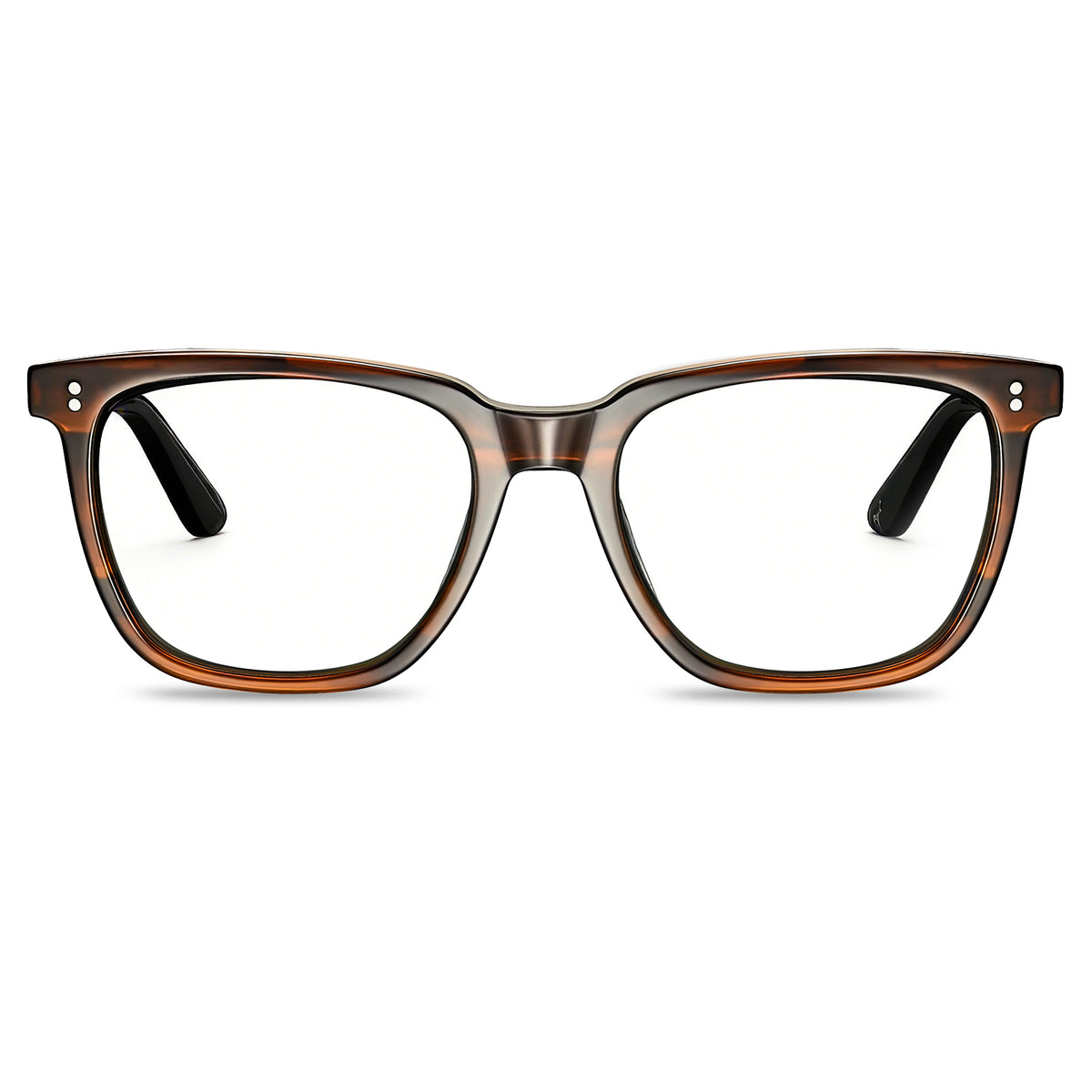
Sedona-C25
Soft square · 142 mm · brown with green lens
|
03
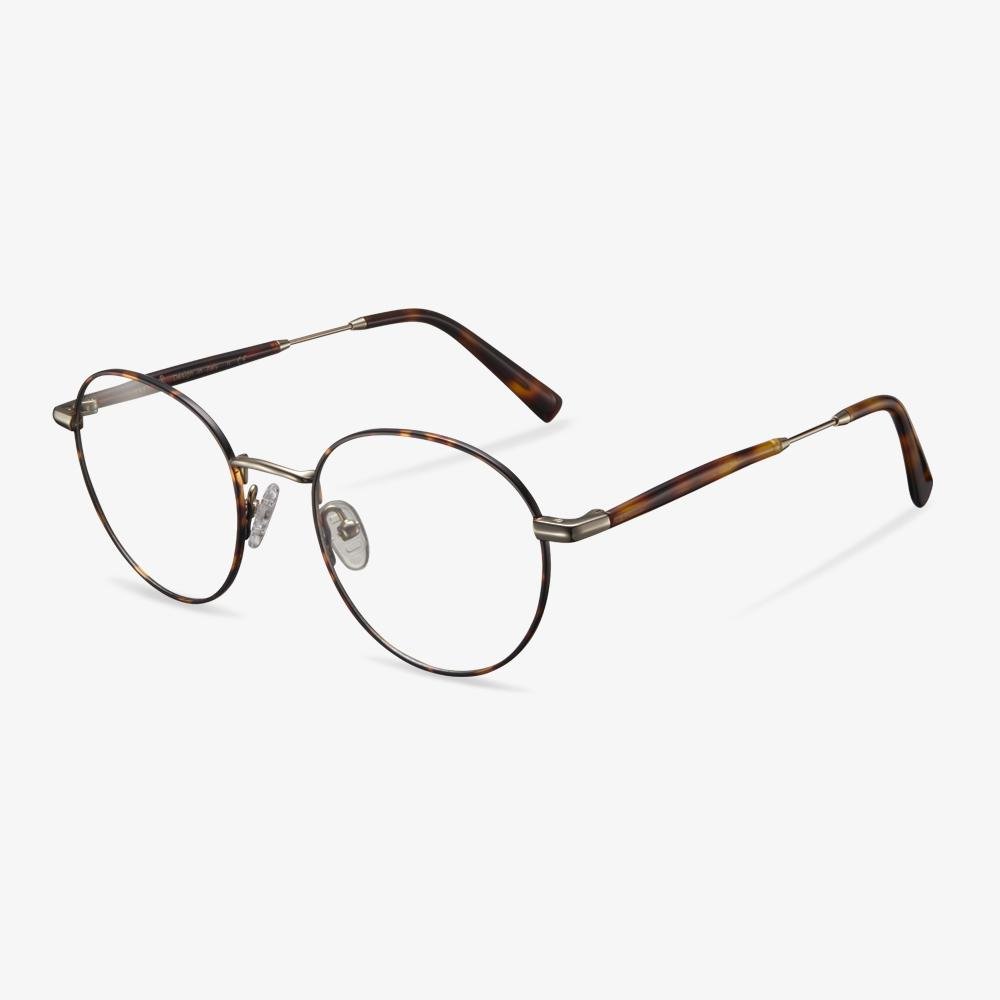
Kenosha-L26
Square · 142 mm · tortoise
|
04
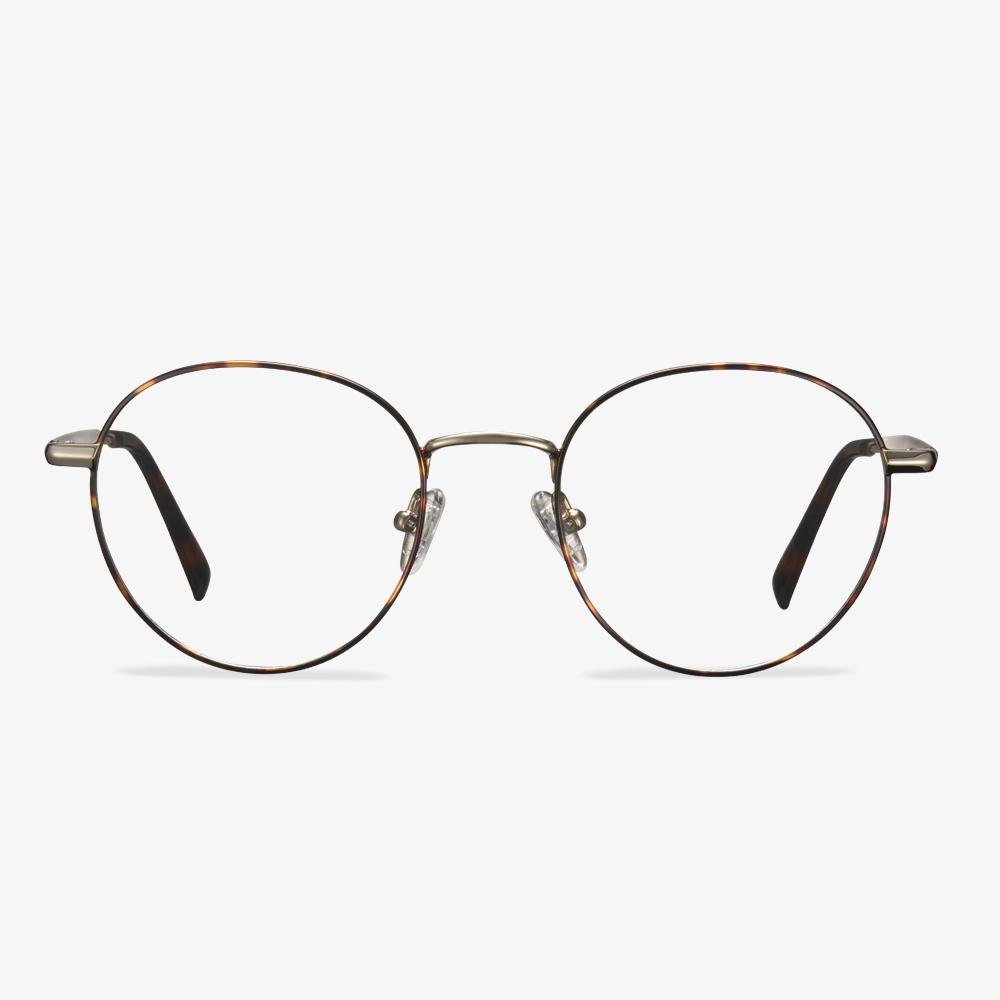
Arnect-C14
Rectangle · 145 mm · tortoise
|
What a wider front actually fixes
Three things, and only one of them is cosmetic. The first is pressure: when a frame is narrower than your head, the temples have to splay outward to reach your ears, which puts constant inward tension on the hinge and leaves a mark above your ear. The second is optical centring — a wider front puts the lens centre closer to your pupils instead of forcing them to converge inward. The third is proportion: a wide front makes a broad jaw look balanced rather than oversized.
What it costs is lens height, usually. A frame that gains width often loses depth to keep the total area from looking like a visor. That is exactly what happened here, and it is the reason these four are not interchangeable: Kenosha-L26 holds a 41 mm lens height at 142 mm, while Arnect-C14 holds 36 mm across a 145 mm front. The wider you go, the more carefully you need to look at depth.
The four frames


The width ladder, in one table
| Frame | Shape | Frame width | Lens height | Bridge | Built for |
|---|---|---|---|---|---|
| Simba-C01 | Square | 148 mm | deep | integrated | Wide head, thick acetate block, copper temple pins |
| Arnect-C14 | Rectangle | 145 mm | 36 mm | 25 mm | Wide but shallow — the flattest profile here |
| Sedona-C25 | Soft square | 142 mm | 43 mm | sculpted | Depth over width; green lens on a warm frame |
| Kenosha-L26 | Square | 142 mm | 41 mm | 19 mm | Standard medium width with more vertical cover |
Why the 148 mm frame is not just a bigger 142 mm
Width is distributed, not added. On Simba-C01 the extra 6 mm goes into the front block, which is thicker than the other three, and into temples that carry copper pins and metal hinges rather than an acetate-only hinge. That construction is the reason the frame can be wide without becoming flexible — a thin acetate frame at 148 mm would twist, and a twisted frame never sits level again.
The trade-off is weight and presence. This is the frame you notice on your face for the first ten minutes and then stop noticing, which is the normal pattern for a wide acetate front. If you want the width without the mass, a thinner material with a smaller lens is a different answer to the same problem, and the men's sunglasses page is where the wider fronts are grouped.
Which of the four, by situation
- Driving on a bright road: Sedona-C25, because the green lens cuts the reflected glare off asphalt without flattening traffic lights the way a very dark grey does.
- Long days outdoors with a wide face: Simba-C01, because a 148 mm front is the only one here that will not pinch at the temples.
- A shallow, flat frame that leaves your cheek visible: Arnect-C14 — 36 mm of lens height is the least coverage in this group.
- A safe second pair in tortoise: Kenosha-L26 at 142 mm with 41 mm of depth, which is the most conventional fit of the four.
All four carry polarized lenses, which is worth separating from tint. Tint reduces brightness; polarization removes the horizontal glare that comes off water, snow and wet asphalt. Polarized sunglasses for driving covers where that difference shows up on a road, and the driving sunglasses collection has the rest of the range if none of these four is the right width.
Checking the width before you order
Take a frame that fits you and measure hinge to hinge. If it comes out at 145 mm or more, Simba-C01 and Arnect-C14 are the two to compare; if it comes out around 142, Sedona-C25 and Kenosha-L26 are the closer pair. The diagram on frame measurement shows exactly where to put the tape, and choosing sunglasses by face shape explains why a wide front changes the proportion of a long face more than a round one.
One exception worth flagging: Arnect-C14 has a 25 mm bridge, which is wider than the 17–19 mm you will find on most frames in this range. On a narrow nose that will sit low. Measure your current bridge before ordering that one.
Squares we did not include
There are more squares in the catalogue than in this drop, and not all of them are wide. The square sunglasses collection sorts by shape, the rectangle collection covers the flatter profile, and polarized sunglasses is the full list if lens type matters more than silhouette.
How wide is too wide
There is a point where extra width stops helping, and it is easier to recognise than to calculate. Three signs, in order: the frame edges pass the widest part of your temples when you look straight ahead; the lenses sit so far apart that you are aware of the gap between them rather than the view through them; and the temples press in front of the ear rather than resting above it. Any one of those means the frame is wider than your head, and a wider frame will not fix it.
The reverse is also true, and it is the mistake people make after reading about wide frames: a 148 mm front on a 138 mm head does not look generous, it looks oversized, and no amount of adjustment will bring the lens centres back over the eyes. The three narrower frames in this group exist for that reason. If you are between sizes, choose the smaller front and accept a little less coverage — a frame that fits is more flattering than a frame that covers more.