



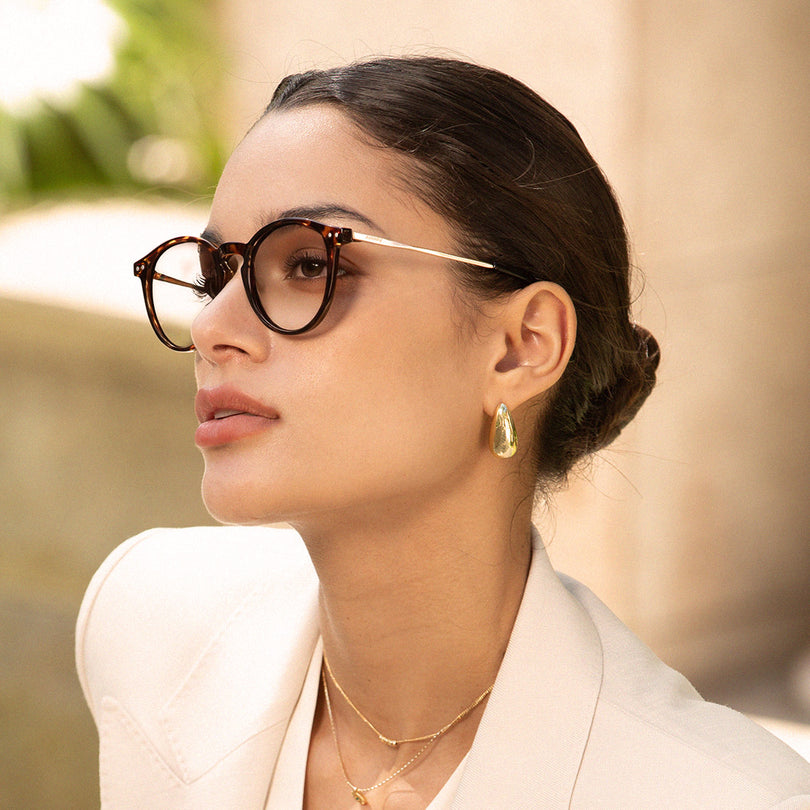


How Much Frame Can Your Face Carry? A Proportion Guide
Two frames can both be the correct width and still look completely different on the same face, because width is only one of three levers that decide how much eyewear you are wearing. The other two are rim depth and rim thickness, and they are almost never discussed.
This is the proportion question, and it is answerable with numbers rather than taste. Across our fifteen best-selling prescription frames, overall frame width runs from 136 mm to 145 mm — a 9 mm range that, combined with the rim, produces frames that occupy very different amounts of a face. The full width range, sortable by shape, is in the eyeglasses collection.
The three levers
- Frame width — hinge to hinge. Decides whether the front matches your face and whether the temples press or float.
- Rim depth — how tall the rim is, which follows the lens height. A deep rim adds presence even when the frame is narrow.
- Rim thickness — how much material surrounds the lens. The same lens in a 2 mm rim and an 8 mm rim is the same size and a different frame.
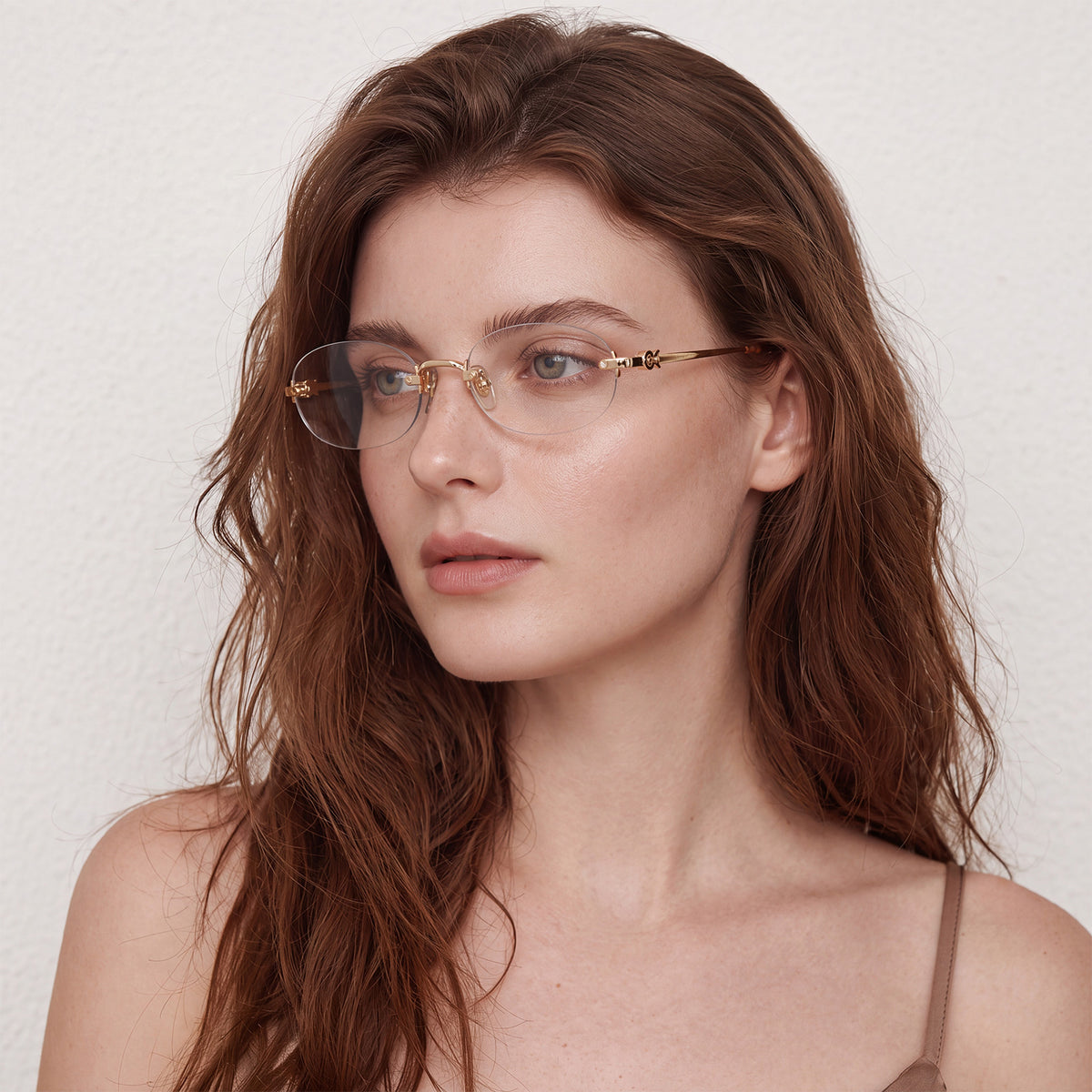
A rimless frame removes the third lever entirely, which is why a 136 mm rimless oval sits on a face more quietly than a 136 mm acetate oval ever could. Removing the rim does more than shaving two millimetres off each edge. It is also why the acetate eyeglasses range reads heavier at identical measurements than anything rimless.
The width rule, with a tolerance
Frame width should match the widest part of your face at the temples, measured straight across in front of a mirror. The usual guidance is that the frame should be equal to, or a couple of millimetres wider than, that measurement — enough to clear the temples without overhanging.
- Under 130 mm face width: look at frames under 138 mm. A 145 mm frame will overhang and read as borrowed.
- 130–140 mm: the 140–142 mm group is the natural fit, and most of our best-sellers live here.
- Over 140 mm: 142–145 mm, and check the temples rather than the front — the arms, not the width, are what press.
Tolerance matters more than precision. Two millimetres either side is invisible; eight is the difference between a frame that looks chosen and one that looks inherited. If you want to compare several frames inside that band, the eyeglasses for women range lists them together.
Six frames, measured, from 136 mm to 145 mm
| Model | Frame width | Lens width + bridge | Rim |
|---|---|---|---|
| Bonterey-FC03 | 136 mm | 53 + 20 mm | Rimless — the least frame possible at this width |
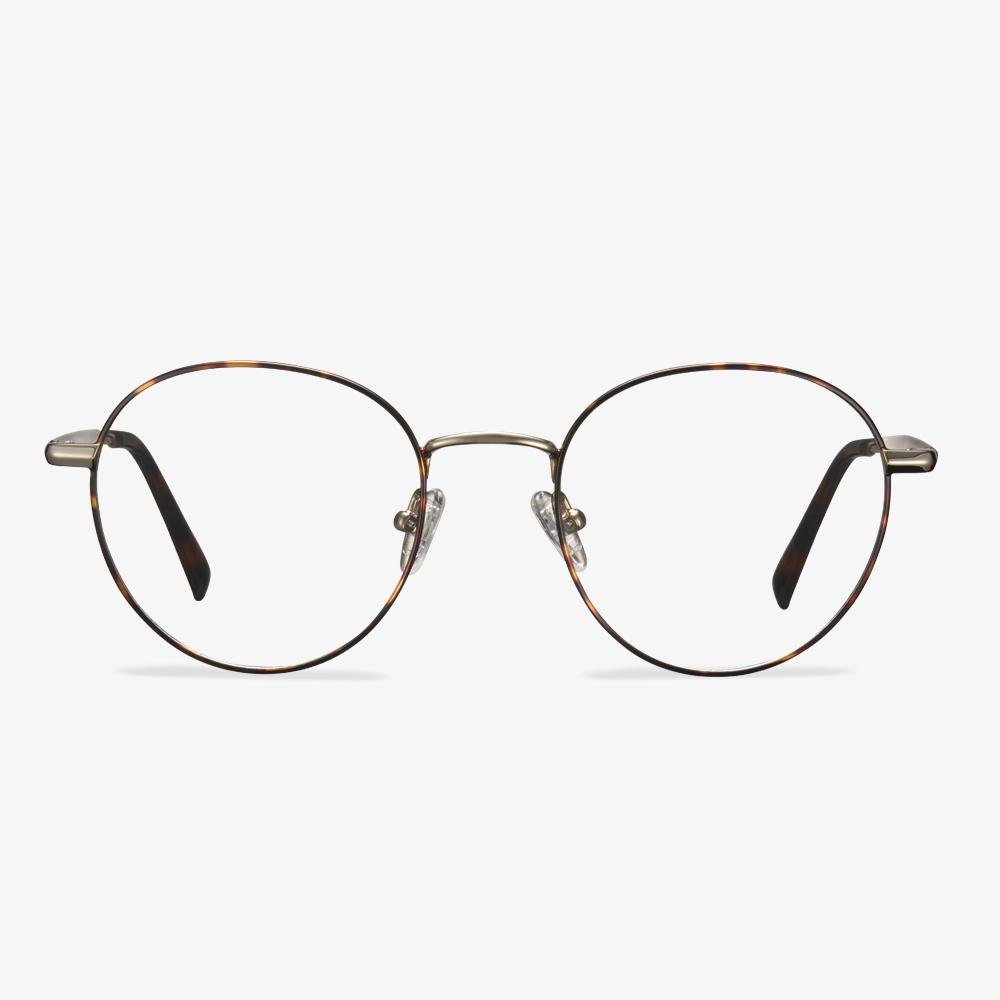
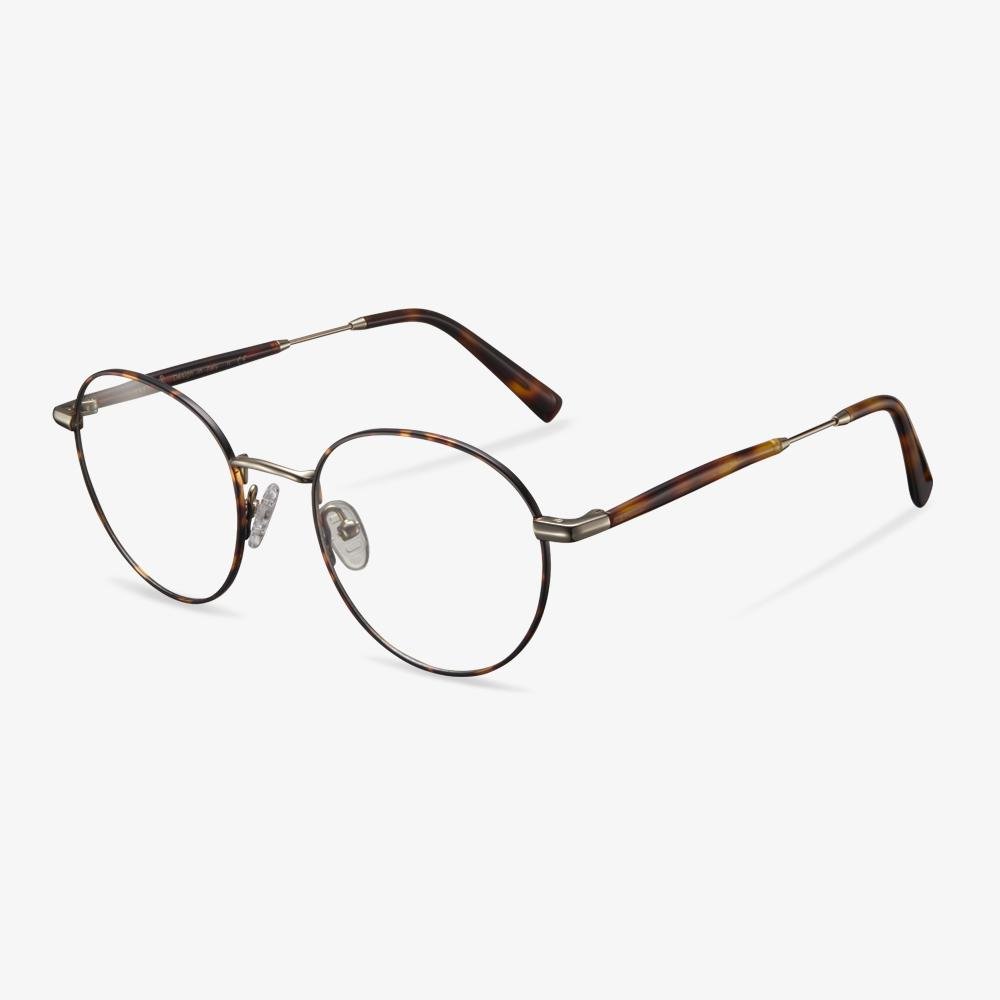
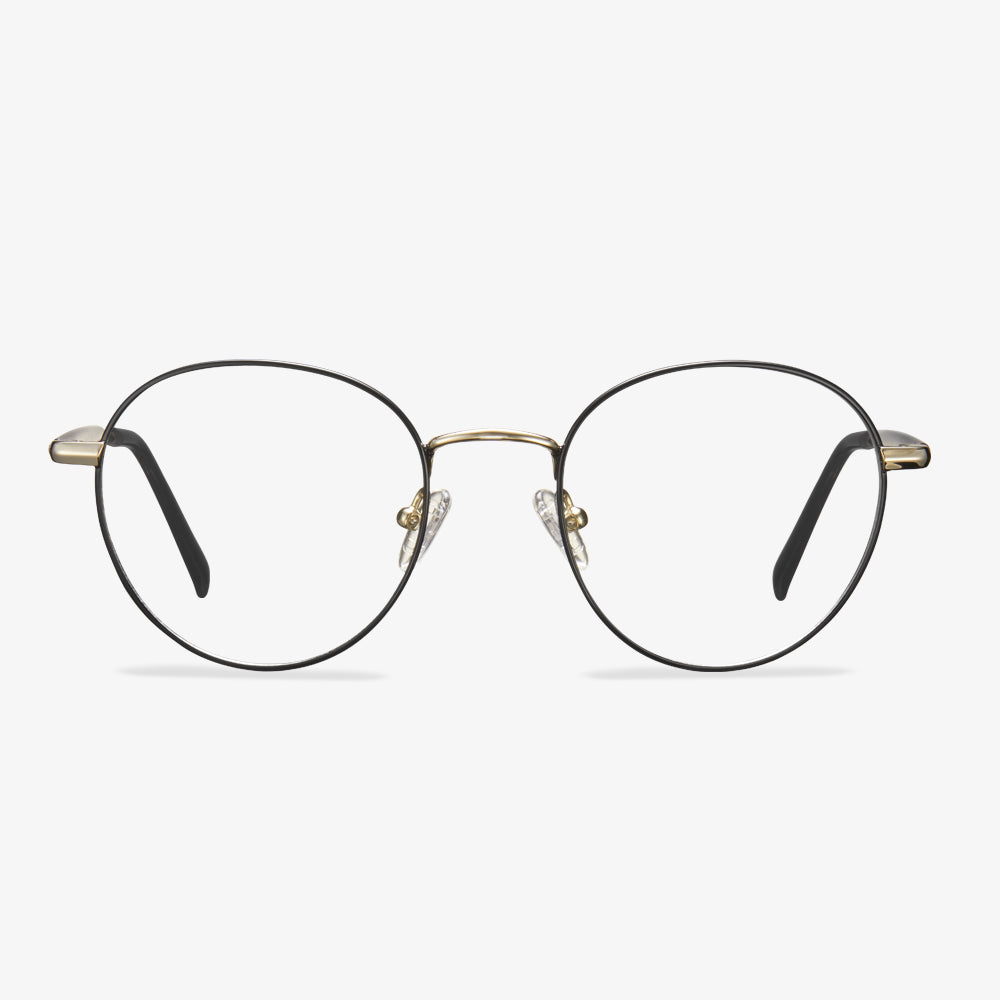
| Mesa-FC03 | 138 mm | 48 + 22 mm | Full-rim acetate, round |
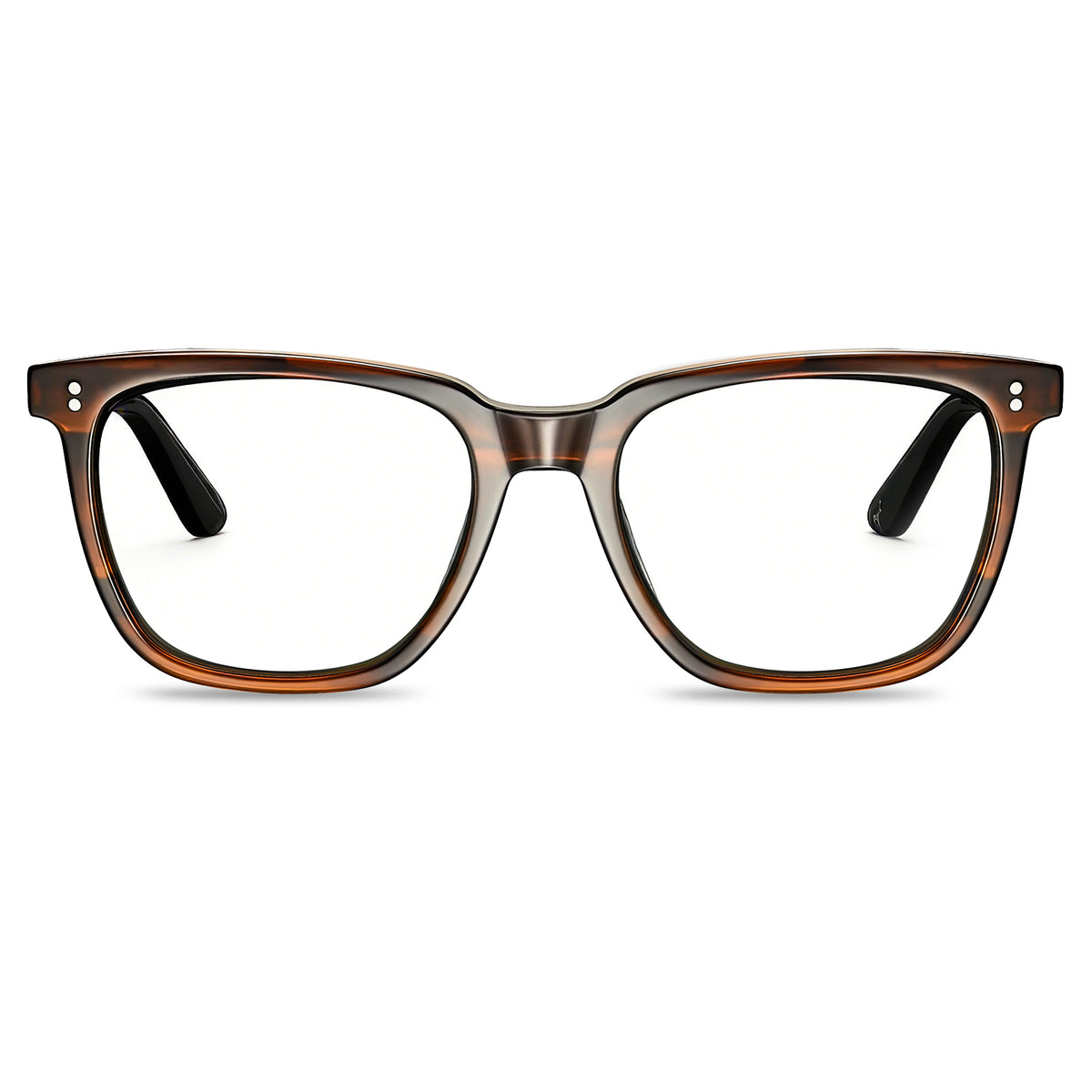
| Downey-FL04 | 140 mm | 50 + 19 mm | Full-rim acetate, square |
| Albany-FC11 | 141 mm | 52 + 18 mm | Full-rim acetate, square |
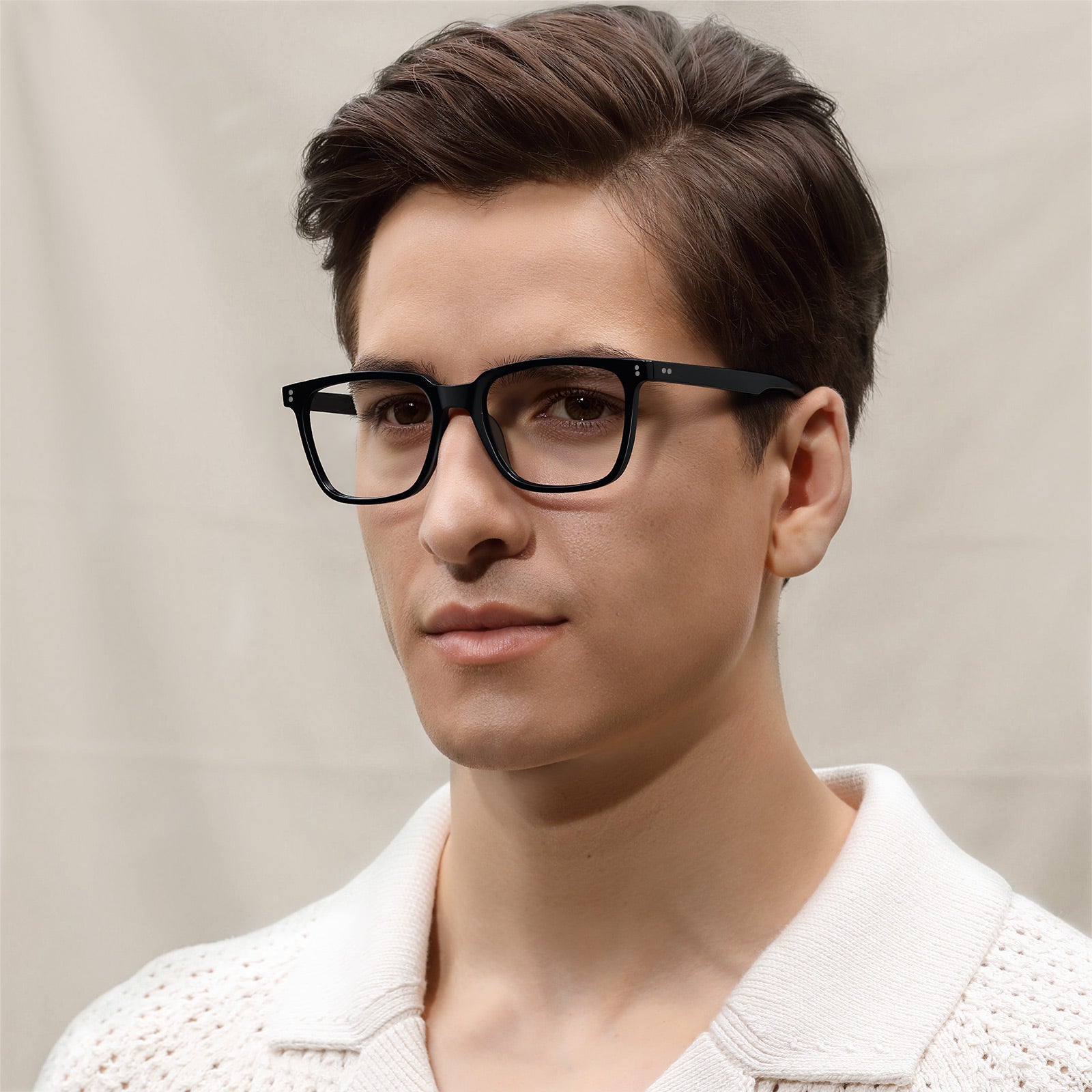
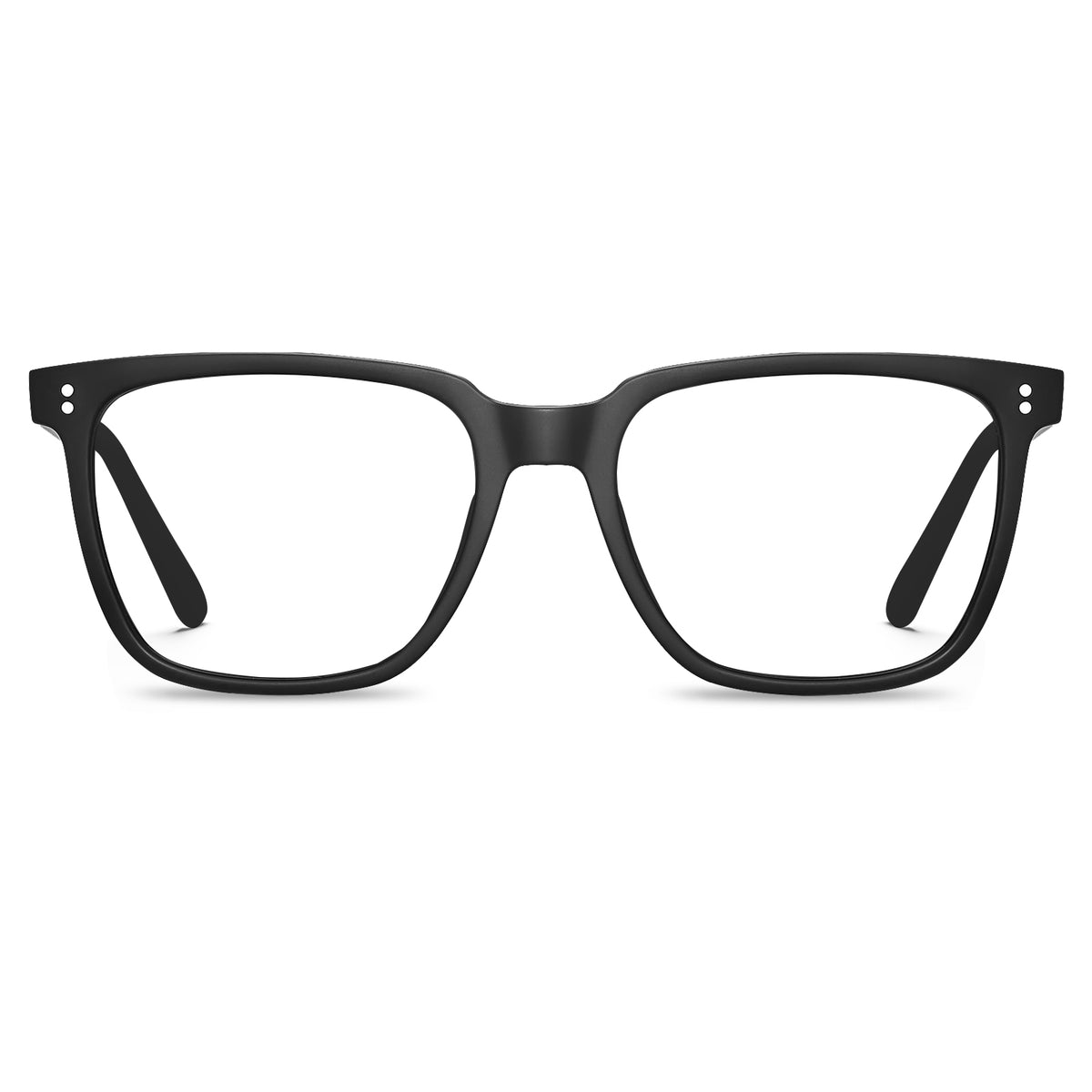
| Kenosha-FL20 | 142 mm | 52 + 19 mm | Full-rim acetate, square, with stud detailing |
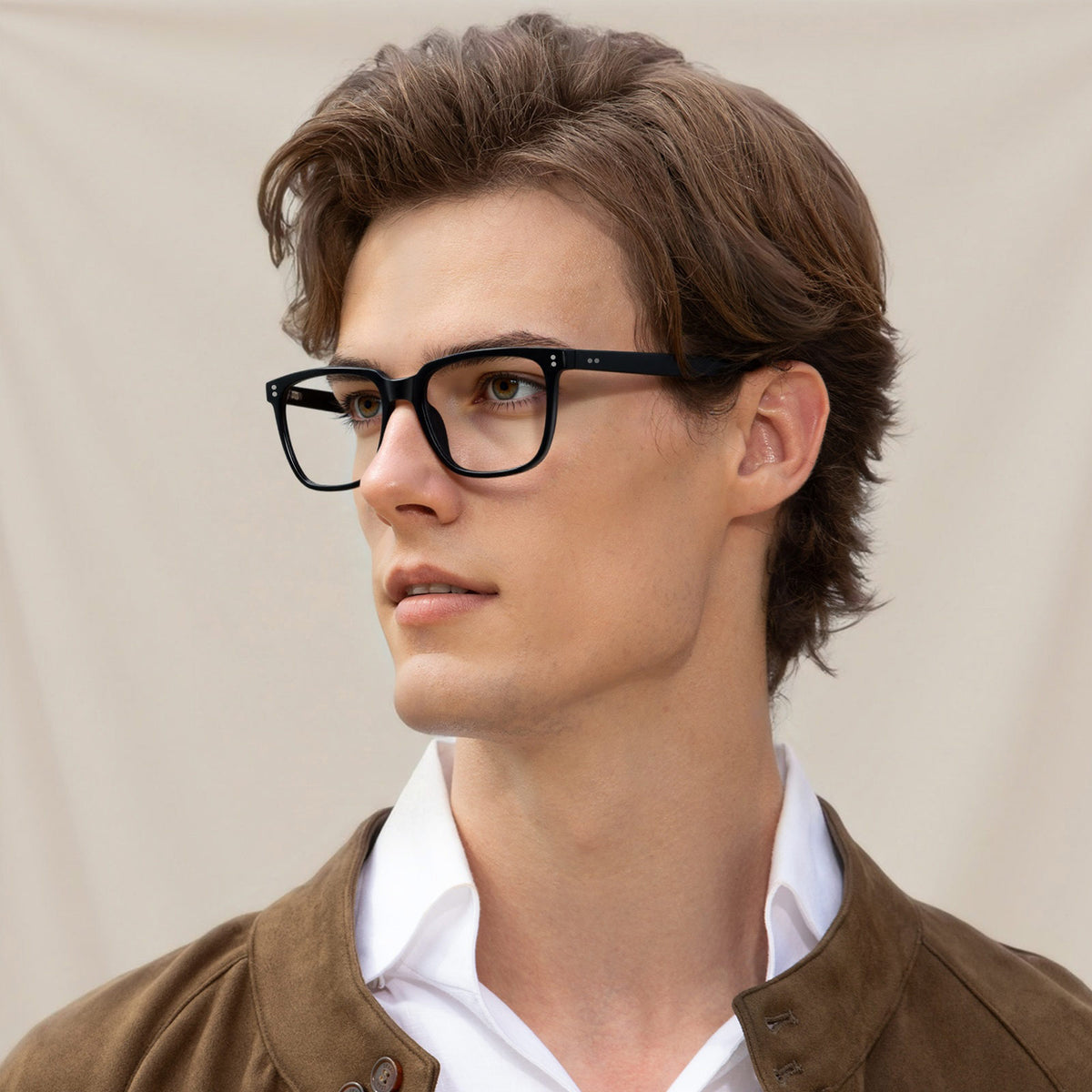
| Architect-FC01 | 145 mm | 51 + 21 mm | Full-rim acetate square — the widest we sell in volume |
Notice that the widest frame in the list does not have the widest lens. Architect pairs a 51 mm lens with a substantial rim to reach 145 mm; Baley reaches a similar overall width with a 58 mm lens and very little rim. Same number on the spec sheet, opposite visual result.
Five frames that show the levers working

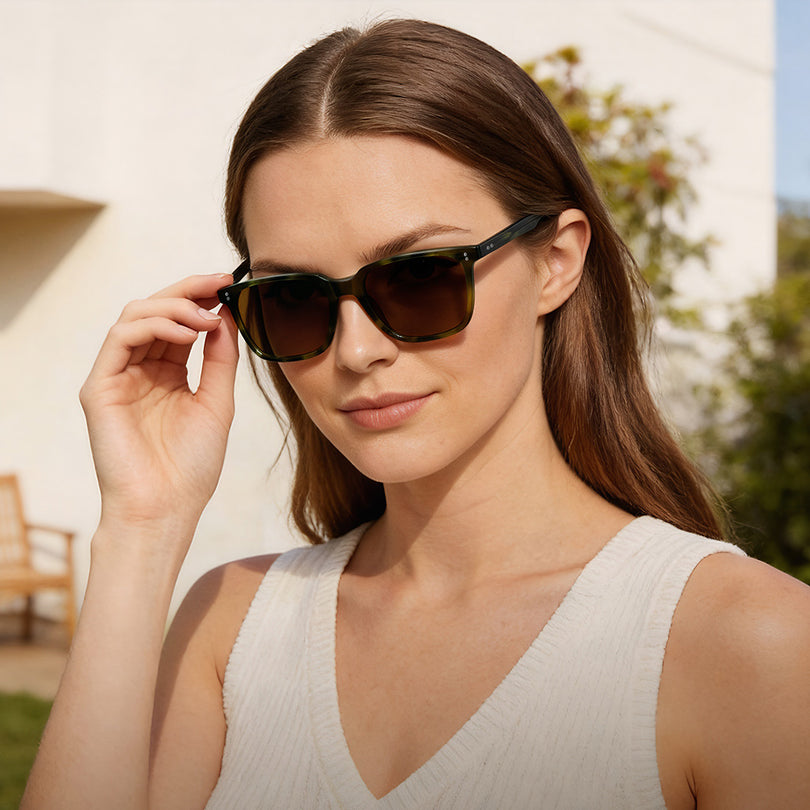
145 mm across and 43 mm deep — the widest frame we sell in volume. A wide front, a square acetate rim and real depth combine into the maximum amount of frame in this range.
Frame width 145 mm · Lens 51 × 43 mm · Bridge 21 mm

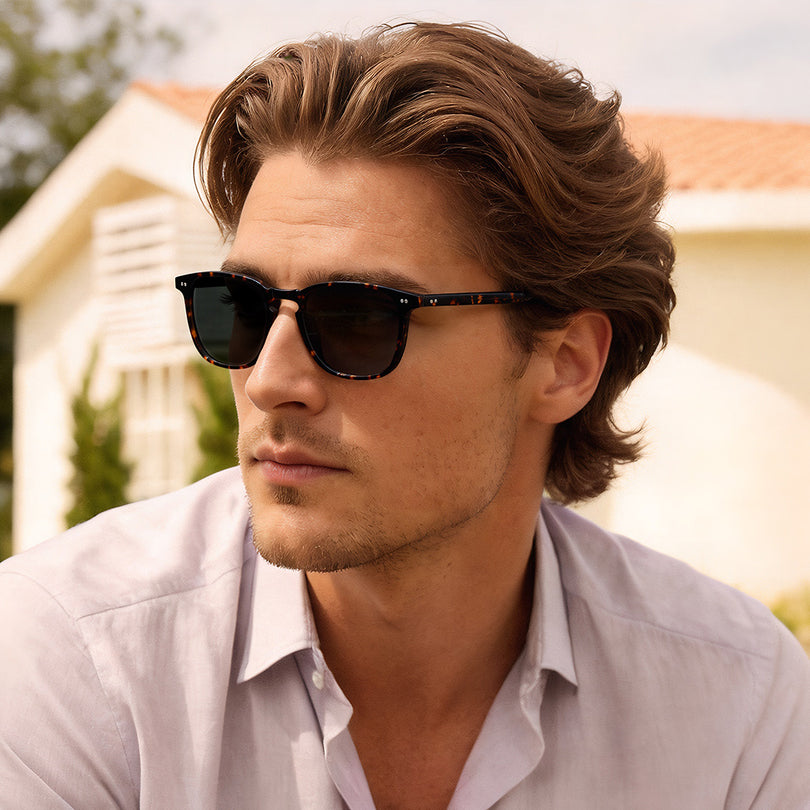
142 mm with a 52 mm lens and stud detailing along the end pieces. Bold, but the detailing breaks up the mass — the reason it reads less heavy than Architect despite similar numbers.
Frame width 142 mm · Lens 52 × 41 mm · Bridge 19 mm

140 mm, 50 mm lens, 43 mm deep. The middle of the range on all three levers, which is why it is the frame people describe as “normal” and then buy twice.
Frame width 140 mm · Lens 50 × 43 mm · Bridge 19 mm

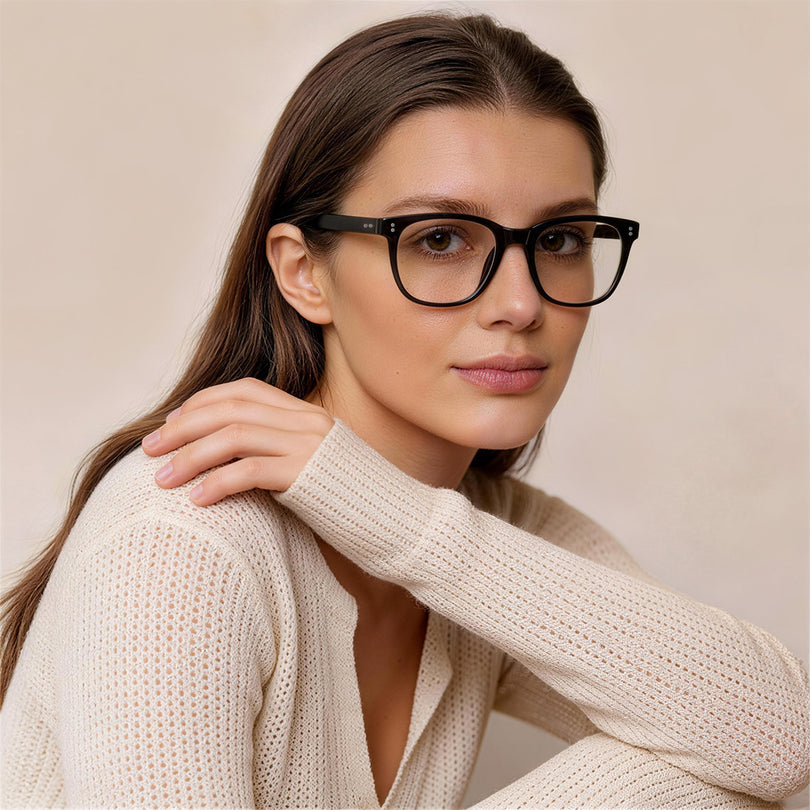
141 mm with a 52 mm lens in black Italian acetate. A square silhouette that reaches its width through the front rather than through the rim.
Frame width 141 mm · Lens 52 × 42 mm · Bridge 18 mm

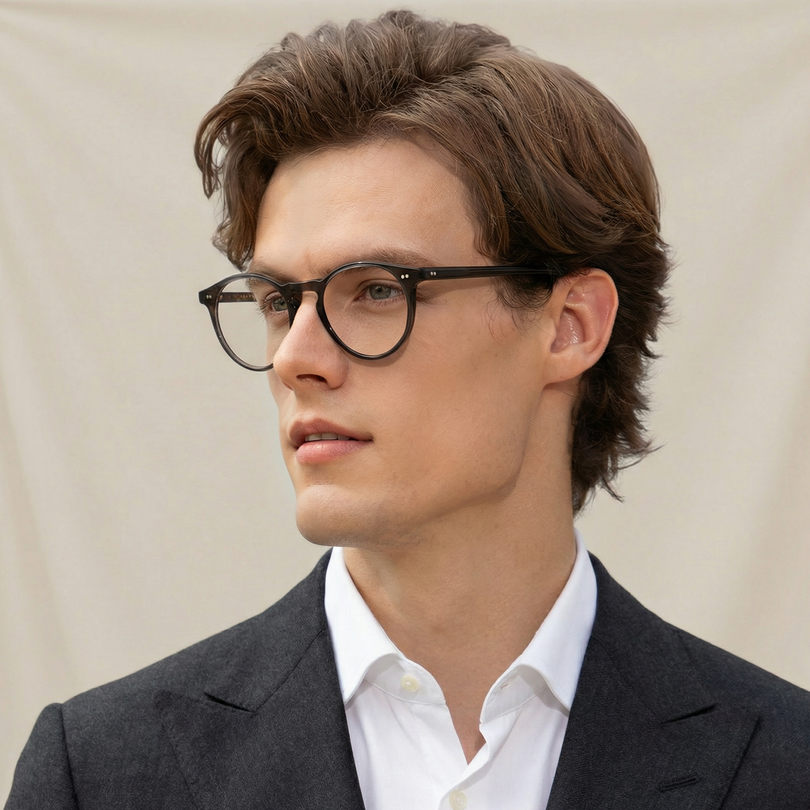
138 mm — the narrowest full-rim frame in the top fifteen, and a round one. On a narrow face this is the frame that stops looking oversized.
Frame width 138 mm · Lens 48 × 43 mm · Bridge 22 mm
Brow line and where the top bar sits
Proportion is not only width. The top bar of the frame should follow the line of your brow rather than cut across it. A frame whose top edge sits noticeably below the brow leaves a band of forehead between brow and frame, which visually shortens the face; one that sits well above it reads as a raised, deliberate line.
This is the reason two square frames at 142 mm can look so different. Rim depth changes where the top bar lands, and where the top bar lands changes the whole balance of the face — more than the width does. Where the top bar sits is also what a face-shape guide is really describing, and frames for face shapes is the short version.
Rimless, semi-rimless, full-rim: three different proportions
Removing the rim does not simply make a frame lighter. It changes where the visual edge of the eyewear sits: a rimless lens ends exactly at the lens, a semi-rimless frame draws a line across the top only, and a full rim adds a border on all four sides.
- Rimless (Bonterey): the lens outline is the frame. Quietest on the face, and the option that lets a 136 mm frame disappear entirely.
- Semi-rimless: a strong horizontal line at the brow and nothing below. Reads technical, and makes the top of the face the reference point.
- Full-rim (every other frame in this list): the rim typically adds two to four millimetres of visual width on each side, and that is the difference between a frame that fits and one that looks oversized.
This is why comparing frames by stated width alone misleads. A 142 mm full-rim frame and a 142 mm rimless frame do not occupy the same space on a face, even though the number on the spec sheet is identical. The measurement method for all three levers is on how to measure frame size.
Where the temples attach, and why it widens the frame
The end pieces — the short section between the lens and the hinge — sit furthest out on the face, and they are the part most frames use for decoration. Stud detailing, a metal plaque or a raised block at the end piece adds a couple of millimetres of visible width without changing the frame width at all.
That is the mechanism behind something you may have noticed: two frames with the same numbers can read as different widths. The one with a decorated end piece looks wider, because its widest visible point is further out. If you are already at the top of your width range, a plain end piece is the cheaper way to stay inside it. If your face is longer than it is wide, the rectangle eyeglasses guide covers why shallow frames balance that proportion.
Four proportion mistakes worth naming
- Choosing the widest frame that fits. Maximum width is not maximum style; it is maximum frame. If your face is already strong, the frame does not need to add another edge.
- Assuming rimless is always lighter. It is lighter visually, but a rimless frame with a 53 mm lens and a 34 mm depth still occupies the same outline — it just has no border around it.
- Ignoring the bottom rim. A deep frame whose bottom edge lands on the cheek looks fine standing still and moves when you smile.
- Matching the frame to the face shape instead of the proportion. Face shape guides are a starting point; width and depth are the measurements that decide whether it works.
The fastest proportion test: photograph yourself straight on, then measure the frame width as a fraction of your face width in the same image. Under 95% reads as undersized, over 105% reads as oversized, and 98–102% is the range almost everyone looks right in.
The checklist, in order
- Measure your face width at the temples. Match frame width to it, within 2 mm.
- Decide how much frame you want on your face — that is rim thickness and rim depth, not width.
- Check where the top bar lands relative to your brow.
- Check that the bottom rim clears your cheek when you smile.
- Then choose the colour, which is the lever that changes attention rather than proportion.
Proportion is the part of frame choice that people call “taste” when they cannot explain it. It is not taste. It is three measurements and one line across the brow, and once you know them, frames stop being a guessing game. If you are drawn to a rimless look instead, the oval eyeglasses guide covers the shape that carries it best.