








Glasses Bridge Width: What 16 mm to 28 mm Actually Fits
Almost everyone chooses a frame by the two numbers that are easiest to see: the overall width, and the colour. The number that decides whether the frame is still comfortable in month three is the one nobody reads — the bridge width, printed second on the inside of the temple.
On a frame marked 52 19 145, the bridge is the 19. It is the distance, in millimetres, between the two lenses at their closest point. Everything downstream follows from it: how high the lenses sit, whether the top bar covers your brow, whether you push the frame back up twenty times a day, and whether you finish the afternoon with two red marks either side of your nose.
Why the bridge comes before shape and colour
A frame can be the right width, the right shape and the right colour and still be unwearable, because the bridge is the only part of a pair of glasses that is in permanent contact with a surface that does not move. Temples rest behind the ears and can be bent. Nose pads can be swapped. The bridge either matches the geometry of your nose or it fights it all day. If you already know the bridge width you need, the eyeglasses collection is the place to start.
This is also the measurement people most often inherit without knowing. If you have worn the same style for years, you have probably been buying its bridge width over and over, whether or not it was ever correct. The three numbers printed on the temple are decoded in how to measure eyeglasses size, which is worth ten minutes if you have never read them.
Three constructions, three different fit behaviours
Bridge width is not a single number with a single meaning, because the material under it changes what the number does.
- Moulded acetate bridge — the most common construction in Carfia frames. A fixed shelf of acetate joins the two lenses. It is stable and predictable, and an optician can adjust it by only a millimetre or two with heat. It is also unforgiving: a moulded bridge 3 mm too wide cannot be corrected by bending.
- Keyhole bridge — an opening shaped like a keyhole, sitting slightly higher. It grips the sides of the nose rather than resting on top of it, which is why it reads as a vintage detail and also why it behaves so differently from a flat bridge at the same stated width.
- Adjustable pads on a metal or rimless bridge — two arms carrying pads that can be brought in, out and up. This is the only construction with real range. If your bridge is low, narrow or uneven, this is where the fit usually gets solved.
The three ways a bridge fails, and what each one feels like
- It slides. The frame creeps down the nose all day and you push it back with one finger. Two small marks appear at the top of the bridge of the nose. Cause: the bridge is wider than your nose, so gravity wins. The lenses also sit lower than intended, which quietly changes where you are looking through them.
- It pinches. Constant pressure at the sides of the nose, a dull ache behind the eyes by late afternoon, and the frame sitting higher than it should with the lenses above the pupil. Cause: the bridge is narrower than your nose, and the frame is being held open like a spring.
- It rocks. The frame shifts side to side when you talk or chew, and the temples press hard behind the ears. Cause: usually a bridge too wide combined with temples pulling the frame backwards to stay on.
All three can be tested in about ten seconds in front of a mirror. Look straight ahead, relax your face, and check two things: where your pupil sits relative to the horizontal midline of the lens, and whether there is a visible gap between the bridge and the side of your nose. Pupil slightly above centre is normal. A gap you can see daylight through is not. If the frame already leaves marks, how to get rid of glasses marks on your nose deals with the aftermath.
What 15 of our best-selling frames actually span
It is worth seeing how wide the real range is, because “average” is not a number you can buy. Across the fifteen best-selling Carfia prescription frames of 2026, the bridge runs from 16 mm to 28 mm — a 12 mm spread inside one product category and one set of materials.
| Model | Bridge | Built for |
|---|---|---|
| Retroz-FC01 | 28 mm | A wide, flat bridge, or anyone who has only ever found comfort in a frame that sits low |
| AvonPaK-FL02 | 24 mm | Wide nose, round face; the double-bridge detail also spreads pressure |
| Concord-FL13 | 22 mm | The middle of the range — the safest starting point if you have no reference pair |
| Dublin-FC14 | 21 mm | Average to slightly narrow, on a round frame with a 50 mm lens |
| Baley-FC07 | 16 mm | A narrow bridge; the tightest fit in the top fifteen |
The two ends are instructive. A 28 mm bridge is not a bigger version of a 16 mm bridge — it is a different product for a different nose. If you order the 16 mm frame because you like the shape, you will feel it within the first hour. If you are buying for a wider face, the men's eyeglasses range starts around 140 mm and goes up from there.
Five frames across the bridge range

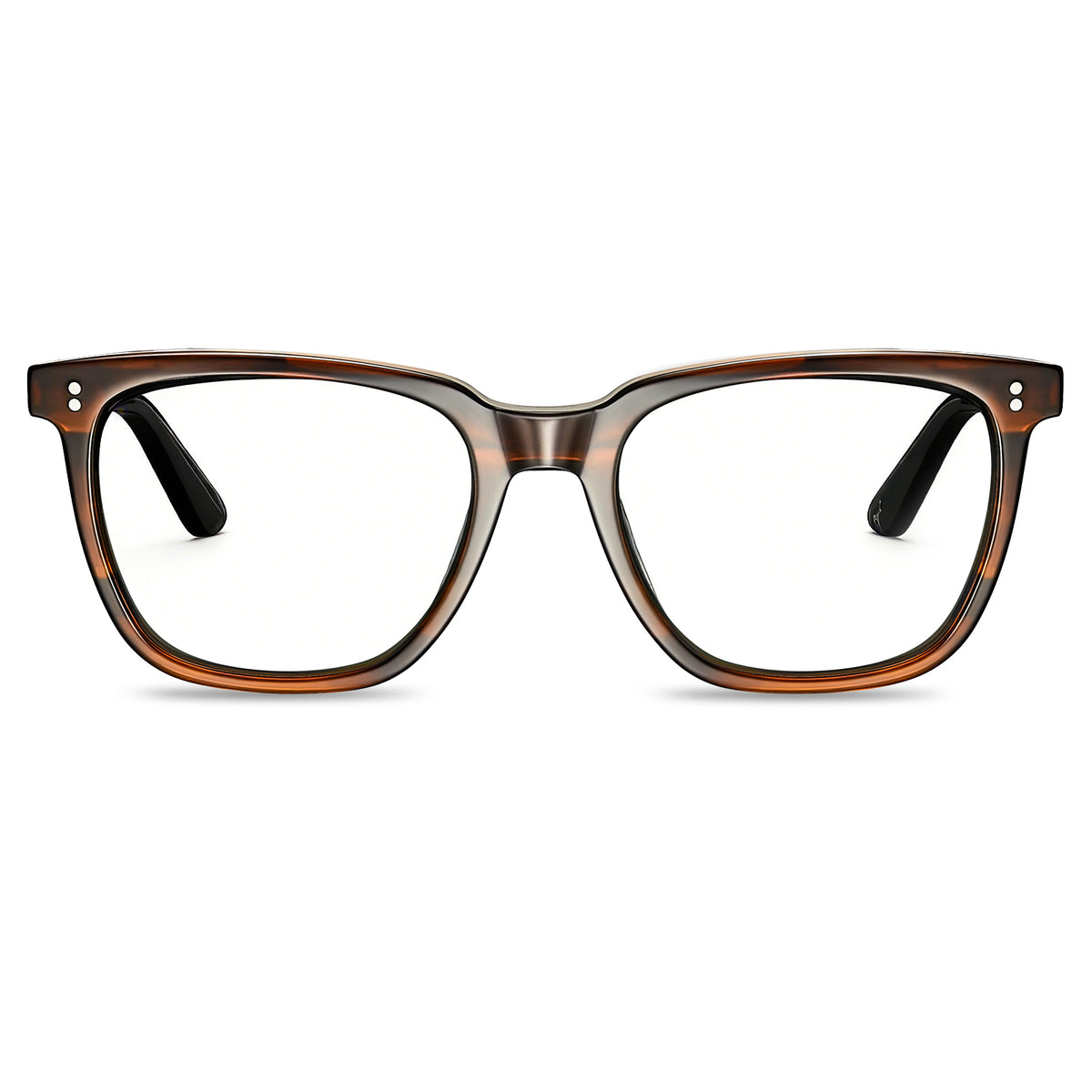
The widest bridge in the top fifteen at 28 mm, and the narrowest lens at 44 mm. That combination — wide bridge, small lens — is the one that suits a broad nose on a narrower face, a pairing most frame ranges do not offer.
Frame width 140 mm · Lens 44 × 43 mm · Bridge 28 mm

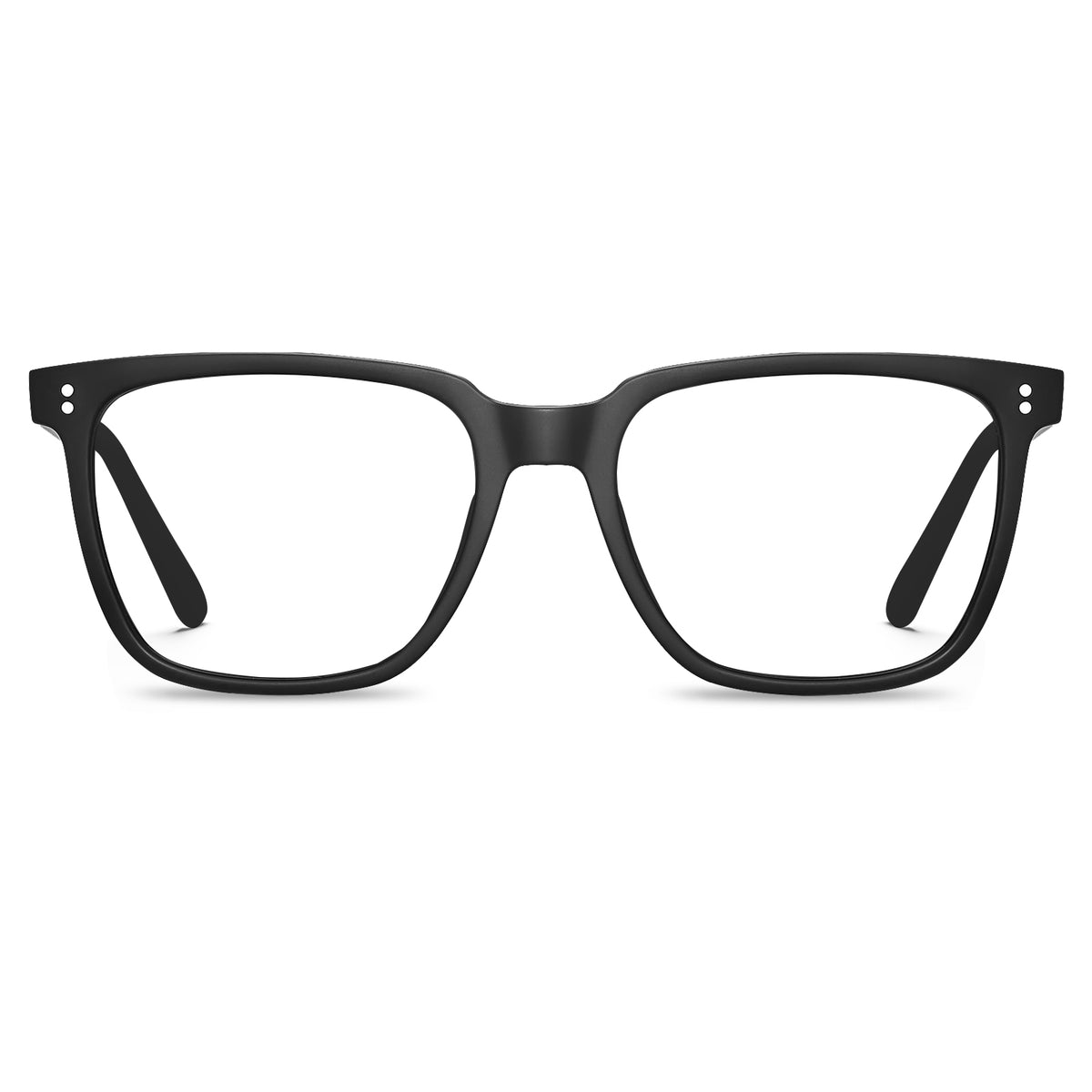
24 mm on a round frame with a double bridge, which distributes contact across two bars instead of one. A practical option when the bridge of the nose is wide and a single thin bar leaves a mark.
Frame width 139 mm · Lens 47 × 46 mm · Bridge 24 mm

22 mm with a 50 mm lens: the closest thing to a neutral default here. If you are replacing a frame you have lost and cannot remember its measurements, this is the least risky starting point.
Frame width 142 mm · Lens 50 × 44 mm · Bridge 22 mm

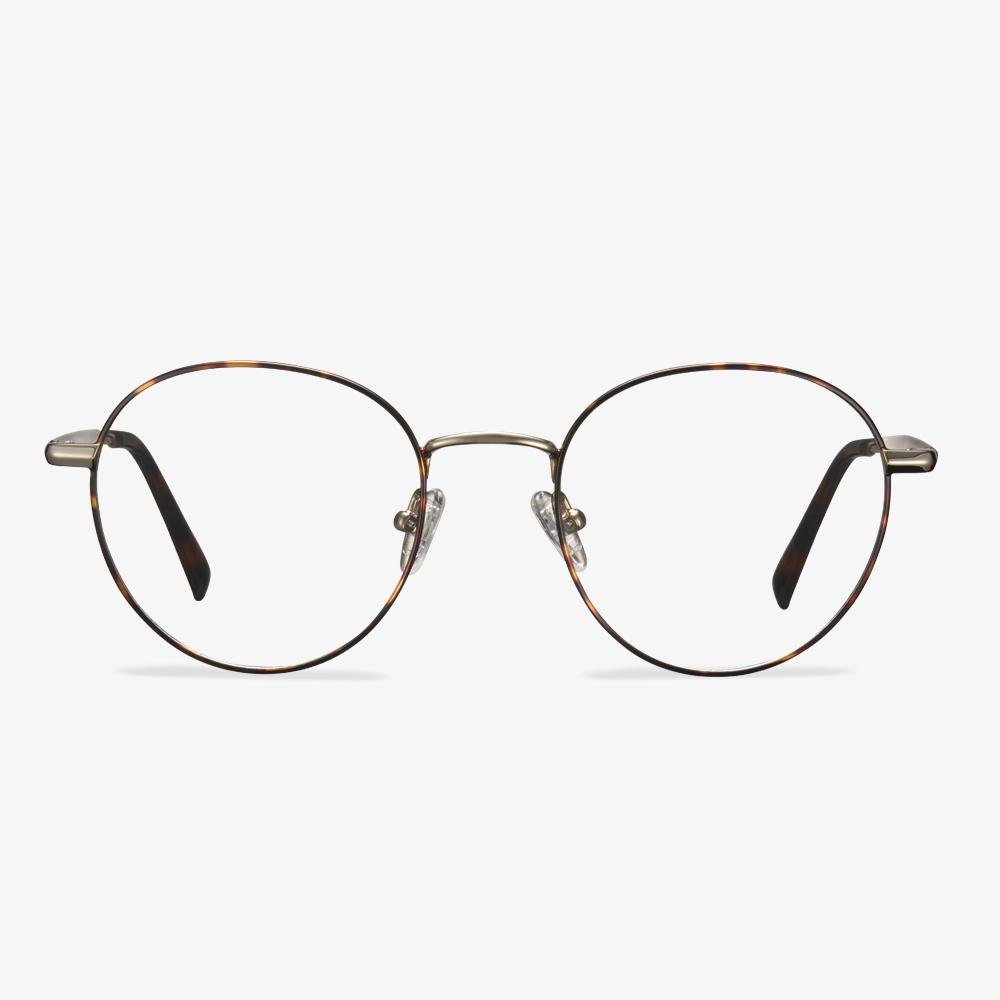
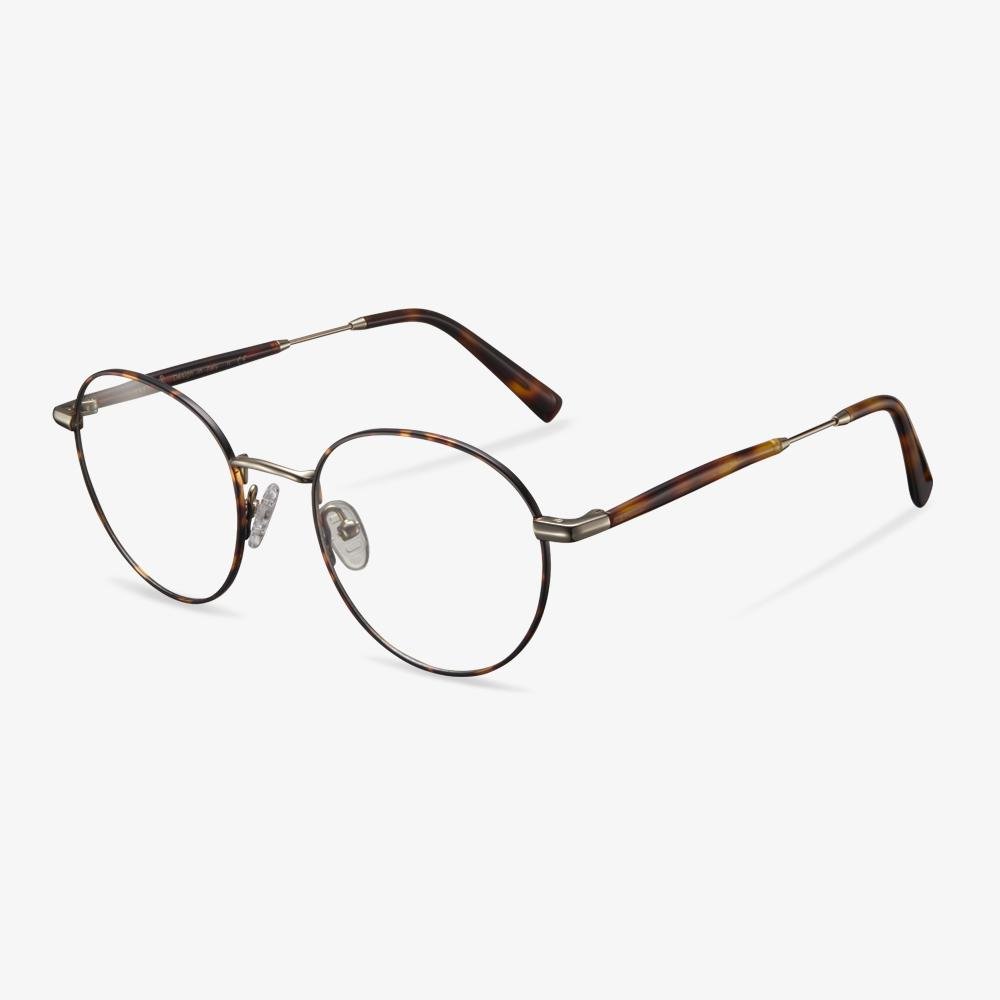
21 mm on a 50 mm round lens, in a tortoise shot through with orange and amber rather than the usual brown. The bridge is the average width here — the colour is the reason to choose this one.
Frame width 142 mm · Lens 50 × 43 mm · Bridge 21 mm

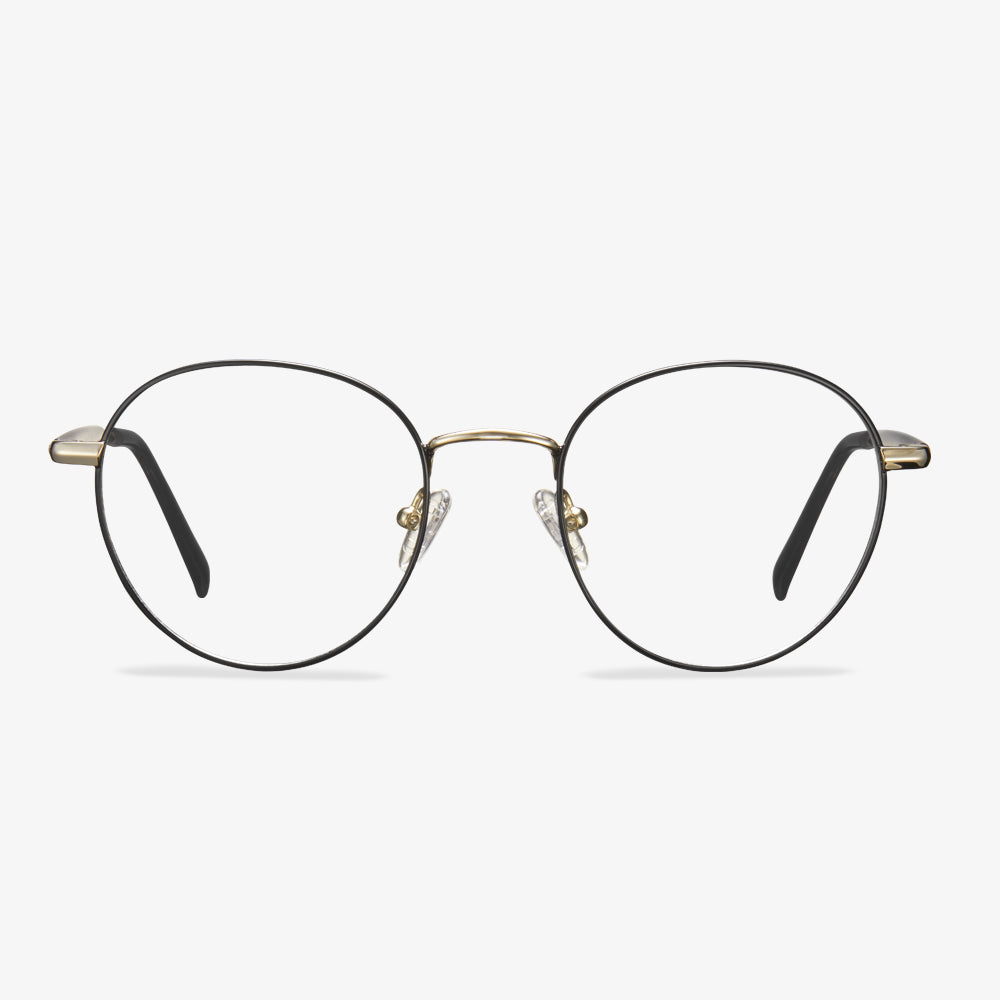
16 mm — the narrowest bridge we sell in volume. Built as a metal frame, so the nose area is thin and the fit is unforgiving in the opposite direction: too narrow shows up immediately as pressure.
Frame width 141 mm · Lens 58 × 45 mm · Bridge 16 mm
If your nose bridge is low or flat
A low, flat bridge gives a frame less vertical surface to sit on, so a moulded bridge that works on someone else will often slide here even at the “correct” width. Two constructions solve it: adjustable pads, which can be brought in and up until they find contact; and a keyhole bridge, which grips the sides rather than the top. Round frames are where keyhole bridges most often appear, so our round eyeglasses are the ones to compare first.
What does not solve it is going narrower and narrower in a flat bridge. At some point the frame is simply pinching a surface it cannot grip, and the answer is a different construction, not a different number.
The order to check things in
- Frame width — does the front match the width of your face at the temples, with no more than a couple of millimetres of overhang?
- Bridge — does it sit without pinching, and stay put when you look down?
- Lens height — does the bottom rim clear your cheek when you smile?
- Colour and shape — the part everyone starts with, and the part that is easiest to change.
Working in this order saves returns. Working in the reverse order is how people end up owning four frames they love and wear none of. The measurement method behind each of those four steps is set out on how to measure frame size.
What can be fixed, and what cannot
- Can be fixed: a moulded bridge 1 mm tight (heat and bend), pad height and angle, temple bend behind the ear.
- Usually cannot: a bridge 4–5 mm too wide. No adjustment closes that gap, and no pad retro-fit is worth it on a frame that was the wrong size to begin with.
- Never worth fixing: a frame that pinches because the lens width, not the bridge, is wrong for your face.
If you already own a pair that fits, you own the measurement. Read the second number on the inside of the temple, or measure across the bridge with a ruler, and stay within 1 mm of it. That single habit removes most of the guesswork from buying glasses online.
Before you order
- Check the second number on a pair you already wear — not the brand, not the size label.
- If you have never had a comfortable pair, start from a frame with adjustable pads rather than a moulded bridge.
- If you are between two bridges, take the narrower one: acetate can be eased out by an optician, but it cannot be shrunk.
- Read the full three-number specification rather than the single “size” badge — the badges are marketing, the numbers are geometry.
None of this makes the bridge the only thing that matters. It makes it the first thing worth checking, because it is the one measurement that cannot be adjusted after the fact — and the one most people never read. Once the fit is settled, shape is the next decision, and frames for face shapes is where that starts.