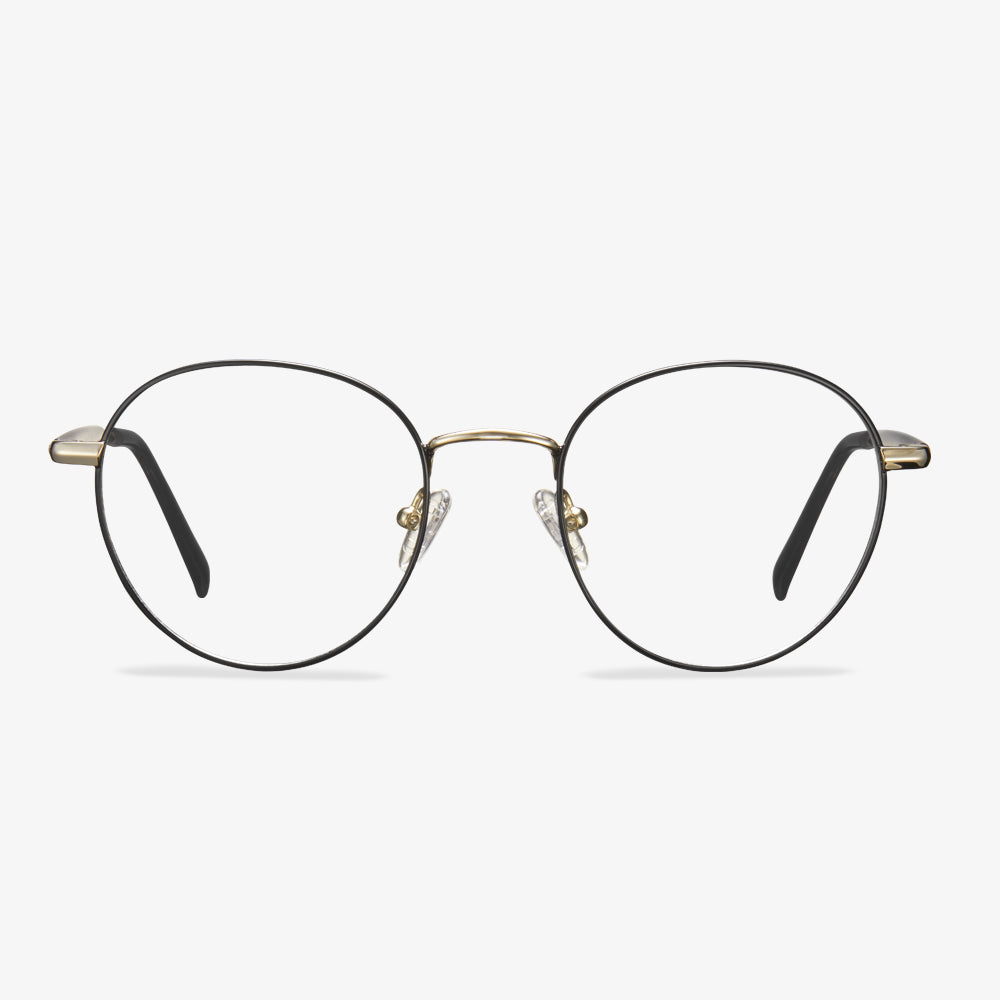










An acetate frame does not wear out evenly. The front, which looks like the important part, usually survives for years with nothing more than a polish. The parts that fail are small, hidden and predictable: the hinge, the wire inside the temple, the rivets that hold the hinge plate, and the surface where it meets skin and hair product.
Knowing the order in which things fail is useful for two reasons. It tells you what to inspect before you buy, and it tells you which two minutes of maintenance a month actually buys you a year of wear. Everything below applies to acetate specifically; the material background is in acetate versus plastic frames.
Failure one: the hinge, and why spring hinges last longer
Every time you take a frame off with one hand, the hinge on the other side takes a twisting load it was not designed for. A standard barrel hinge transfers that load straight into the screw and the acetate around it. A spring hinge absorbs the over-travel first, so the joint sees less of it. That is the entire practical argument for spring hinges, and it is why they matter more on an acetate frame than on a metal one: acetate is the material that has to be drilled to take the hinge.

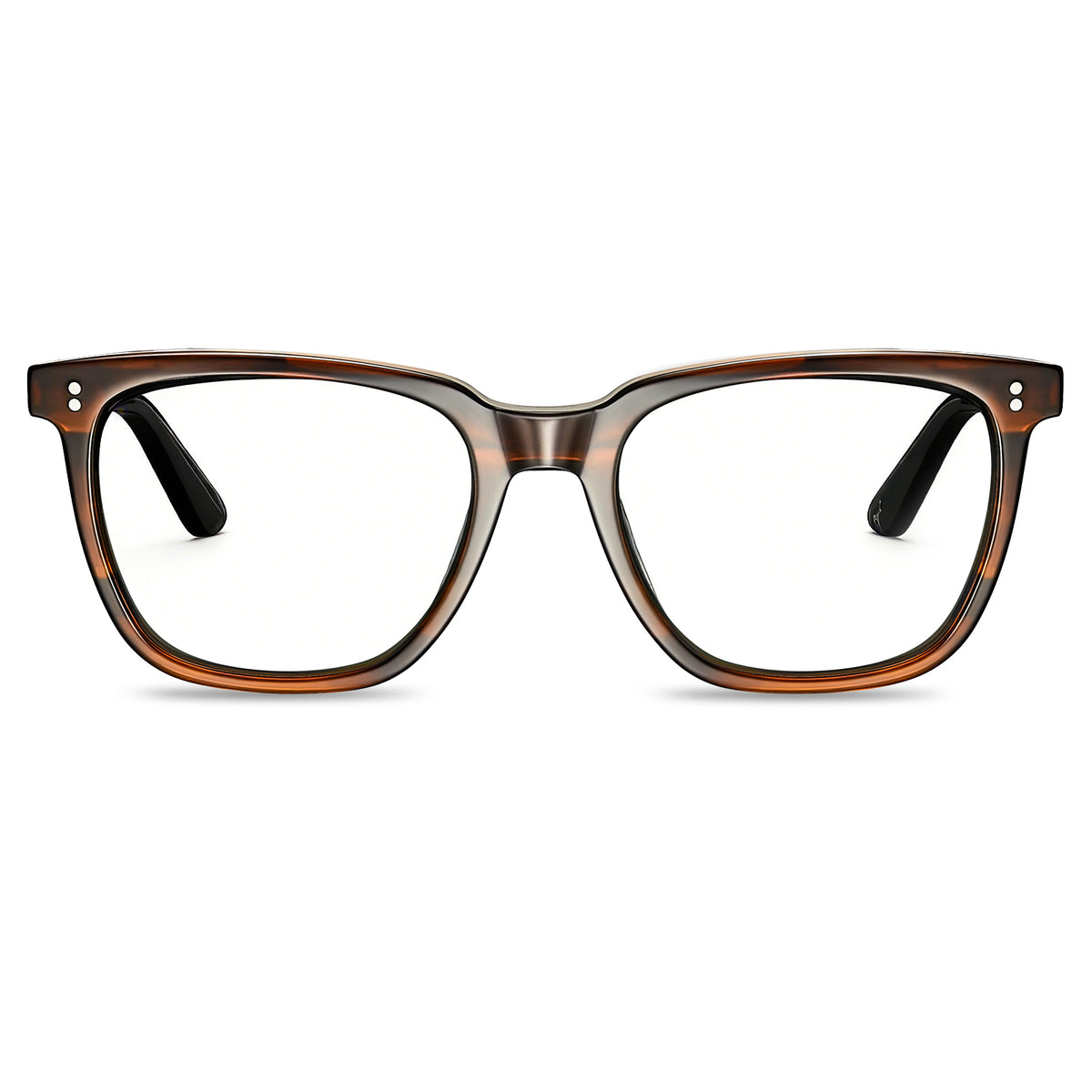
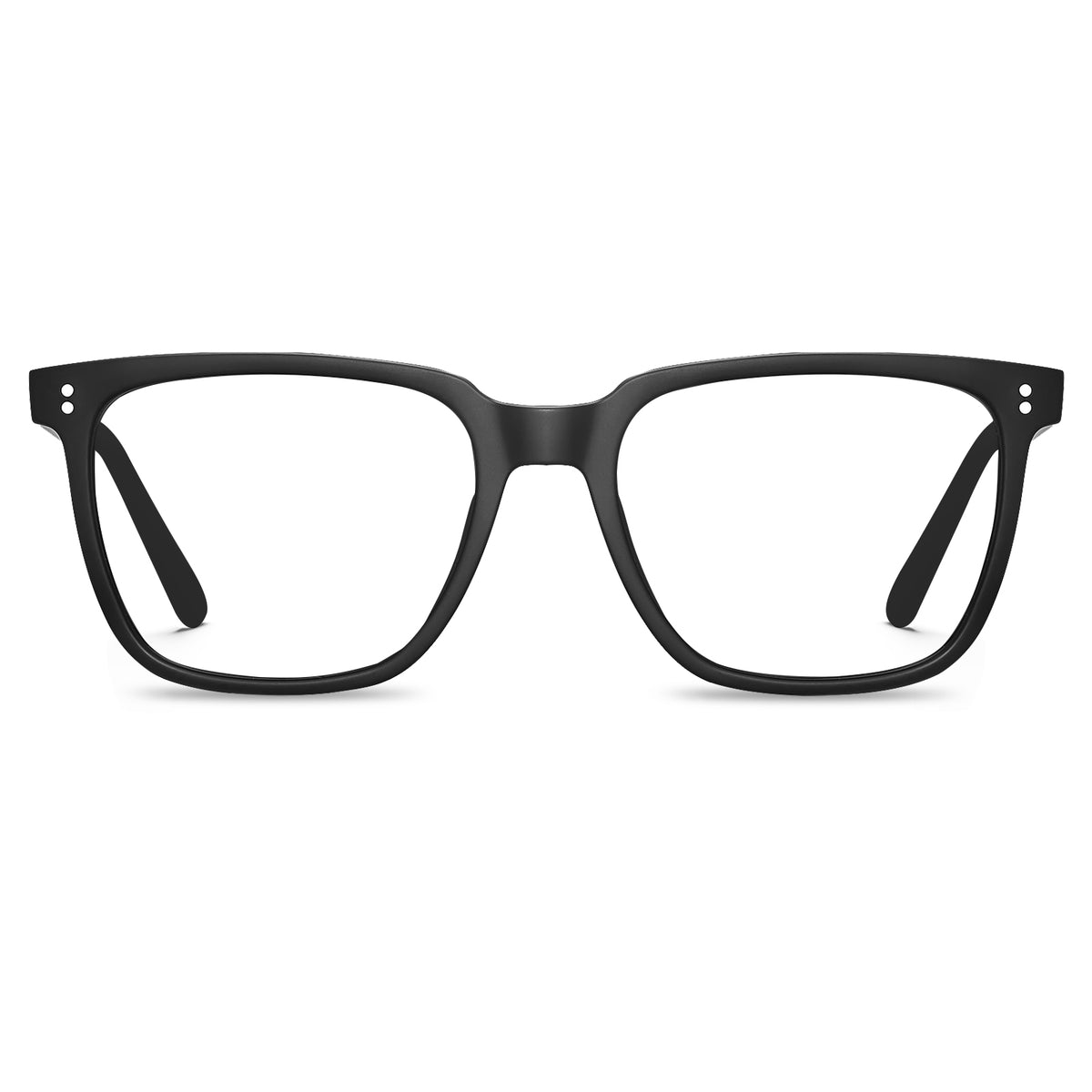
A 142 mm black acetate square with spring hinges and double-riveted hinge plates — 55 mm lens, 45 mm lens height, 17 mm bridge, matte finish.
Frame width 142 mm · Lens 55 × 45 mm · Bridge 17 mm
The double rivet is the second half of the same idea. Two rivets spread the load across two points instead of one, which is why a riveted plate loosens later than a single-screw joint. When you inspect a frame, look at the inside of the temple at the hinge: one screw means the acetate is doing all the work, two rivets or a plate means the hardware is helping.
Failure two: the temple, and the wire you cannot see
Most acetate temples have a metal wire core inside them. That core is what lets an optician bend the temple to your head without the acetate cracking, and it is also what eventually fatigues if the temple is bent in the same place repeatedly. You cannot see the core, but you can infer it: a temple that holds a curve after you bend it has one; a temple that springs straight back has less of one.
This is also why an acetate frame should never be adjusted cold. Heat softens the material enough for the core to move with it. Bent cold, the acetate either cracks at the bend or delaminates along the layers, and a lamination is exactly what most coloured acetate frames are.
Failure three: rivets and studs
Rivets work loose. It is not a defect, it is what happens when a metal pin sits in a material that expands and contracts with temperature. A loose rivet shows up as a faint rattle when you shake the frame gently, or as a hinge that has developed a millimetre of side-to-side play. It is also the cheapest thing on the frame to fix, which is why it is worth fixing early rather than waiting for the plate to pull through.

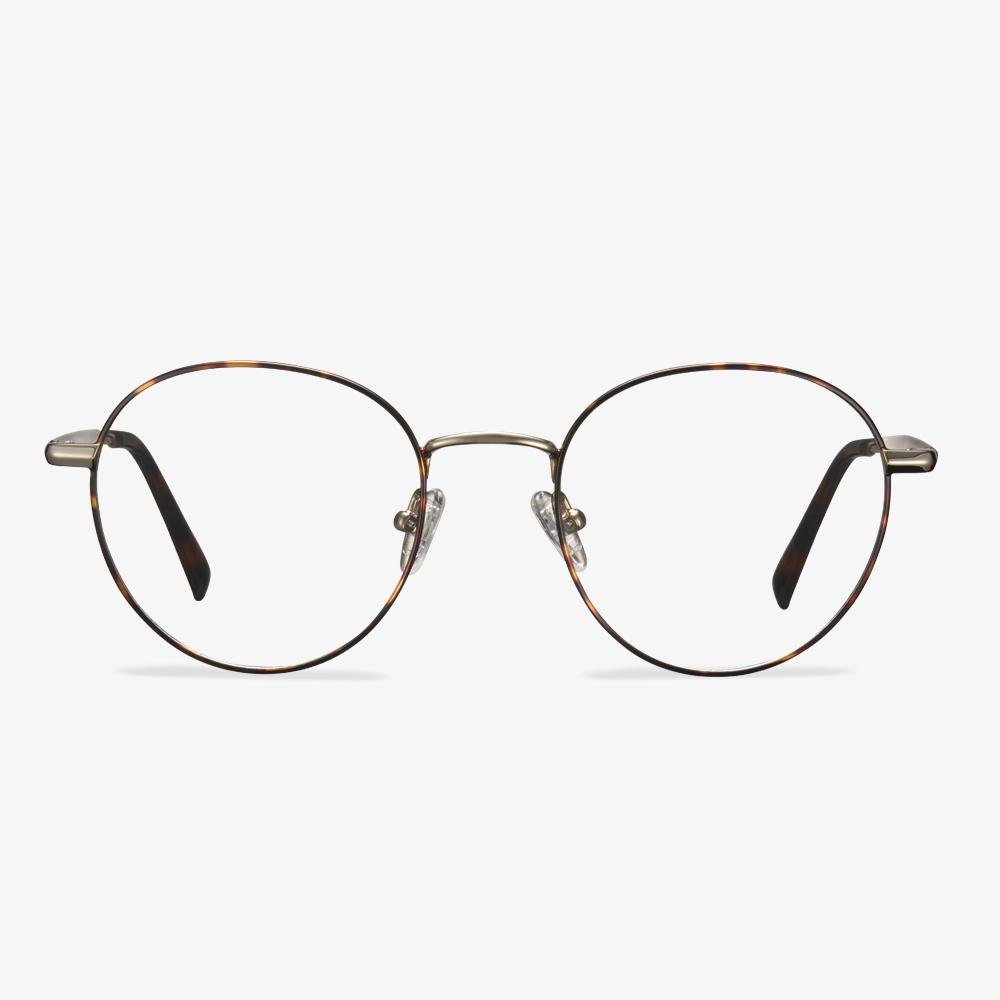
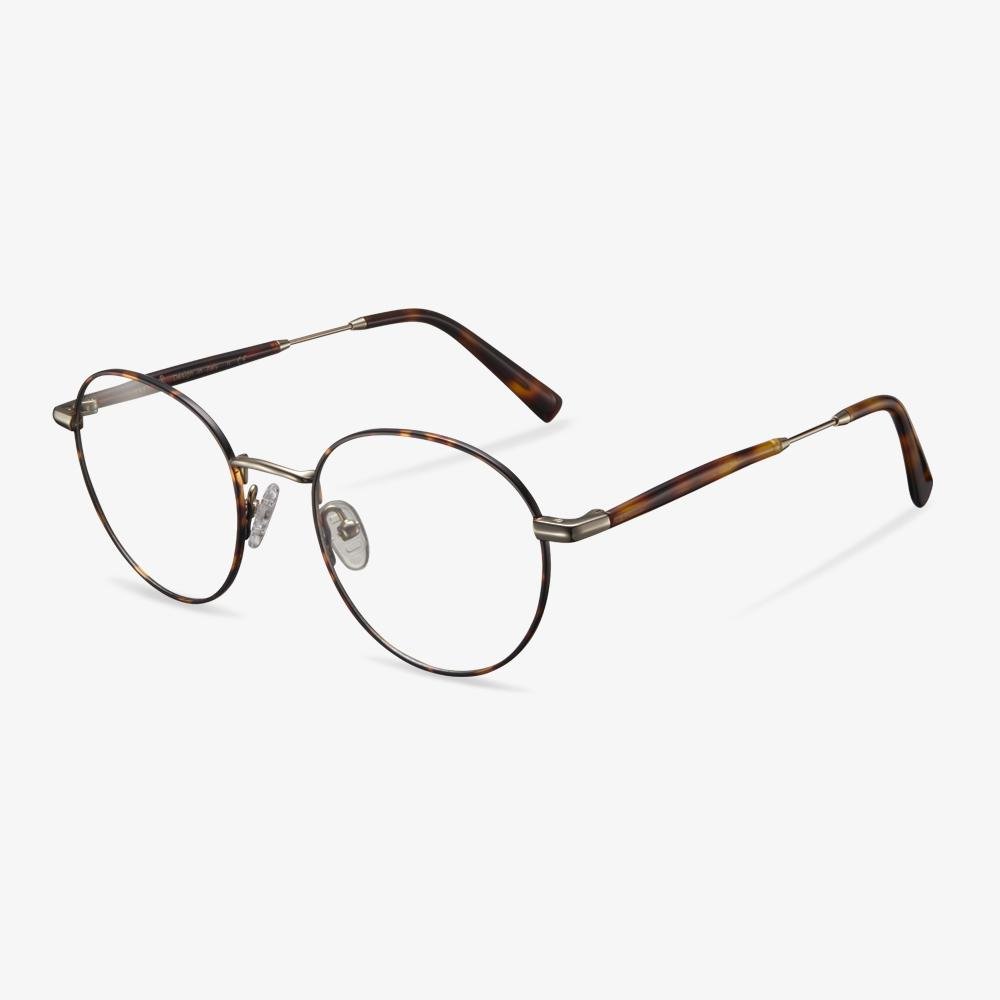
A 142 mm black acetate round with signature metal rivets and gold-tone temple accents — 50 mm lens, 43 mm lens height, 21 mm bridge.
Frame width 142 mm · Lens 50 × 43 mm · Bridge 21 mm
Temple studs — the rectangular pieces on the outside of the arm — are decorative hardware doing a structural job. On a frame with studs, check that they sit flush. A stud that has started to lift is telling you the temple has been flexed more than it should.

A 142 mm acetate rectangle with rectangular temple studs and flexible spring hinges — 54 mm lens, 41 mm lens height, 18 mm bridge.
Frame width 142 mm · Lens 54 × 41 mm · Bridge 18 mm
Failure four: the surface, which is mostly your fault
Acetate is polished, not coated, so it does not peel. What it does instead is dull and, in the worst case, craze — fine surface cracks that start where the frame has been exposed to heat or solvent. Two habits cause most of it: leaving the frame on a car dashboard in summer, and cleaning it with alcohol-based hand sanitiser or window cleaner.
- Clean with lukewarm water and a drop of washing-up liquid, then dry with the microfibre cloth that came with the frame.
- Never use hot water, alcohol, acetone or glass cleaner — all four attack the polished surface.
- Do not leave the frame on a dashboard, a windowsill or a radiator. Acetate softens before it looks soft.
- Store it in a hard case, not a bag. Most hinge damage happens in the two seconds a frame spends loose in a bag.
- Take the frame off with two hands. It is the single habit that most extends hinge life.
A frame that has gone slightly dull can be brought back by an optician with a proper polish. A frame that has crazed cannot — the cracks are in the material, not on it. That is the difference between maintenance and repair, and it is decided by how the frame was stored, not by how much it cost.
What “still fits” means after a year
Fit drifts. Acetate relaxes slightly with body heat, temples bend where they are pushed, and the frame that sat perfectly in November sits a little lower by the following autumn. A yearly check takes five minutes: put the frame on, look straight ahead, and see whether your eyes are in the upper half of the lens. If they are in the middle or below, the frame has settled and needs the temples re-curved.
This matters more with progressive lenses than with single vision, because the reading zone is at the bottom of the lens and a frame that has slipped puts the wrong part of the lens in front of your eye. A frame that has settled usually starts to press in a new place as well — if the symptom is a mark rather than a slip, how to get rid of glasses marks on your nose explains which adjustment to ask for. If you are about to order progressives, the lens choice is covered on our lenses page, and the frame measurement that makes it work is in how to measure frame size.
When to replace rather than repair
Three signals. A hinge that has been re-riveted twice and is loose again — the acetate around the plate has worn oval and will not hold. A temple that will not hold a bend after heating. And a frame that has been through a repair and now sits visibly off-centre on your face, which you will notice in photographs before you notice in the mirror.
Everything else is a repair: a rivet, a screw, a temple tip, a nose pad, a re-polish. Our frames carry a one-year warranty from delivery for manufacturing defects, and several listings include a longer replacement window for defects in the product page terms — worth reading on the specific frame rather than assuming.

A 145 mm square in Italian acetate at 29 g — 50 mm lens, 36 mm lens height, 25 mm bridge, full rim, tortoiseshell brown.
Frame width 145 mm · Lens 50 × 36 mm · Bridge 25 mm
The Arnect is a useful example of why a shallow lens ages better in a practical sense: less lens mass hanging off the front means less load on the hinge and less pressure on the bridge, so the frame keeps its original fit longer. A 36 mm lens height is on the shallow side, and on a strong prescription it is also the reason the edge stays short.

A 143 mm oversized square in brown tortoise Italian acetate at about 30 g — 57 mm lens, 50 mm lens height, 17 mm bridge, the heaviest frame in this article.
Frame width 143 mm · Lens 57 × 50 mm · Bridge 17 mm
The Matthew is the counter-example, and an honest one: 30 g with a 57 mm lens is a lot of frame, and it will ask more of the hinge and the bridge than a 20 g rectangle will. That is not a reason to avoid it — it is a reason to take it off with two hands and keep it in its case, which is the whole point of this article.
The care routine, in one paragraph
Wash it in lukewarm water when it looks dull, dry it with microfibre, keep it in a hard case, take it off with both hands, and have the temples checked once a year. That is the entire routine, and it addresses every failure mode above except the ones caused by heat. If you do only one of those things, do the case — most of the frames that come back damaged were damaged in a bag, not on a face.
If you are replacing a pair rather than repairing one, the same habits transfer to the new frame, and the material choices are laid out in acetate eyeglasses. For a lighter, more technical build, eyeglasses for men holds most of the larger frames, and the full range is in all eyeglasses. Whatever you choose, check the bridge width against the pair you are retiring — it is the number that decides whether the new frame will feel like the old one by week two.