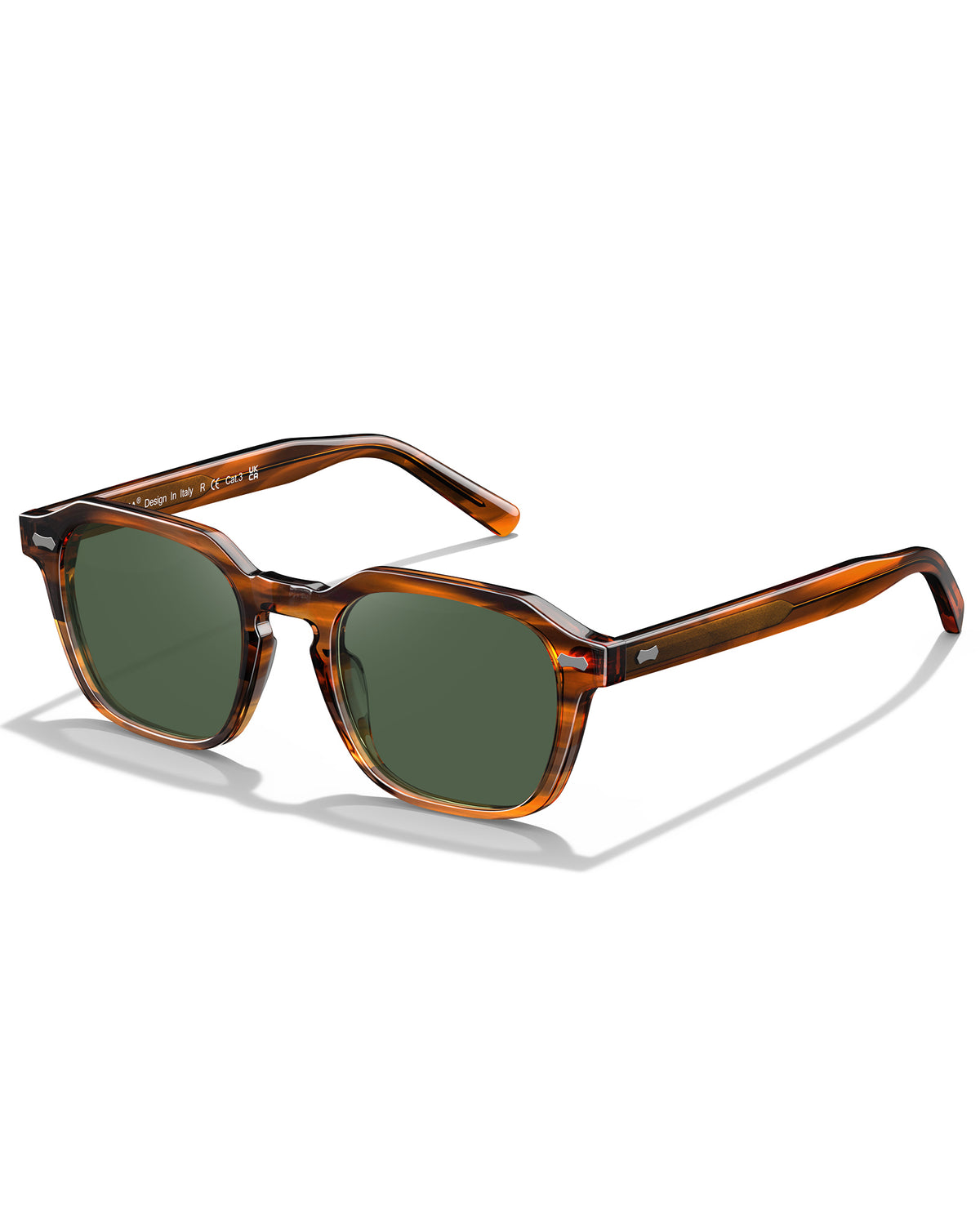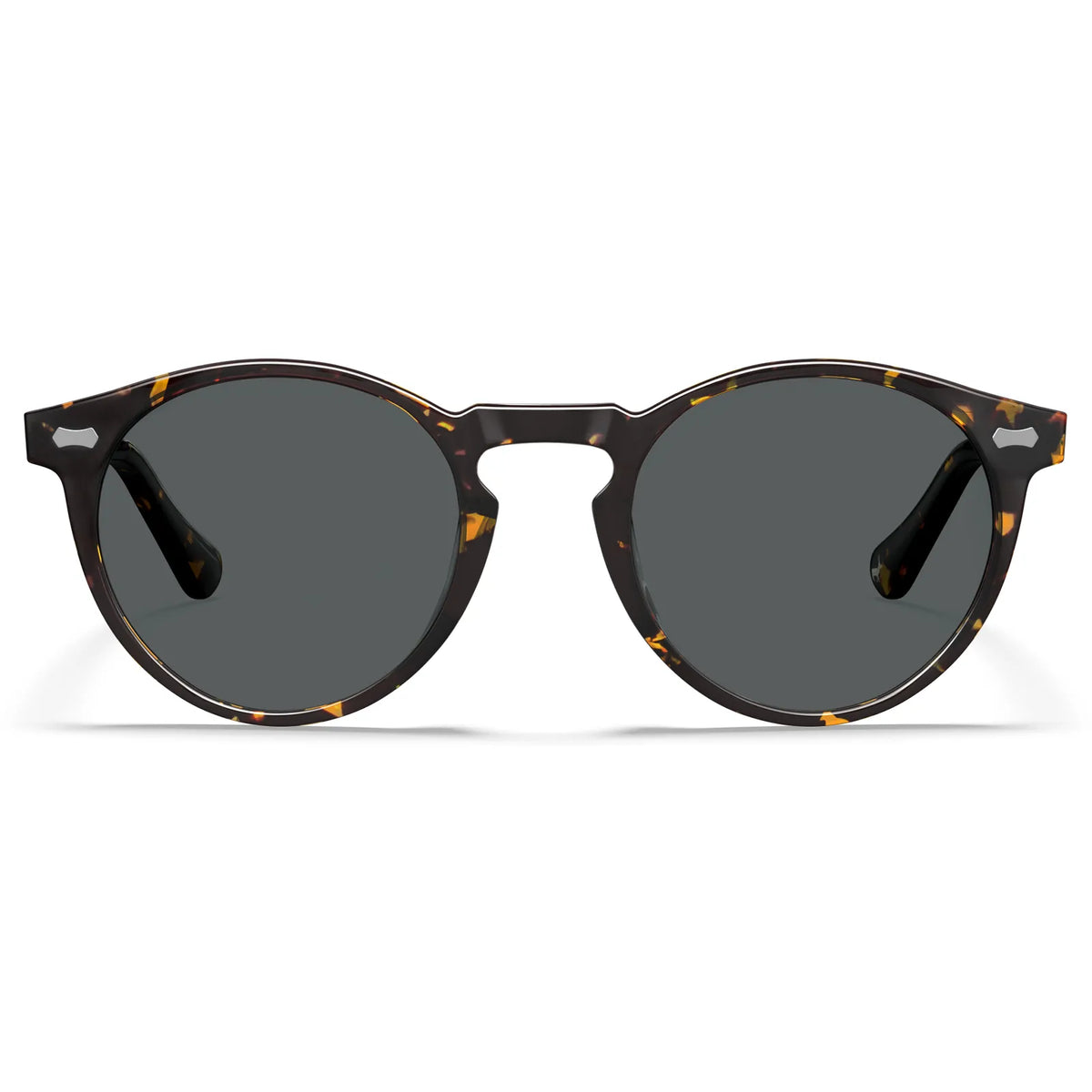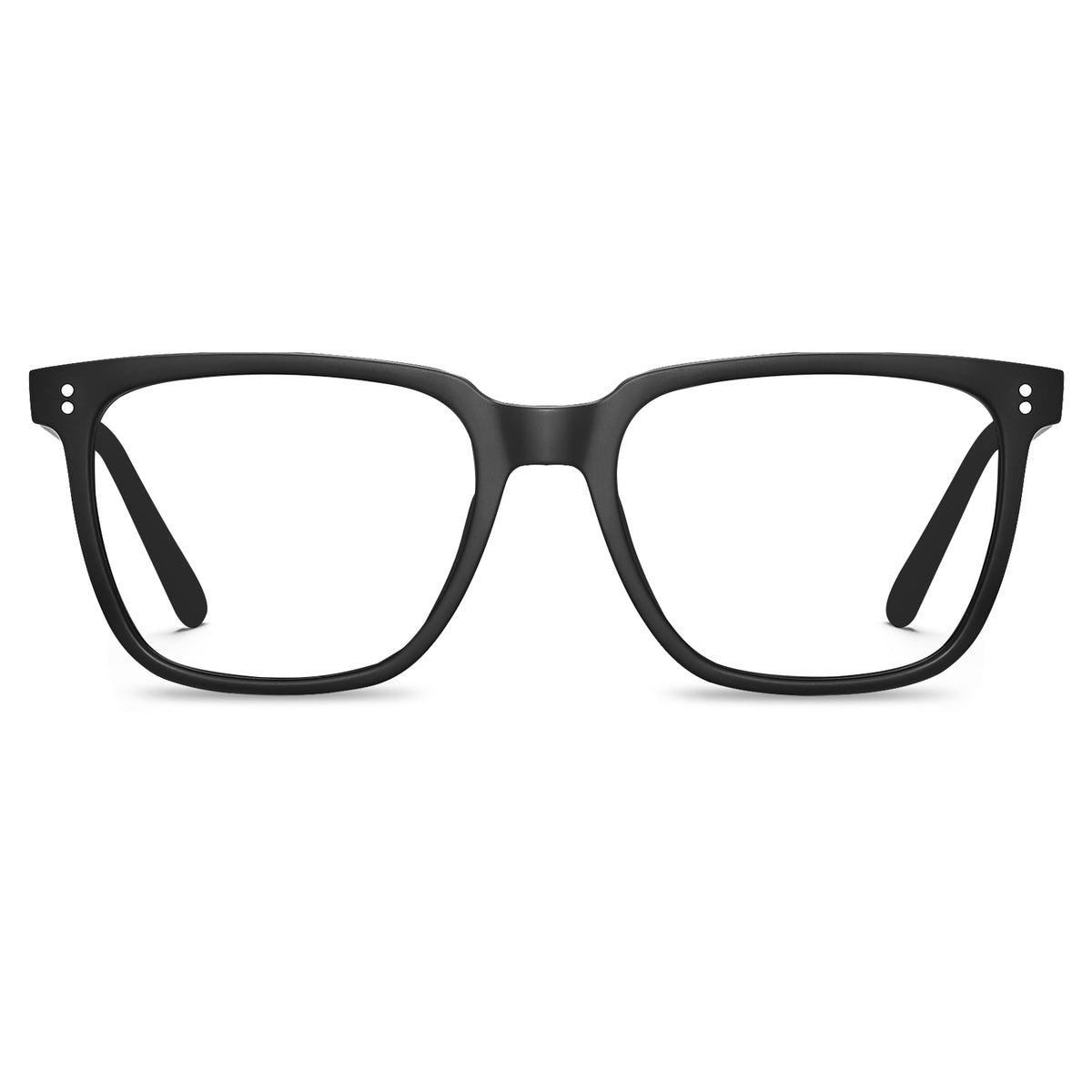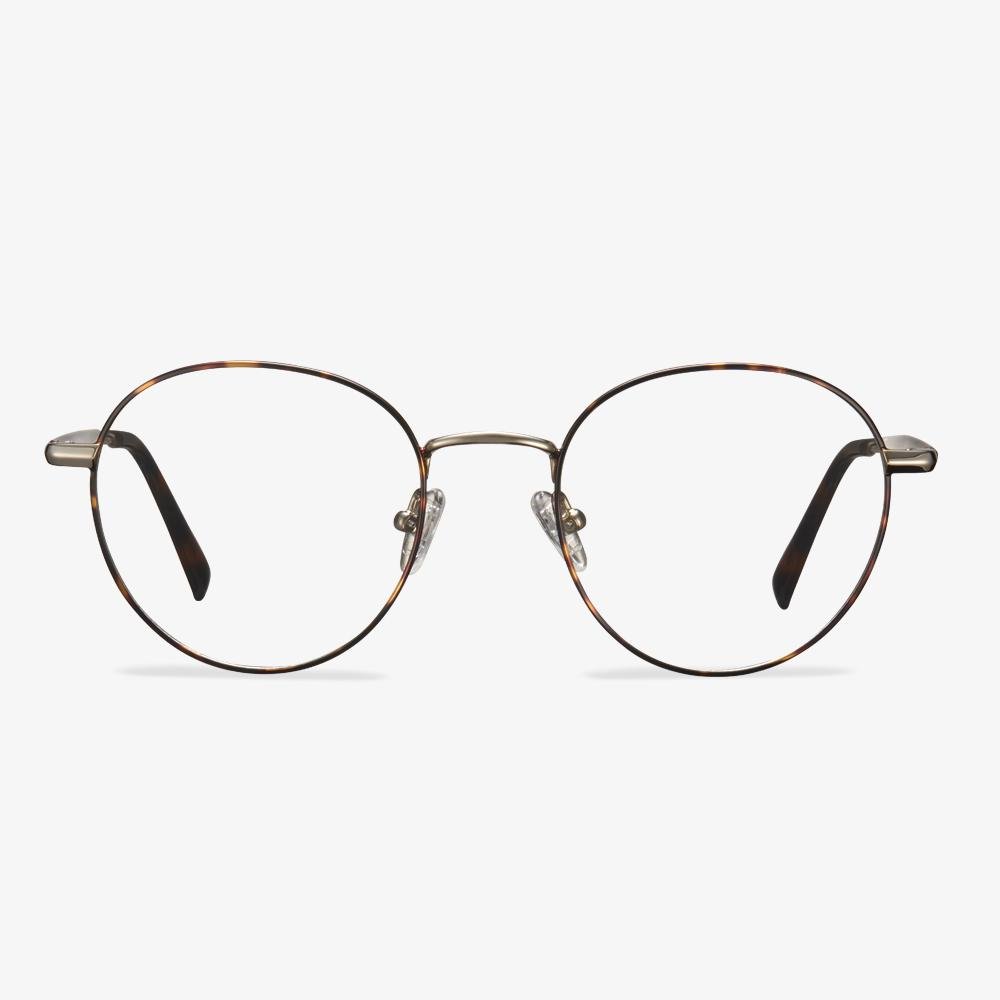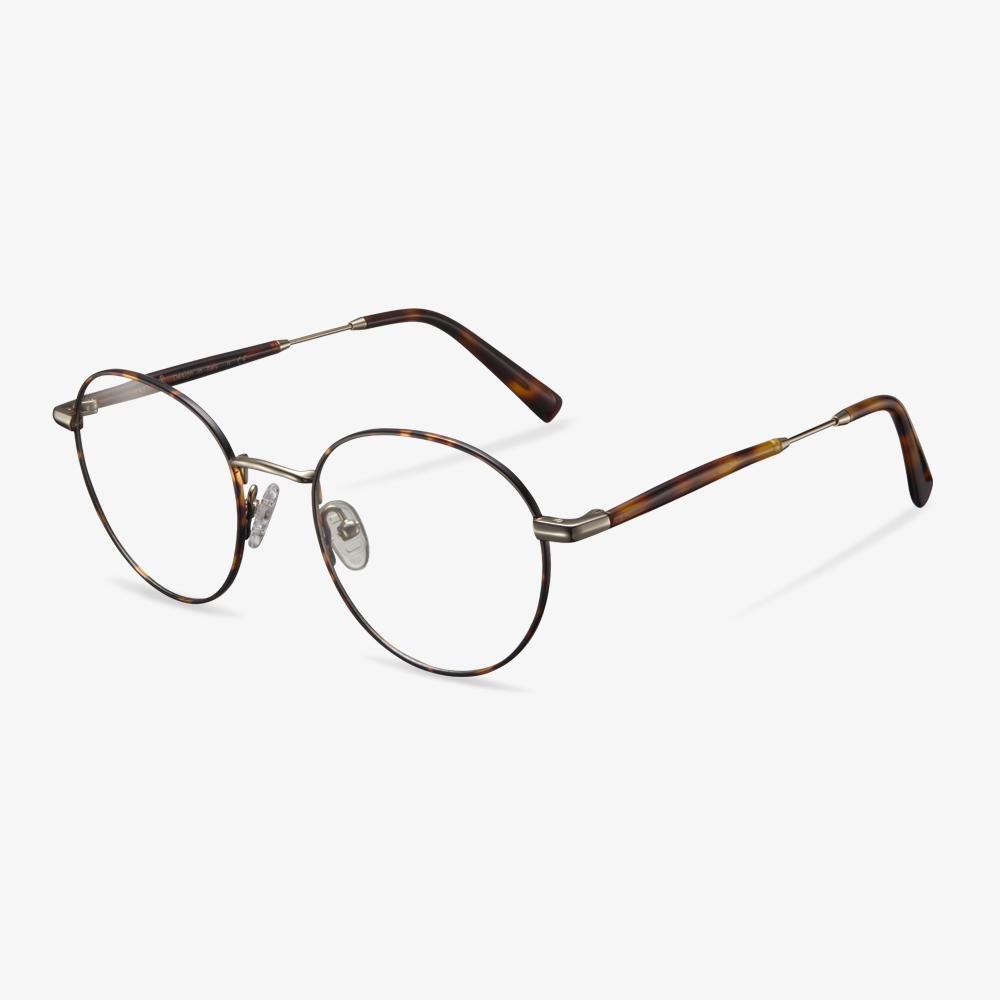








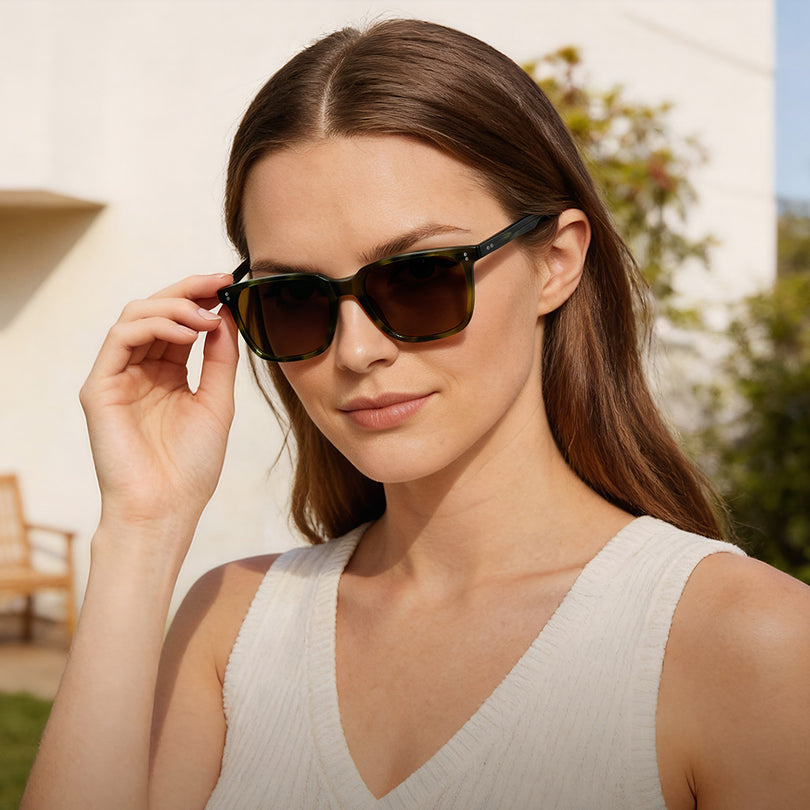



Finding glasses that fit isn't guesswork — it's geometry. Whether you're shopping for prescription eyeglasses, designer sunglasses, or blue-light-blocking frames, knowing your measurements means you'll never deal with frames that pinch, slide, or gap again.
Why Eyeglasses Size Matters
Ill-fitting frames cause more than discomfort. Frames that are too wide distort your vision through off-center lenses. Frames that are too narrow create pressure headaches. And for prescription wearers, even a few millimeters of misalignment can affect optical clarity.
The good news: measuring your eyeglasses size takes less than 5 minutes — and you only need to do it once.
Understanding the Eyeglasses Size Number System
Every pair of glasses has a 3-number size stamp printed on the inside of the temple arm. It looks like this:
52 □ 18 — 140
| Number | Measurement | What It Affects |
|---|---|---|
| 52 | Lens width (mm) | How wide each lens is |
| 18 | Bridge width (mm) | The gap between lenses, over your nose |
| 140 | Temple length (mm) | The arm that hooks over your ear |
💡 Carfia Tip: Most of our frames display these measurements on the product page. Match them to your current pair for a guaranteed fit.
Step-by-Step: How to Measure Your Eyeglasses Size
Step 1 — Measure Your Lens Width
What it is: The horizontal width of one lens, measured from the inner edge to the outer edge.
How to measure:
- Lay your current glasses face-down on a flat surface.
- Use a millimeter ruler to measure across one lens horizontally.
- Measure only the lens, not the frame border.
Typical range: 40mm–62mm. Most adults fall between 50–58mm.
Step 2 — Measure Your Bridge Width
What it is: The distance between the two lenses — the part that sits on your nose.
How to measure:
- Measure the gap between the inner edges of both lenses.
- This is the narrowest point of the frame front.
Typical range: 14mm–24mm. Most adults fall between 16–20mm.
A bridge that's too narrow pinches the nose; too wide and the glasses slide down constantly.
Step 3 — Measure Your Temple Length
What it is: The full length of the arm from the hinge to the tip that curves behind your ear.
How to measure:
- Open the temples fully.
- Measure from the hinge screw to the very tip of the arm.
Typical range: 130mm–150mm. Most adults use 140mm–145mm.
Step 4 — Measure Your Total Frame Width
What it is: The full width of the frame front, from hinge to hinge.
How to measure:
- Measure across the front of the frame at its widest point.
- This should roughly match the width of your face at the temples.
Typical range: 120mm–150mm.
💡 Face width tip: Measure your face from temple to temple (just above your eyebrows). Your frame width should be within ±5mm of this number for a balanced look.
Step 5 — Check Lens Height (Important for Progressive & Bifocal Lenses)
What it is: The vertical height of the lens, measured top to bottom.
Why it matters: Progressive lenses require a minimum lens height (usually 28mm–35mm) to fit all three vision zones. If the lens is too short, your reading zone gets cut off.
How to Find Your Face Shape (And Which Frames Suit You)
Your measurements tell you what fits — your face shape tells you what flatters.
| Face Shape | Characteristics | Best Frame Styles |
|---|---|---|
| Oval | Balanced proportions, slightly wider forehead | Almost any frame |
| Round | Full cheeks, similar width and length | Angular, rectangular frames |
| Square | Strong jaw, wide forehead | Round or oval frames |
| Heart | Wide forehead, narrow chin | Bottom-heavy frames, aviators, rimless |
| Oblong | Long and narrow | Wide frames, decorative temples |
Carfia Frame Size Guide
| Carfia Size | Lens Width | Bridge | Temple | Best For |
|---|---|---|---|---|
| Small | 48–50mm | 16–18mm | 135–138mm | Petite faces, children |
| Medium | 51–54mm | 18–20mm | 140–142mm | Most adults |
| Large | 55–58mm | 20–22mm | 143–148mm | Wider faces |
| XL | 59mm+ | 22mm+ | 148–150mm | Broad face width |
💡 If you're between sizes, go larger for sunglasses (more coverage) and smaller for prescription frames (better optical centering).
Measuring for Sunglasses vs. Prescription Glasses
Sunglasses prioritize coverage and style. A slightly wider frame is acceptable — even desirable for UV protection. Look for:
- Lens width: 54mm–62mm for full coverage
- Wraparound styles: check the base curve (4–8 is standard; 8+ for sport/wrap)
- Polarized lenses don't change fit, but lens height matters for glare protection below the eye line
Prescription glasses require precision:
- Lens width must center your pupil (your optician measures your PD — pupillary distance)
- Bridge width affects how the frame sits on your nose and how your PD aligns
- Progressive wearers: prioritize lens height ≥30mm
How to Measure Your Pupillary Distance (PD)
Your PD is the distance between the centers of your pupils. It's essential for prescription lenses.
DIY method:
- Stand 8 inches from a mirror.
- Hold a millimeter ruler against your brow.
- Close your right eye — align the ruler's 0 with the center of your left pupil.
- Open your right eye and close your left — read the number at the center of your right pupil.
Average PD: 54–74mm for adults. Children: 41–55mm.
Common Fit Problems & How to Fix Them
| Problem | Likely Cause | Fix |
|---|---|---|
| Glasses slide down | Bridge too wide or nose pads too loose | Try a narrower bridge; add silicone nose pads |
| Temples pinch | Temple length too short | Size up in temple length |
| Frames look too wide | Frame width exceeds face width | Go 5–10mm narrower |
| Lenses fog up | Frame sits too close to face | Adjust nose pads or try a higher bridge |
| Headaches after wearing | Frame too tight at temples | Gently bend temples outward or size up |
Quick Reference: How to Read Your Current Glasses Size
- Remove your glasses and look at the inside of one temple arm.
- Find the 3-number sequence (e.g., 54-18-140).
- Use those numbers as your baseline when shopping Carfia frames.
- Cross-reference with the table above to confirm your size category.
Frequently Asked Questions
Q: What is the standard eyeglasses size for adults?
A: Most adults wear a lens width of 50–56mm, bridge of 16–20mm, and temple length of 140–145mm.
Q: How do I know if glasses are too big for my face?
A: If the frame extends beyond your temples or the lenses sit below your eyebrows, the frame is too wide or too tall.
Q: Can I wear sunglasses with my prescription?
A: Yes. Carfia's prescription-compatible frames can be fitted with prescription lenses by your optician. Check each product page for lens height compatibility.
Q: What does "one size fits most" mean for sunglasses?
A: It typically means a medium-large frame (54–58mm lens width) designed to fit the majority of adult face widths.
Q: How accurate is measuring glasses at home?
A: Very accurate if you use a millimeter ruler and measure your current frames. The margin of error is typically ±1–2mm, which is within acceptable fit range.
Final Thoughts
The perfect pair of glasses starts with the right measurements. Once you know your lens width, bridge width, temple length, and face width, shopping online becomes as reliable as shopping in-store — sometimes more so, because you can compare exact specs side by side.
At Carfia, every frame listing includes full measurements, material details, and fit notes. We design for real faces — and we want yours to feel like these were made for you.
Questions about fit? Contact our team or use our virtual try-on tool.