








| Black Friday · Prescription Glasses |
| Black Friday window · Friday 27 – Monday 30 November |
Black Friday discounts land on the frame, but the frame is not what most people are unhappy with. The complaint is usually the lens: thick at the edge, heavy at the front, or a reading zone that never sat where it should. This article picks four frames for what they do to the lens rather than for how they look.
The window is Friday 27 to Monday 30 November. It is a reasonable week to replace a pair you have been putting up with since spring, provided you decide the lens first and the frame second — the order most people do it in is the reverse, and it is why a new frame can feel like the same pair.
What the frame does to the lens
Three frame measurements change the lens you end up wearing. Lens width and lens height decide how much lens there is to work with. Front width decides where the lens sits relative to your eye, which matters more as the prescription gets stronger. Bridge width decides how far apart the two lenses are, which changes how the edges are cut.
A smaller lens, a shorter bridge and a well-centred front all reduce edge thickness before any lens material is chosen. That is why the same prescription can look thin in one frame and thick in another, and why two people with identical prescriptions can pay for different lenses. If your prescription is above about −4.00, the high-index lens guide explains what the material adds on top of the frame choice.
The four frames, and the lens decision each one makes
One is a deep square built for a progressive, one is rimless and takes the opposite approach, one is a small round that reduces edge by removing lens area, and one is the newest square in the range. All four are in the Black Friday window.
|
Fri 27 Nov
Black Friday
The window opens. Every frame in this article is included.
|
Sat 28 – Sun 29
The weekend
The two quietest days to order, before the Monday rush.
|
Mon 30 Nov
Cyber Monday
The window closes. Orders after this are at standard pricing.
|
Early December
For gifting
Order in the first week of December; shipping runs 5–20 business days.
|
|
01
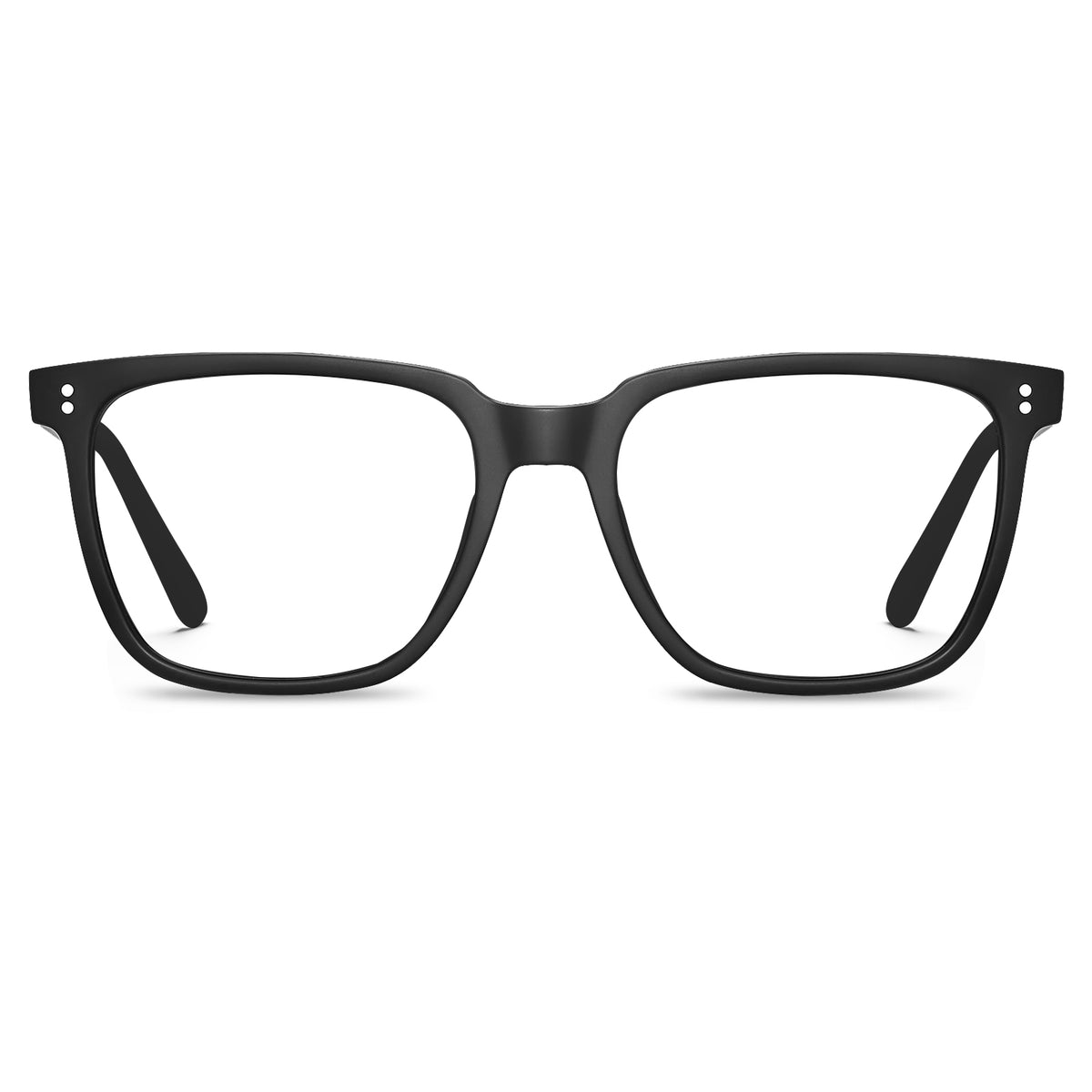
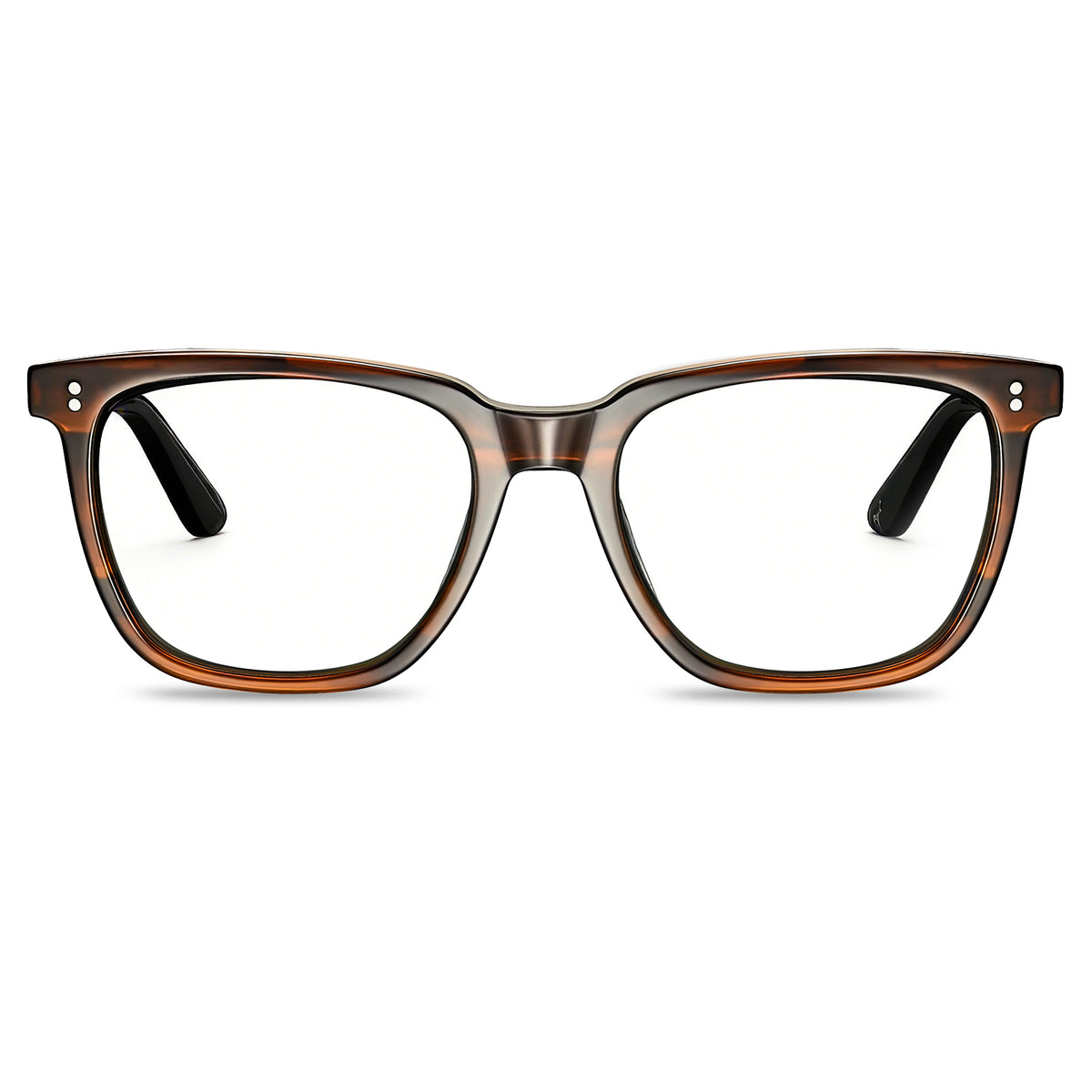
Architect-FC03
145 mm square · 43 mm lens · 28 g
|
02
Bonterey-FC09
Rimless oval · 34 mm lens · 18 g
|
03
AvonPaK-FC01
138 mm round · 45 mm lens · 28 g
|
04
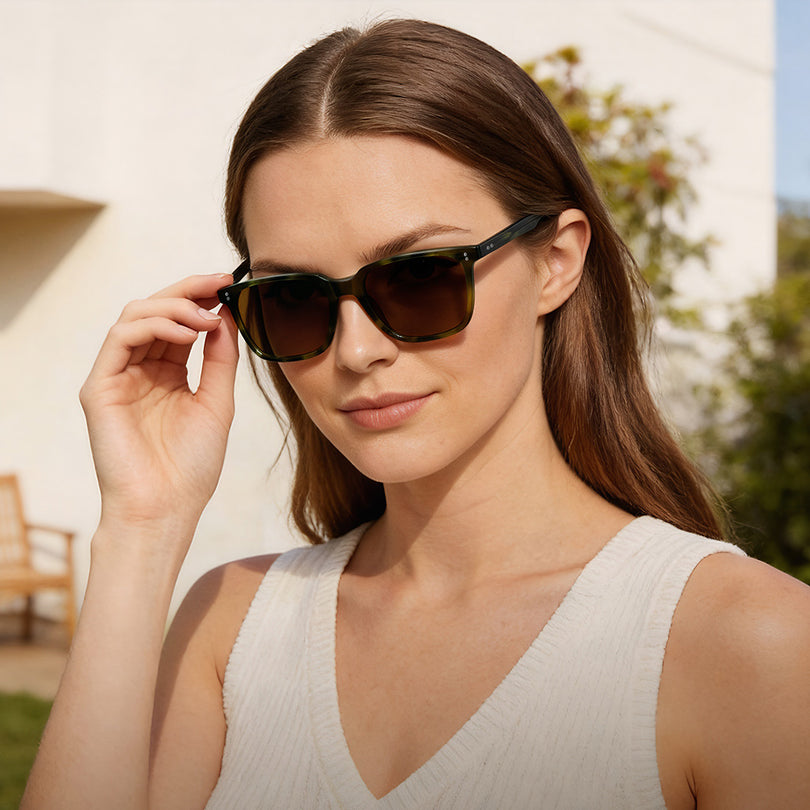
Milo-FC02
New · 142 mm square · 48 mm lens
|


How they compare on the lens
| Frame | Front | Lens W × H | Bridge | Weight | Lens decision |
|---|---|---|---|---|---|
| Architect-FC03 | 145 mm | 51 × 43 mm | 21 mm | 28 g | Depth for a progressive: 43 mm of lens height leaves room for the reading zone |
| Bonterey-FC09 | 136 mm | 53 × 34 mm | 20 mm | 18 g | Rimless and shallow: 18 g on the face, and an edge that is visible rather than hidden |
| AvonPaK-FC01 | 138 mm | 46 × 45 mm | 23 mm | 28 g | Small and deep: less lens area to cut, a wide bridge that keeps the front centred |
| Milo-FC02 | 142 mm | 48 × 42 mm | 22 mm | 28 g | The newest square: mid-size lens, so edge stays manageable in a normal prescription |
The rimless question
Bonterey is the outlier here and the most interesting frame in the group. At 18 g with no rim, nothing hides the edge of the lens — which is fine at a low prescription and very visible at a high one. It is also the lightest way to wear a pair all day, and the 34 mm lens height keeps the frame out of the field of view. If you have a strong prescription and want this look, choose a high-index material and accept that the edge will still be part of the design.
What the window changes for a prescription order
A prescription order is two purchases in one: a frame and a lens. The window moves the first and leaves the second alone, which is why the useful question is not 'which frame is reduced' but 'which frame lets me buy the lens I need'. A deep square that accepts a progressive without shrinking the reading zone is worth more than a shallow frame that happens to be the cheapest thing in the window.
The orders that go wrong are usually decided in the other order: the frame is chosen for how it looks on a model, the prescription is entered afterwards, and the lens that arrives has an edge nobody expected. Deciding lens material and lens height first takes about ten minutes and removes that outcome almost entirely.
What to decide before you order
- Read your prescription, not your old frame. The numbers on the last pair tell you what you tolerated, not what you need.
- Choose the lens, then the frame size. The lens page covers coatings and materials; progressive lenses covers what changes when you move from single vision.
- Check the lens height against how you use the pair. A shallow frame is fine for distance and awkward for reading; the frame measurement guide shows where that number is on the product page.
Ordering timing: lenses take 1–7 business days to process and shipping runs 5–20. A pair ordered in the Black Friday window has room before the holidays; a pair ordered after mid-December is a January arrival.
The frame is what people see. The lens is what you wear.
If you are replacing an older pair
Two frames here are the ones most often bought as replacements: Architect in tortoise and AvonPaK with its gold double bridge. Both are acetate, both are in the acetate eyeglasses collection, and both sit in the middle of the size range — Milo, the newest of the four, is in new arrivals this month. The lightweight eyeglasses page groups the frames under 25 g if weight is the reason you are replacing, and metal eyeglasses covers the thinner profiles.
For shape rather than lens, the square eyeglasses collection holds three of these four, and all eyeglasses is the full catalogue. If you are deciding between single vision and a progressive before you buy anything, single vision versus progressive is the honest comparison.