









“Combination frame” is one of the least useful terms in eyewear, because it describes a category rather than a construction. Two frames can both be called combination and share nothing: one has a metal front with acetate arms, the other has an acetate front with a metal bridge. They weigh differently, they break differently, and they fit differently.
This article separates the configurations we actually build, then looks at what the mix does to balance, hinge life and fit. It is the practical companion to the broader question of acetate versus plastic — here the question is not which material is better, but which part of the frame each one should be made of.
Configuration one: metal front, acetate temples
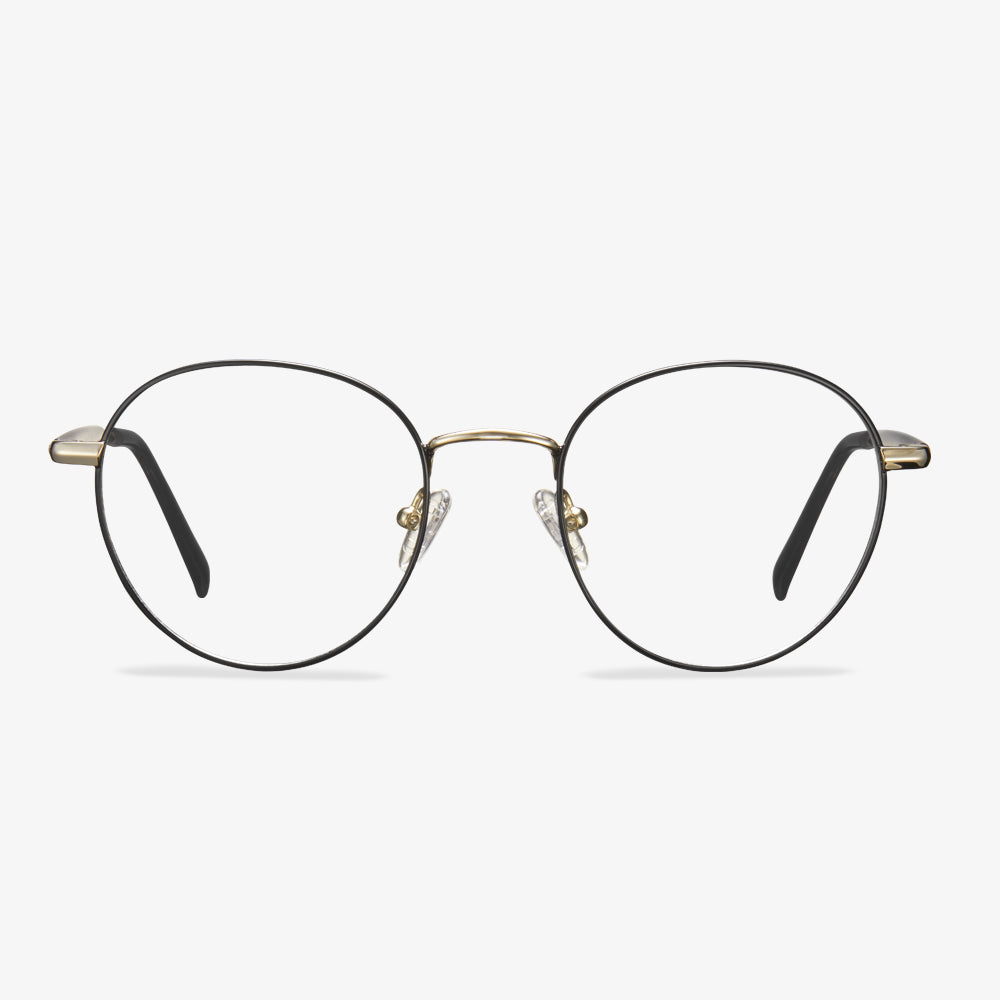
This is the classic combination, and it exists for a specific reason. The front is the part that has to hold the lens and stay rigid, so metal does that job with the least material — a millimetre of rim instead of five. The temples are the part that touches skin, absorbs sweat, bends to the head and gets pushed on and off a hundred times a week, so acetate does that job with the most comfort.

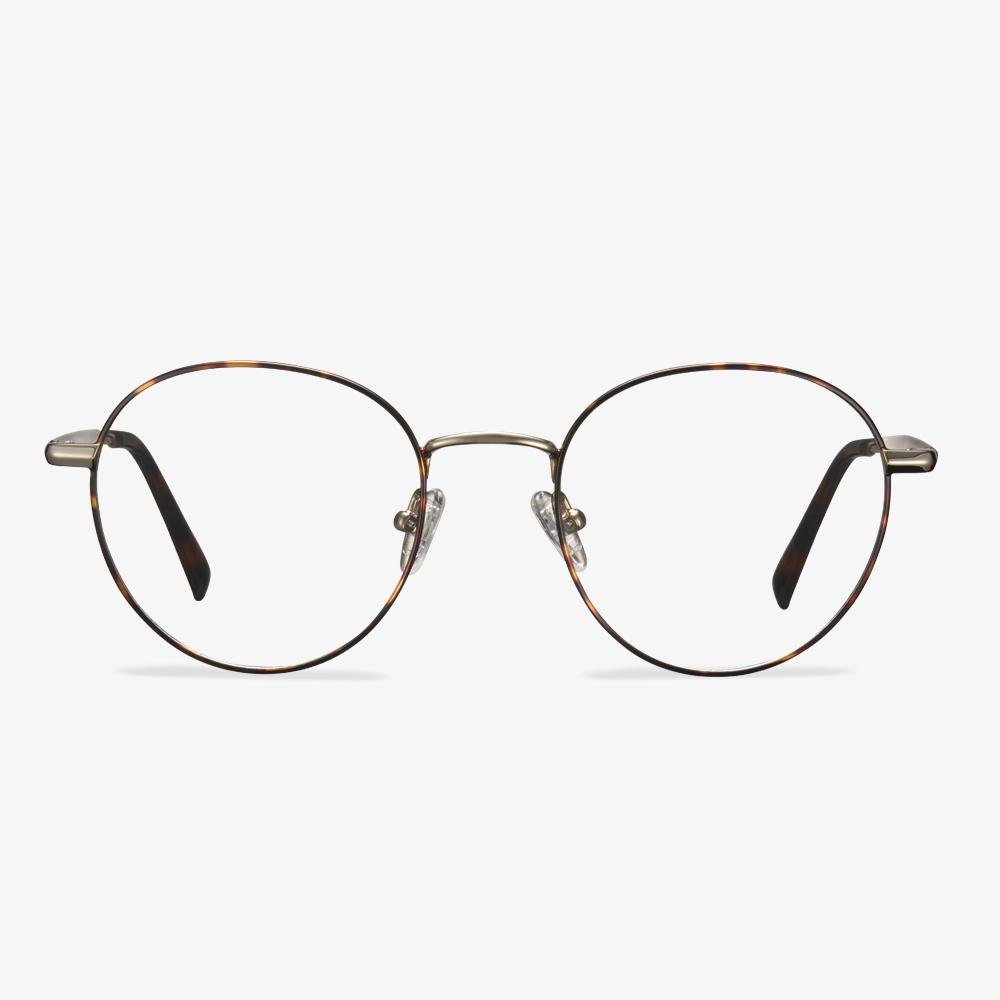
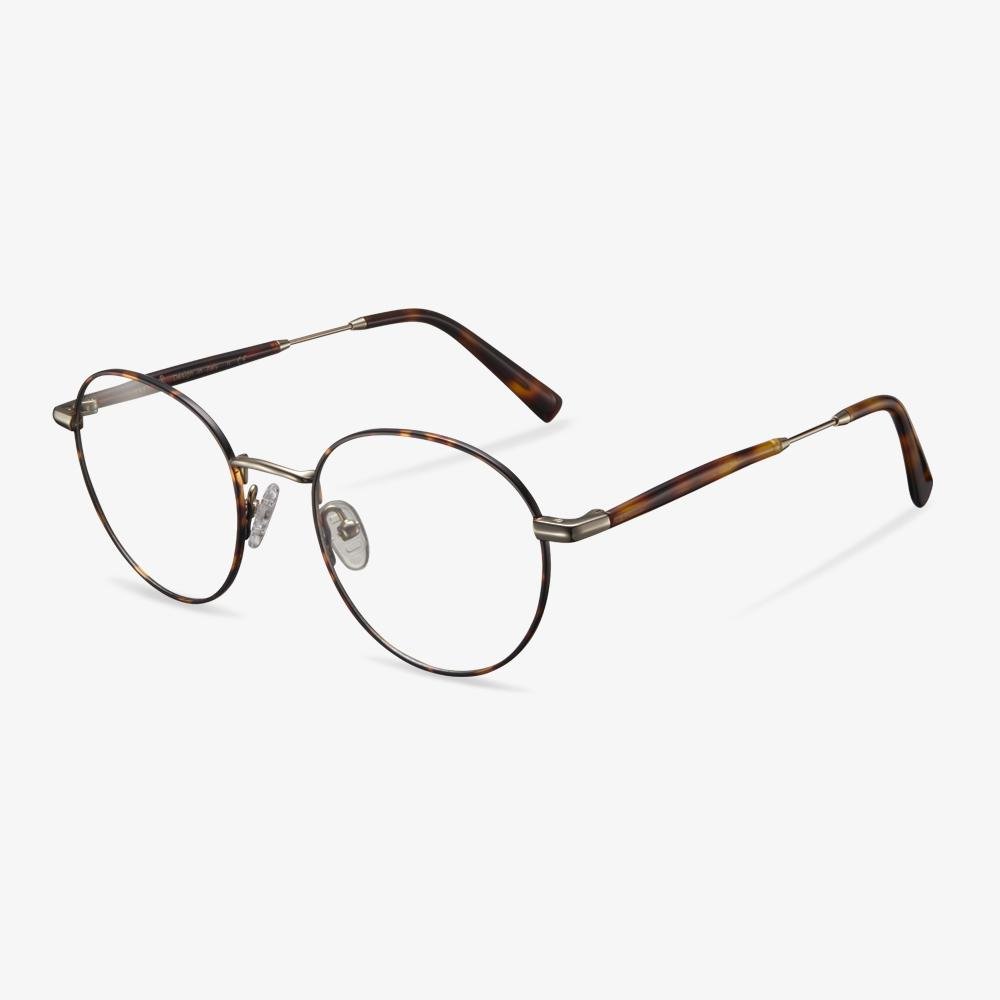
A 137 mm round at 18 g — metal front with tortoiseshell acetate temples, 49 mm lens, 20 mm bridge, 145 mm temple — the lightest full-rim build in this article.
Frame width 137 mm · Lens 49 mm · Bridge 20 mm
18 g for a full-rim frame is light enough that the weight argument for going rimless largely disappears. The tortoiseshell temples also do something a photograph cannot show: they warm the frame up against the face, so the thin metal front reads as deliberate rather than clinical.
Configuration two: acetate front, metal bridge
Here the logic reverses. The front stays acetate because the colour and the depth of the block are the point, and metal appears as a piece of hardware — most often a double bridge, where a thin bar sits above the moulded bridge. It is a decorative move, but not a meaningless one: the metal bar stiffens the bridge area, which is where a chunky acetate frame flexes most.

A 139 mm round in warm brown acetate with a gold-tone metal double bridge — 47 mm lens, 46 mm lens height, 24 mm bridge, 28 g, full rim.
Frame width 139 mm · Lens 47 × 46 mm · Bridge 24 mm
Two numbers on that card are unusual and worth understanding. The 24 mm bridge is wide, which suits a broader nose; the 46 mm lens height is the deepest in this group, which is what makes the double-bridge design legible — there has to be room above the lens for the bar to read as a bar. On a shallow front the same detail collapses into a line.
Configuration three: rimless metal with acetate arms
The third configuration removes the front rim entirely and keeps acetate only where it touches you. The metal bridge holds the two lenses, and the arms are acetate so the fit behind the ear is soft and adjustable. It is the lightest of the three, and the least forgiving of a thick lens, because nothing covers the edge.

A 136 mm rimless oval at 18 g with a polished gold metal frame — 53 mm lens, 34 mm lens height, 20 mm bridge, and a shallow lens that keeps the drilled edge small.
Frame width 136 mm · Lens 53 × 34 mm · Bridge 20 mm
If you are choosing a rimless frame with a prescription above about −4.00, the lens height is the number to watch. A 34 mm lens has less edge to polish and less mass hanging off two drill points than a 46 mm lens in the same power. It is the quiet reason small rimless frames look better on strong prescriptions than large ones.
The fourth case: metal as hardware, not structure
Not every mix changes how a frame carries load. Plenty of full acetate frames use metal for rivets, temple studs and hinge plates, and the metal is there to protect the acetate rather than to replace it. When a listing mentions “signature metal rivets” or “rectangular temple studs”, that is what it means: the load at the hinge is spread across a metal plate instead of a single hole in the material.

A 142 mm round in orange tortoiseshell acetate with signature metal rivets at the hinges — 50 mm lens, 43 mm lens height, 21 mm bridge, full rim.
Frame width 142 mm · Lens 50 × 43 mm · Bridge 21 mm
The Dublin is a good test of whether you actually want a combination frame or just want visible hardware. The construction is fully acetate; the rivets are the only metal on the front. If what you liked about a combination frame was the little bit of gold at the corner, this gets you there without giving up the deep rim.
What the mix does to balance
Hold a combination frame by one temple and let it hang. A metal front with acetate arms will usually hang almost level, because the front is light and the arms carry the mass at the back. A chunky acetate front with thin metal temples will dive forward. Neither is wrong — but the frame that dives forward is the one that slides down the nose by lunchtime, and the frame that hangs level is the one that stays put.
This is why the published weight of a combination frame tells you less than you would expect. Two frames at 20 g can behave completely differently depending on whether that mass sits in the front or in the temples. The 25 g acetate square below is a useful reference point: it is heavier than either metal-front frame in this article, and it is also the most stable of the three on a wide face.

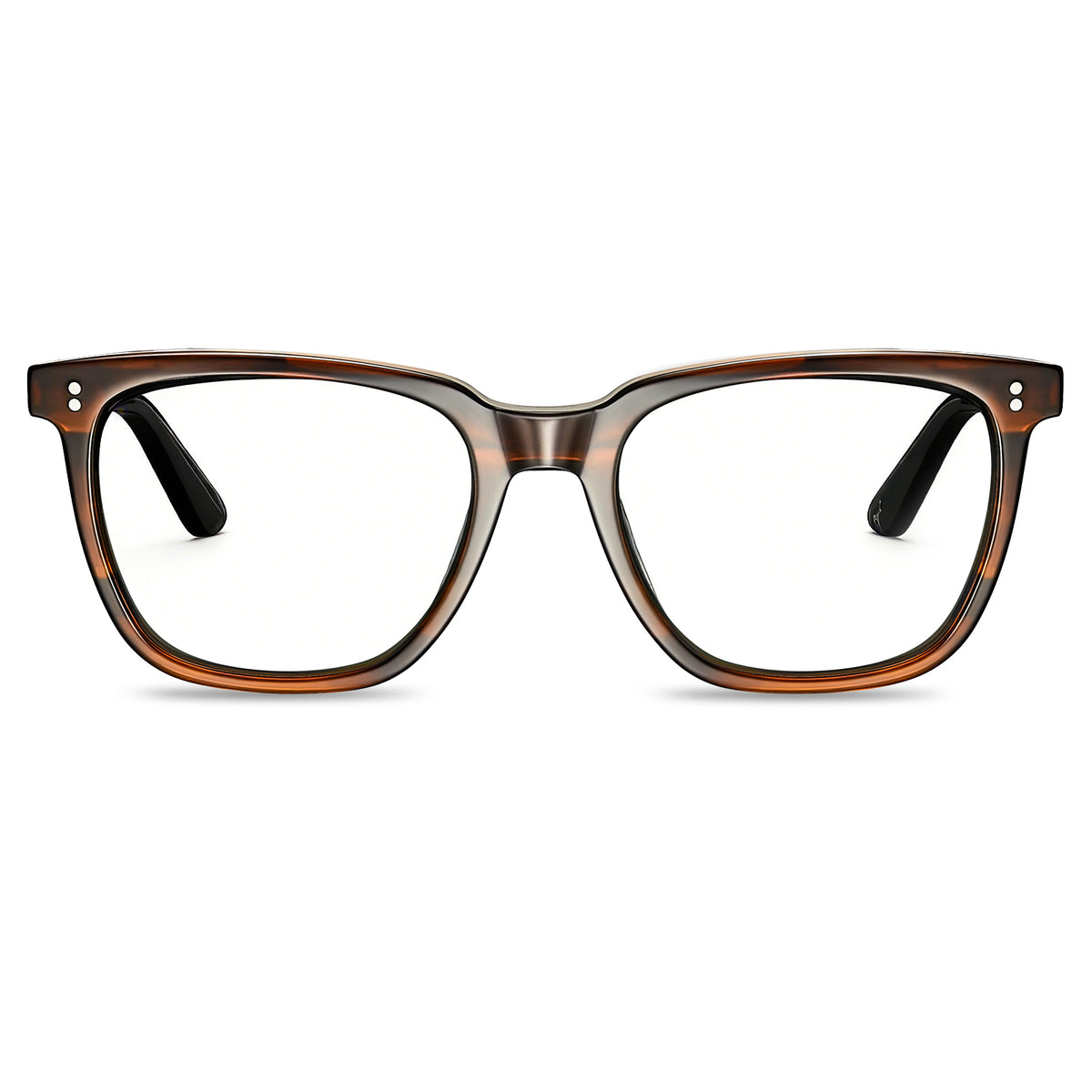
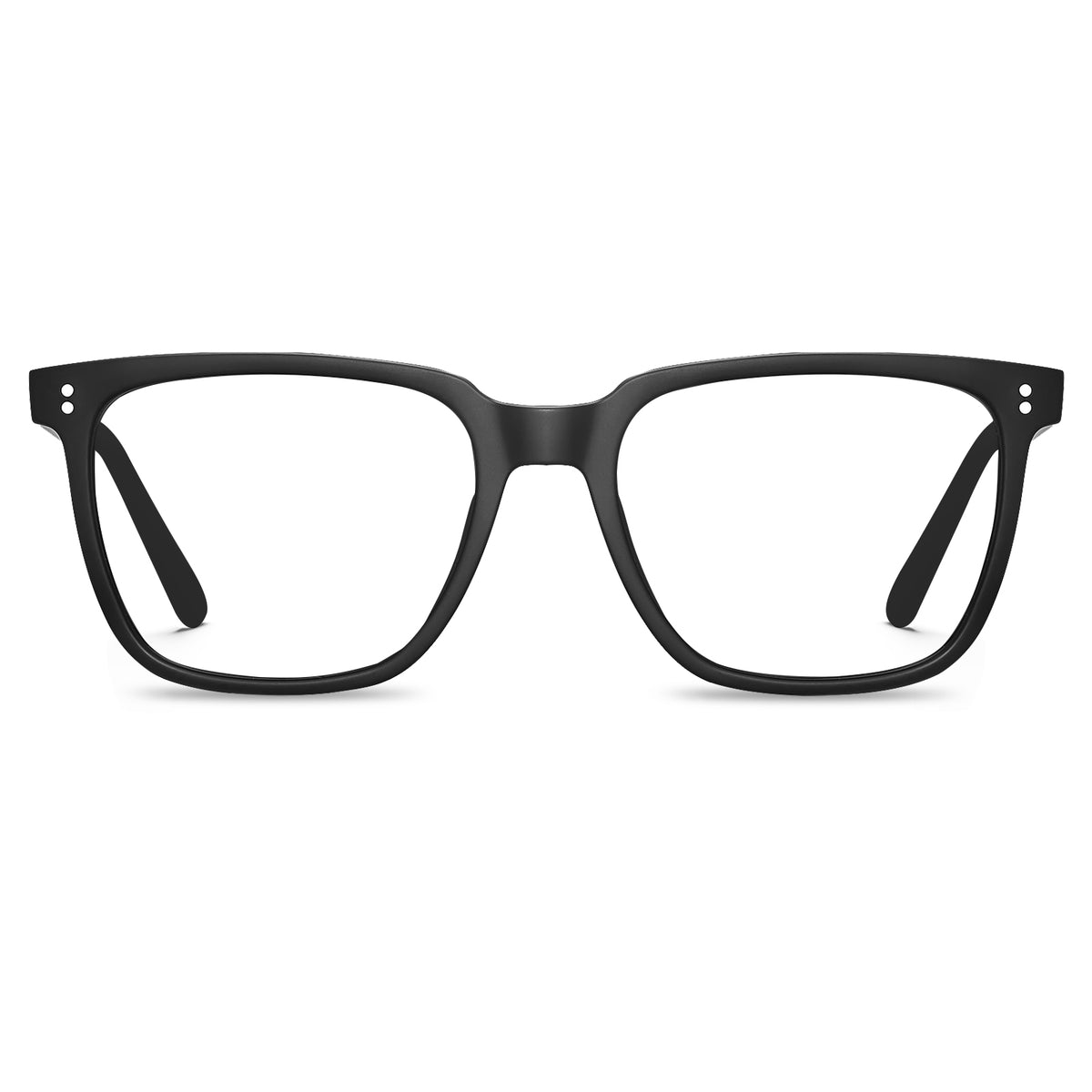
A 140 mm retro square in full-rim acetate at 25 g — 50 mm lens, 43 mm lens height, 19 mm bridge, blue colourway.
Frame width 140 mm · Lens 50 × 43 mm · Bridge 19 mm
The two places combination frames actually fail
The first is the joint where the two materials meet. Metal and acetate expand at different rates and flex differently, so the temple screw or the hinge plate is where a combination frame loosens first. Spring-loaded hinges help a great deal here, because the spring absorbs the over-travel that would otherwise be transferred into the joint every time you pull the frame off with one hand.
The second is fit. A combination frame is harder to adjust than either pure material, because the optician is working with two different behaviours on the same frame: the metal front can be bent, the acetate temple has to be heated. Ask for both to be checked at the same appointment, not one at a time. If you are between sizes and need a real adjustment rather than a nudge, start from how to measure frame size so you bring the right numbers to that appointment.
Who a combination frame suits
It suits the person who wants a thin-looking frame but not a cold one, and the person whose prescription is moderate enough that the lens edge does not need hiding. It also suits anyone who has had a metal frame leave marks and an acetate frame feel heavy: the hybrid takes the pressure off the nose and puts a softer material behind the ear.
It suits less well if your prescription is strong. In that case a deep acetate rim gives you the cover a thin metal front cannot, and the difference in weight is smaller than the difference in how the lens looks from the side. If your face is narrow, the same logic applies in a different dimension — frames for small faces explains why a 137 mm front is often the better starting point than a 145 mm one.
Where to compare
The fastest comparison is the same silhouette in both directions. Open metal eyeglasses and look at the round frames, then open acetate eyeglasses and look at the same shape. The difference in rim depth is obvious in a thumbnail, and rim depth is the variable that decides whether the frame reads as a line or as a block.
If the frame is going to be worn with colour — warm tortoise, translucent, or a metal bridge over a coloured front — the softer palette in eyeglasses for women is where most of the combination builds sit, regardless of who ends up wearing them. And if you are still unsure which silhouette to put the material on, frames for face shapes will narrow it to two options before you start comparing construction.
The summary worth keeping: a combination frame is not a compromise between two materials. It is a decision about which part of the frame each material is best at — metal for the front’s rigidity, acetate for everything that touches you.