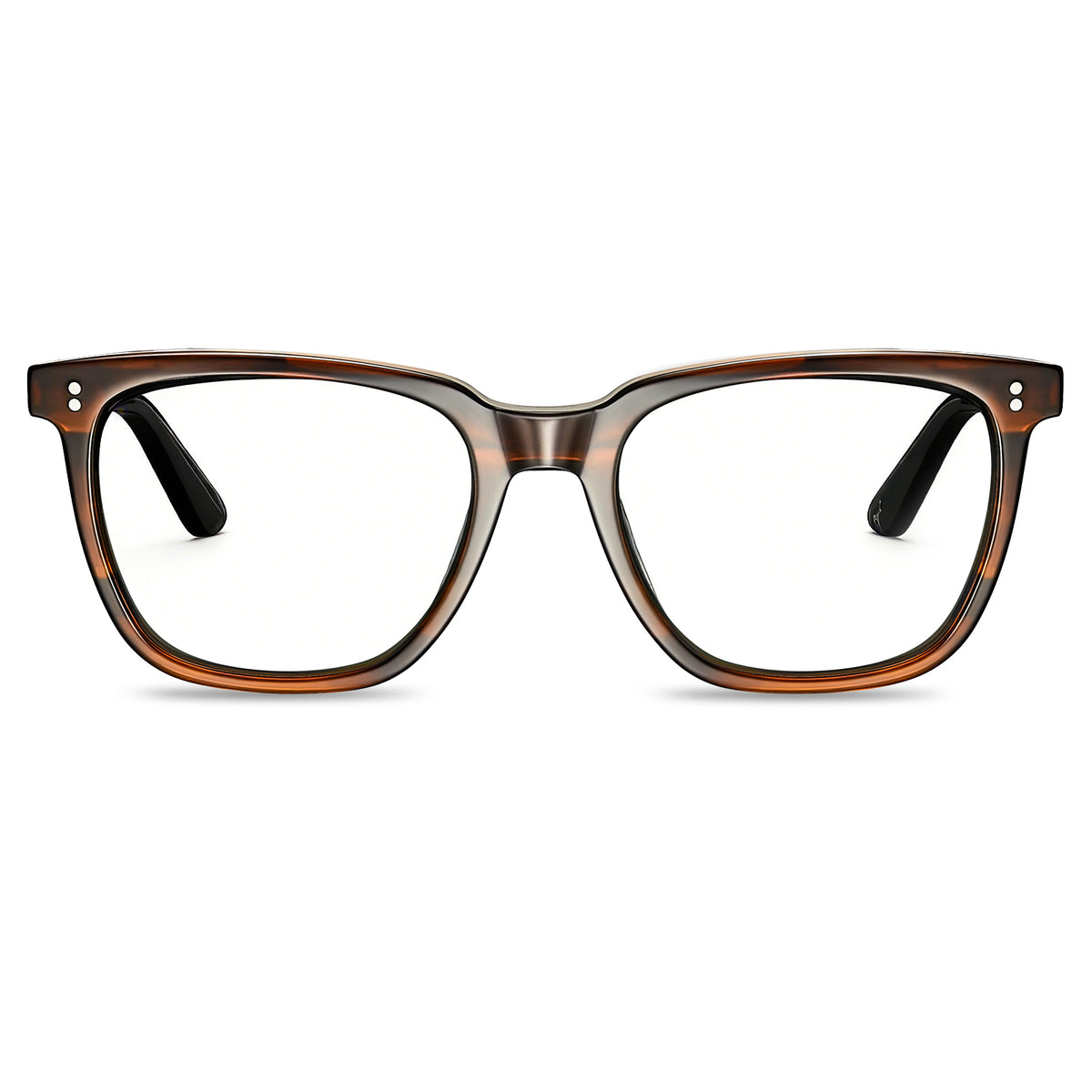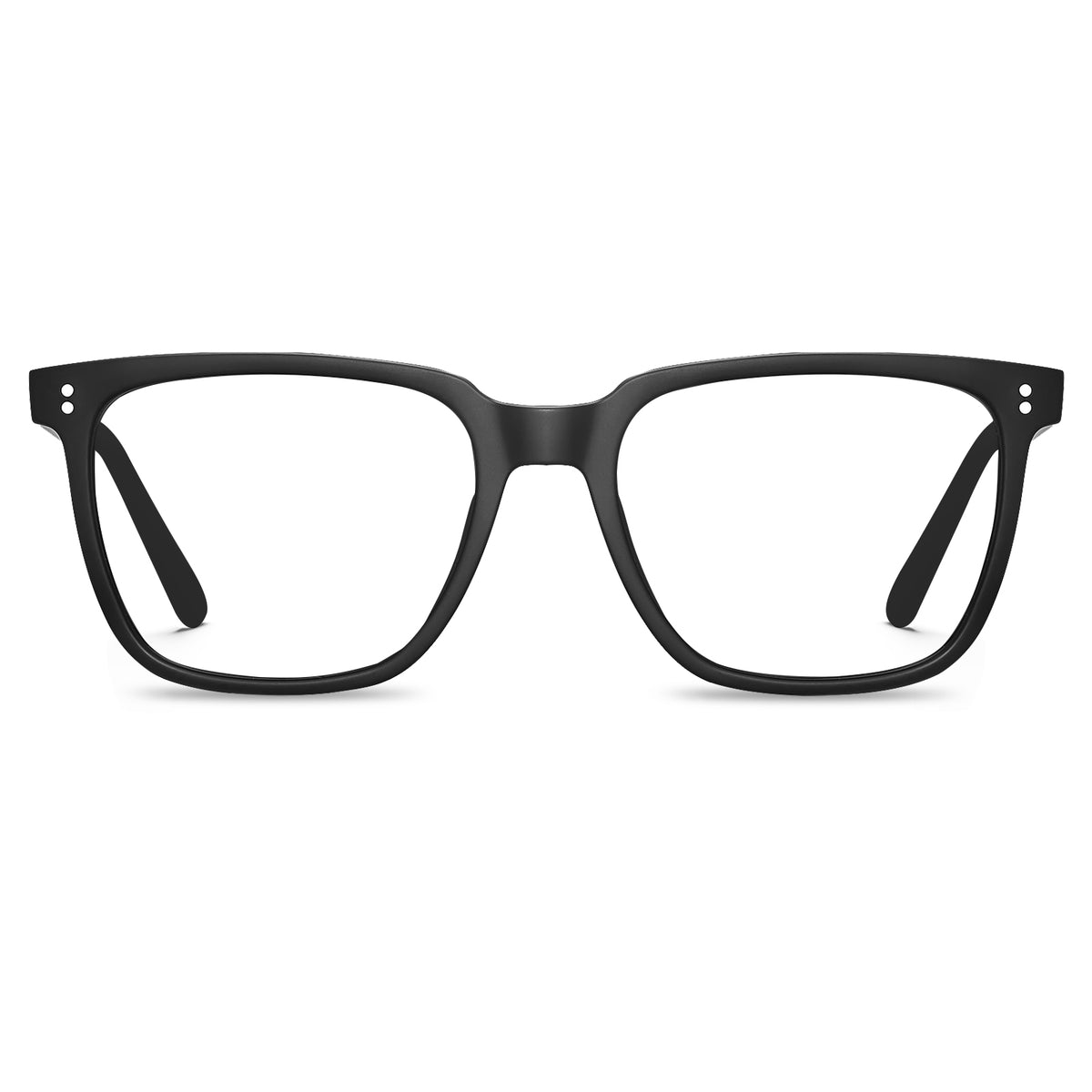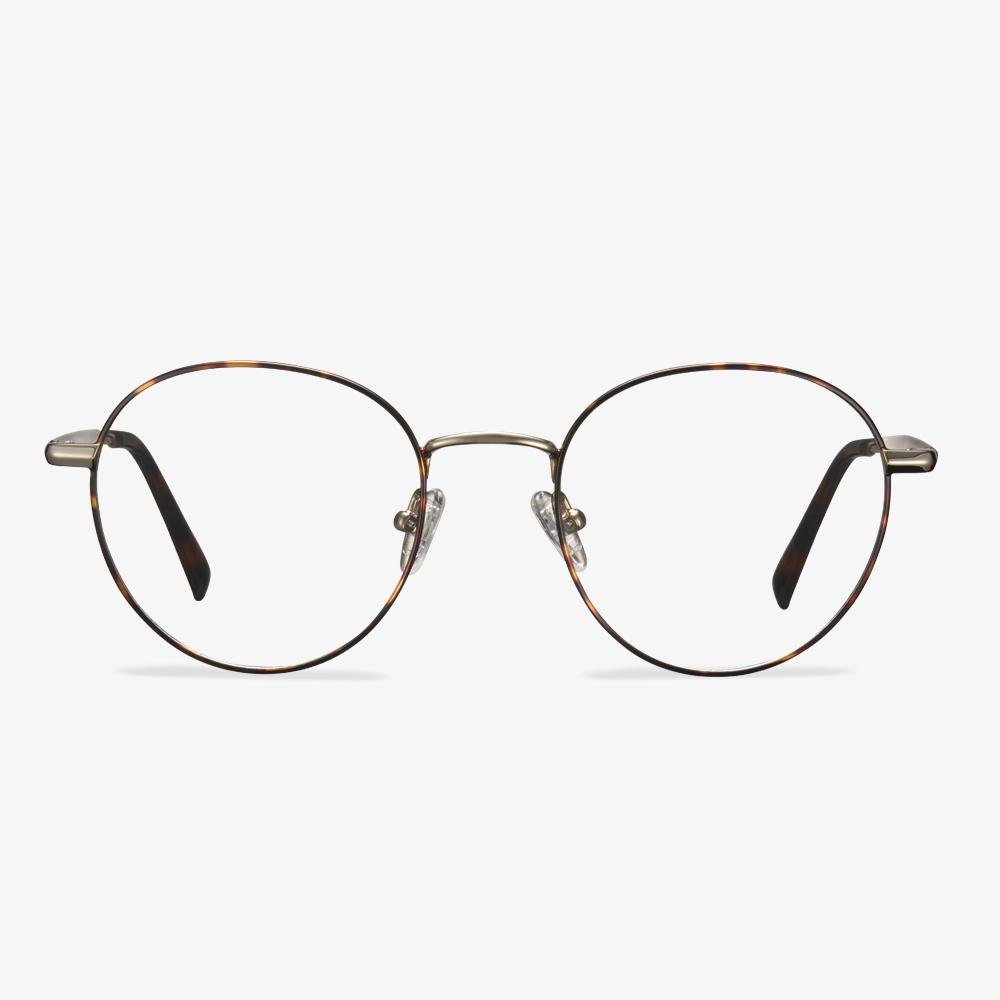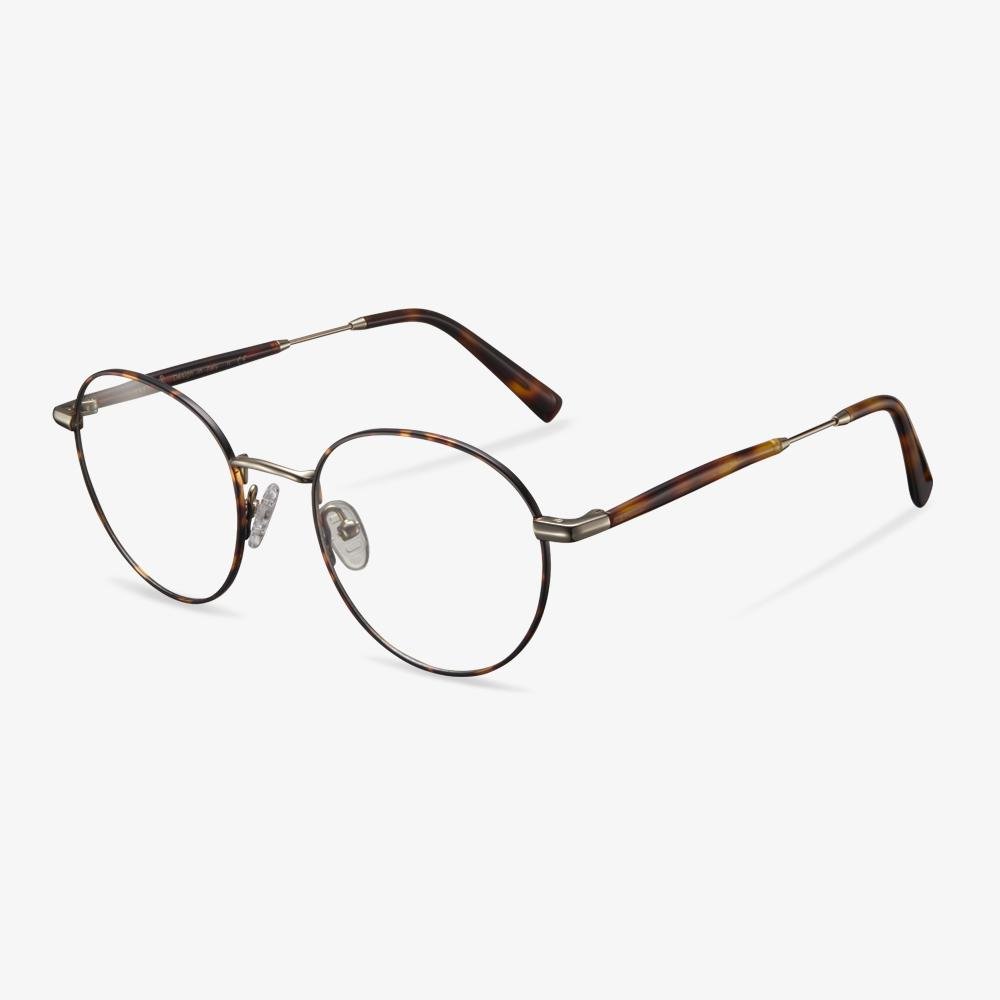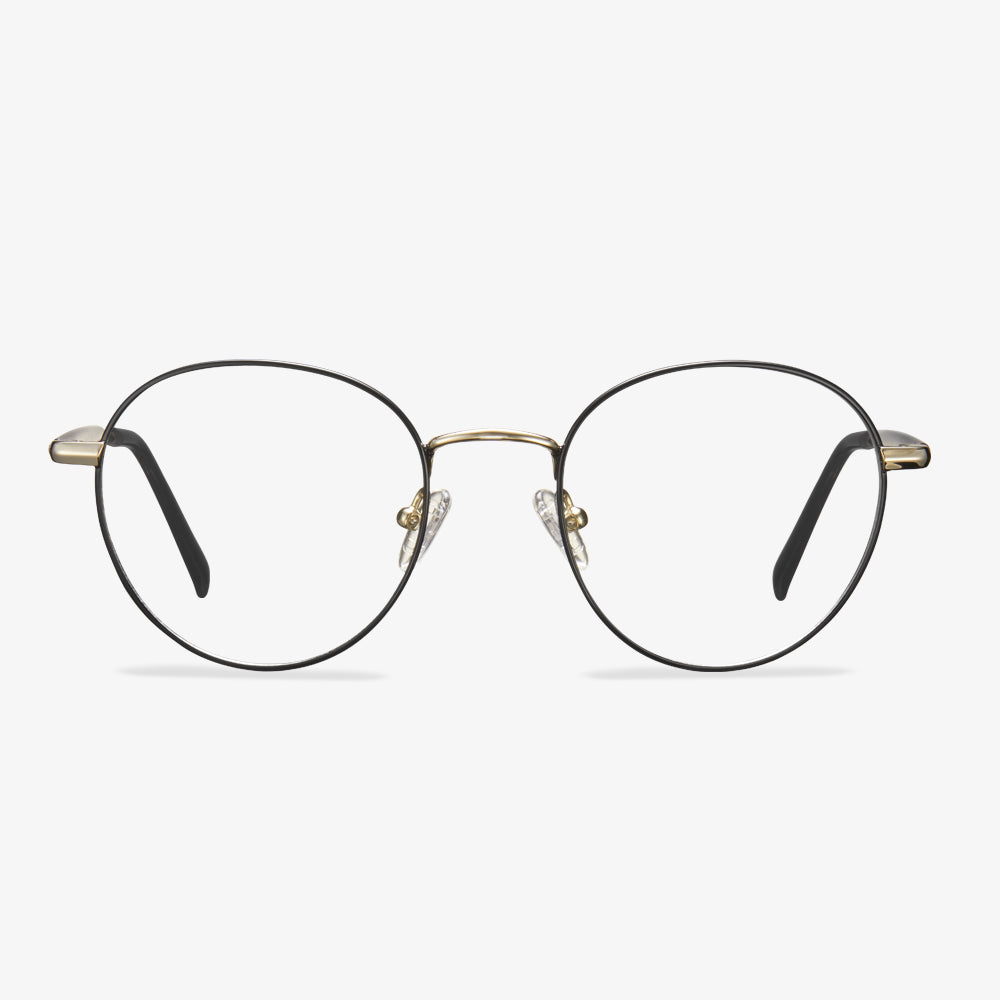










Two frames went live within ten days of each other, and they are the same material cut two different ways: Aster, a 142 mm square with a 54 mm lens, and Theory, a 144 mm round with a 50 mm lens and a 23 mm keyhole bridge. Same acetate, same 41–42 mm lens height, entirely different result on a face.
That is the part worth writing about. A square and a round frame with nearly identical measurements still behave differently, because the square keeps its width at the corners and the round spends it in the middle. If you are choosing your first pair of acetate glasses, this is the comparison to make before you look at colour. Both shapes are on the new arrivals page, along with the rest of this month's frames.
|
01
Aster-FC01
Square · 142 mm · black
|
02
Aster-FC04
Square · 142 mm · tortoise
|
03
Theory-FL01
Round · 144 mm · black
|
04
Theory-FL02
Round · 144 mm · clear
|
What the two shapes share
Both are full-rim acetate, both hold roughly 41 to 42 mm of lens height, and both sit at the medium end of the fit range. That last point is not incidental: 41 mm is enough vertical room for a progressive lens to keep a usable reading zone at the bottom, which is not true of every frame in this width class. If you are moving from single vision to progressive, either shape will take it without forcing you into a deeper frame.
The other shared feature is the construction. Neither frame is a thin rim with a lens dropped in; the acetate is thick enough at the corner to hold the lens without a visible edge, which is what makes a strong prescription look ordinary. Single vision versus progressive covers when that matters, and our progressive lenses lists what the frames will accept.
The four frames


Where a square and a round actually differ
A square frame puts material at the four corners. That does three things: it makes the frame look wider than its measurement, it holds a lens with more edge thickness more securely, and it draws a horizontal line across the face at brow height. If your face is long or narrow, those three things work in your favour — the horizontal line breaks the length.
A round frame puts its width at the centre and nothing at the corners. That makes it look narrower than its measurement, gives you the least possible material in peripheral vision, and draws no horizontal line at all. On a round or square face it softens the jaw; on a very narrow face it can make the eyes look further apart, which is either the point or the problem.
| Frame | Shape | Frame width | Lens | Lens height | Bridge | Temple |
|---|---|---|---|---|---|---|
| Aster-FC01 | Square | 142 mm | 54 mm | 41 mm | 17 mm | 145 mm |
| Aster-FC04 | Square | 142 mm | 54 mm | 41 mm | 17 mm | 145 mm |
| Theory-FL01 | Round | 144 mm | 50 mm | 42 mm | 23 mm | 145 mm |
| Theory-FL02 | Round | 144 mm | 50 mm | 42 mm | 23 mm | 145 mm |
The 17 mm versus 23 mm bridge is the real decision
Everything about these two frames is close except the bridge, and the bridge is what decides whether a pair sits correctly. Aster's 17 mm bridge is on the narrow side, which suits a narrower nose and holds the frame higher. Theory's 23 mm keyhole bridge leaves a gap over the nose instead — it distributes contact to the sides and lets the frame sit slightly lower, which is why it works on a wider bridge and why it will not slide forward on a low one. Nose marks and bridge fit explains the difference in contact points.
If you have worn glasses for years and never thought about bridge width, check the pair you own: the number is usually printed on the inside of the temple, second figure in the sequence. 17 to 19 mm is common; 23 mm is wide. Ordering a 23 mm bridge when you need a 17 mm one is the single most common reason a correctly sized frame feels wrong.
Colour, once the shape is settled
Aster comes in black and in tortoise, and the stud accents at the corners are the same on both — which means colour does all the work. Black reads more formal and holds a hard line against the face; tortoise reads warmer and picks up the light through the material. Theory comes in black, clear, grey and blue, and the clear version is the one that changes the frame most: at 144 mm it stops looking like a frame at all and starts looking like the shape of your face.
If you want to stay within one shape while you choose, the square eyeglasses and round eyeglasses collections hold the wider catalogue, and acetate eyeglasses cuts across both by material. The women's eyeglasses page is where the clear and blue finishes are grouped.
Ordering either one
- Measure a pair that fits you hinge to hinge — 142 mm for Aster, 144 mm for Theory.
- Read the bridge width off the inside of that temple and compare it with 17 mm or 23 mm.
- Confirm your pupillary distance against the lens width, not the frame width.
- If you wear a progressive, keep the 41–42 mm lens height in mind when choosing the reading position.
Step one is diagrammed on frame measurement, step three on pupillary distance, and how to measure a frame you own covers where to find the numbers on an existing pair.
Both shapes are available now in all listed colours. If neither bridge width is right, the rectangle frames in this month's drop use an 18 mm bridge, which sits between the two.
What 54 mm and 50 mm lens sizes do to a prescription
The two frames differ by 4 mm of lens width as well as 6 mm of bridge, and 4 mm is the number that shows up in a prescription. Lens thickness at the edge grows with lens size, so a −4.00 in Aster's 54 mm lens will be visibly heavier at the corner than the same prescription in Theory's 50 mm lens. On a moderate prescription that difference is invisible; on a strong one it is the difference between a frame that looks normal and one that looks like it is doing some work.
The material choice closes part of that gap. A 1.67 index lens in the wider frame will end up thinner than a standard index lens in the narrower one, which is why the order of decisions matters: frame first for fit and shape, lens index second for thickness. High-index lenses sets out the steps, and how to choose lenses covers what is available at checkout for either frame.
Everything else that arrived this month is on the eyeglasses page, sorted with the rest of the catalogue rather than by arrival.