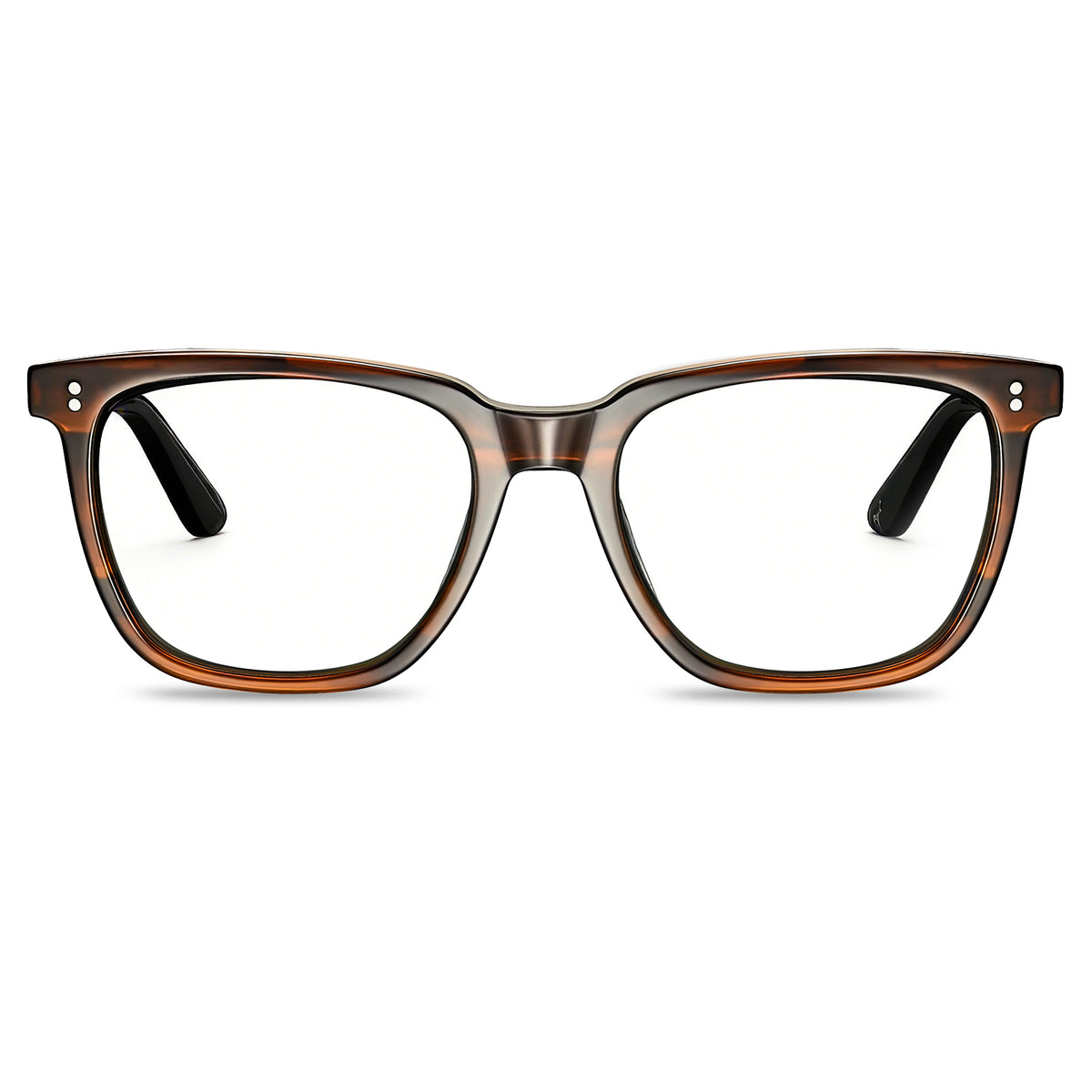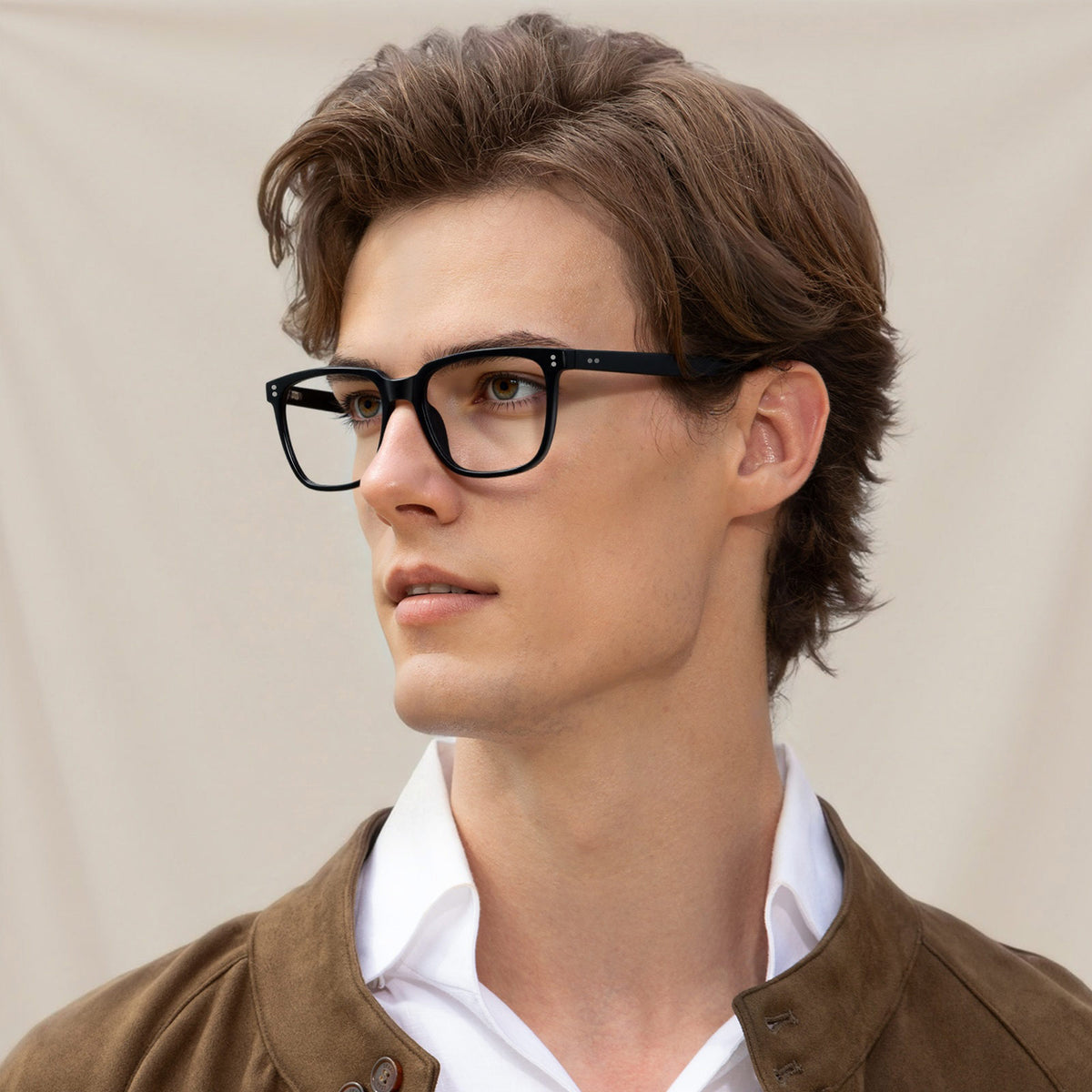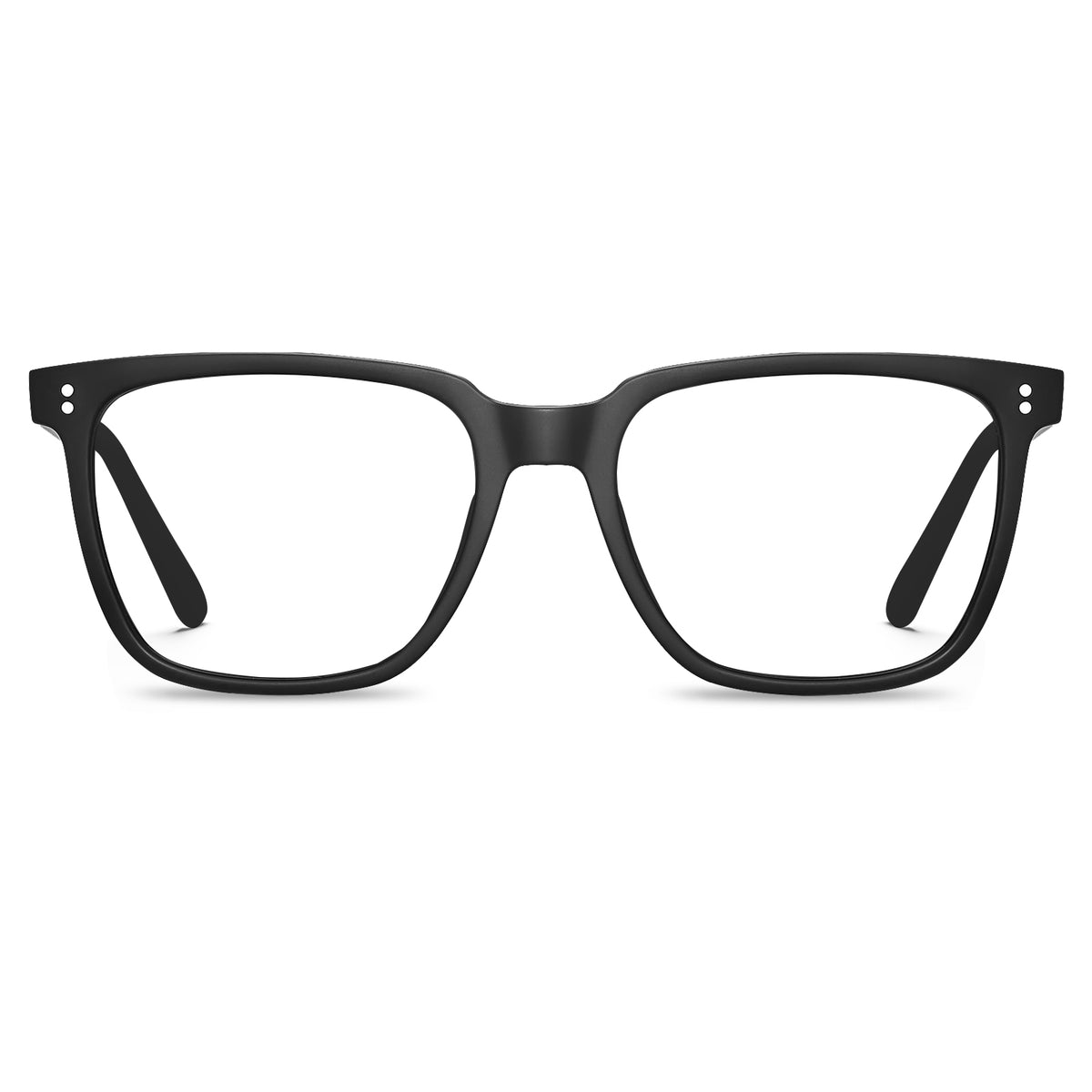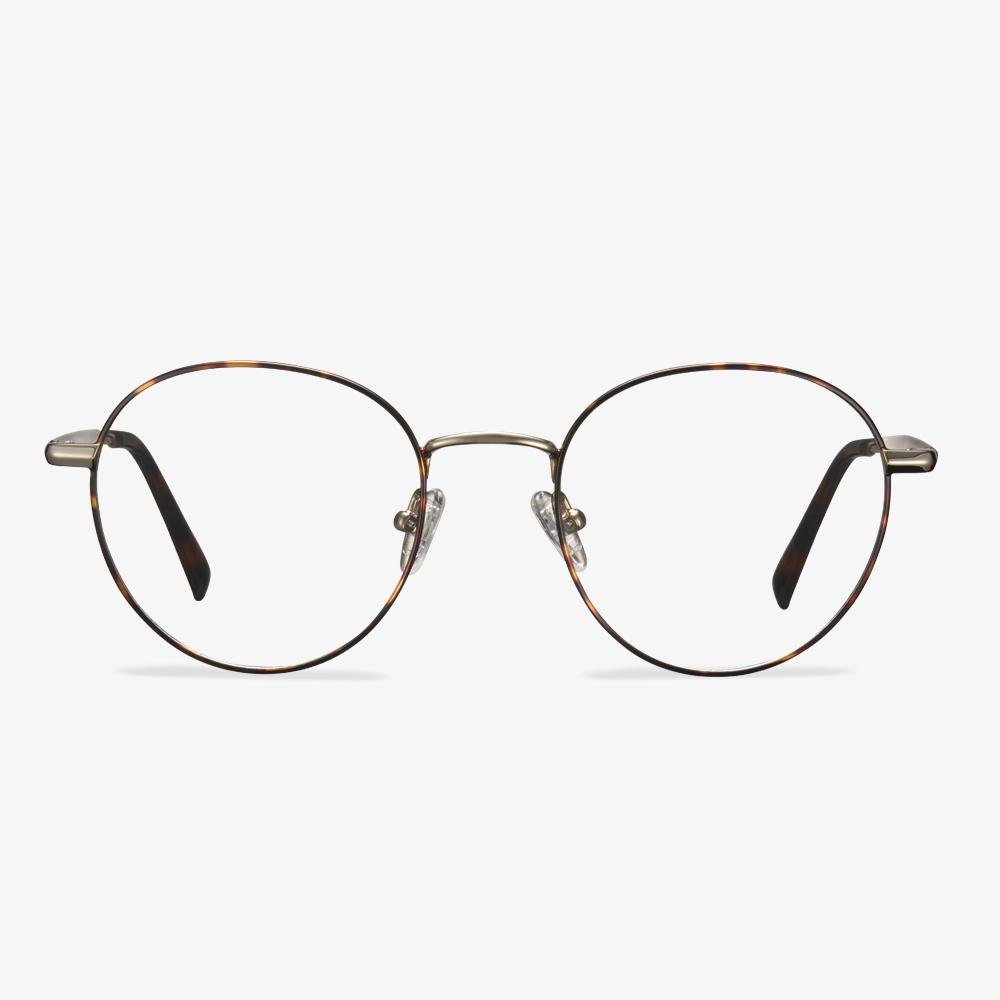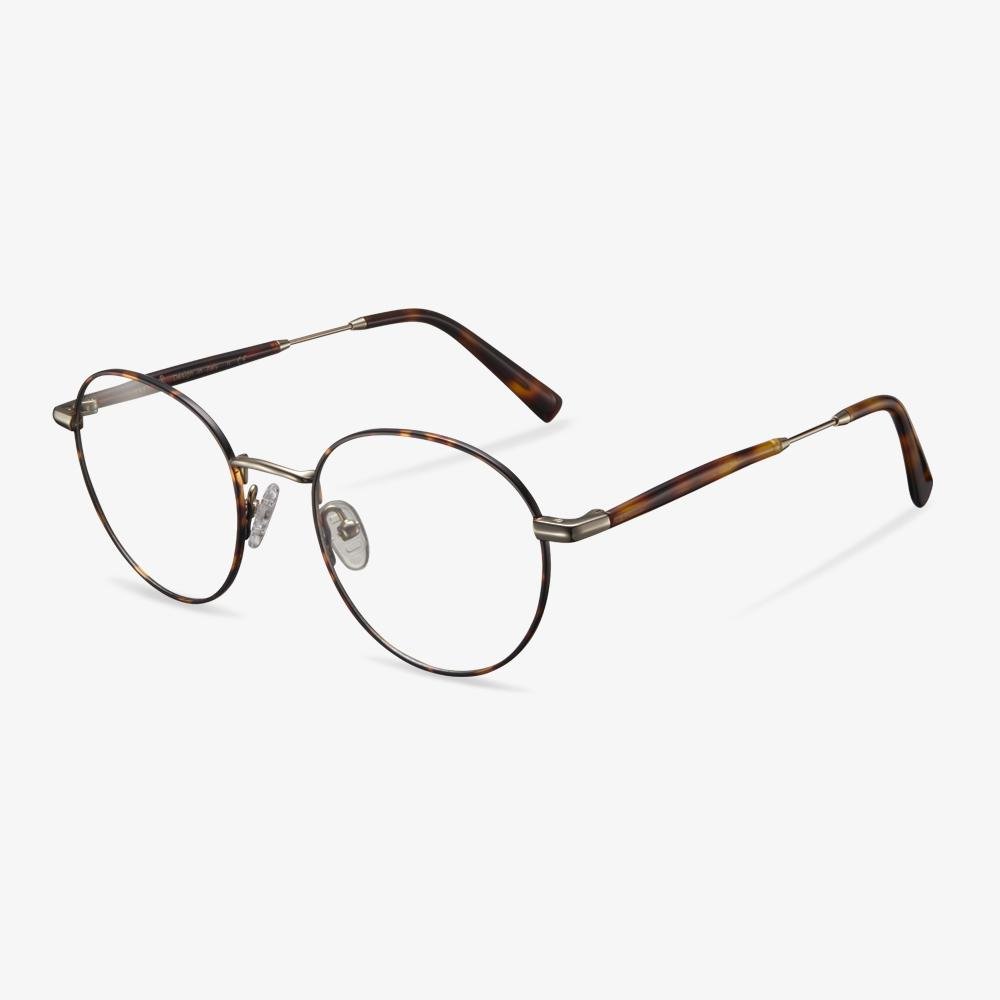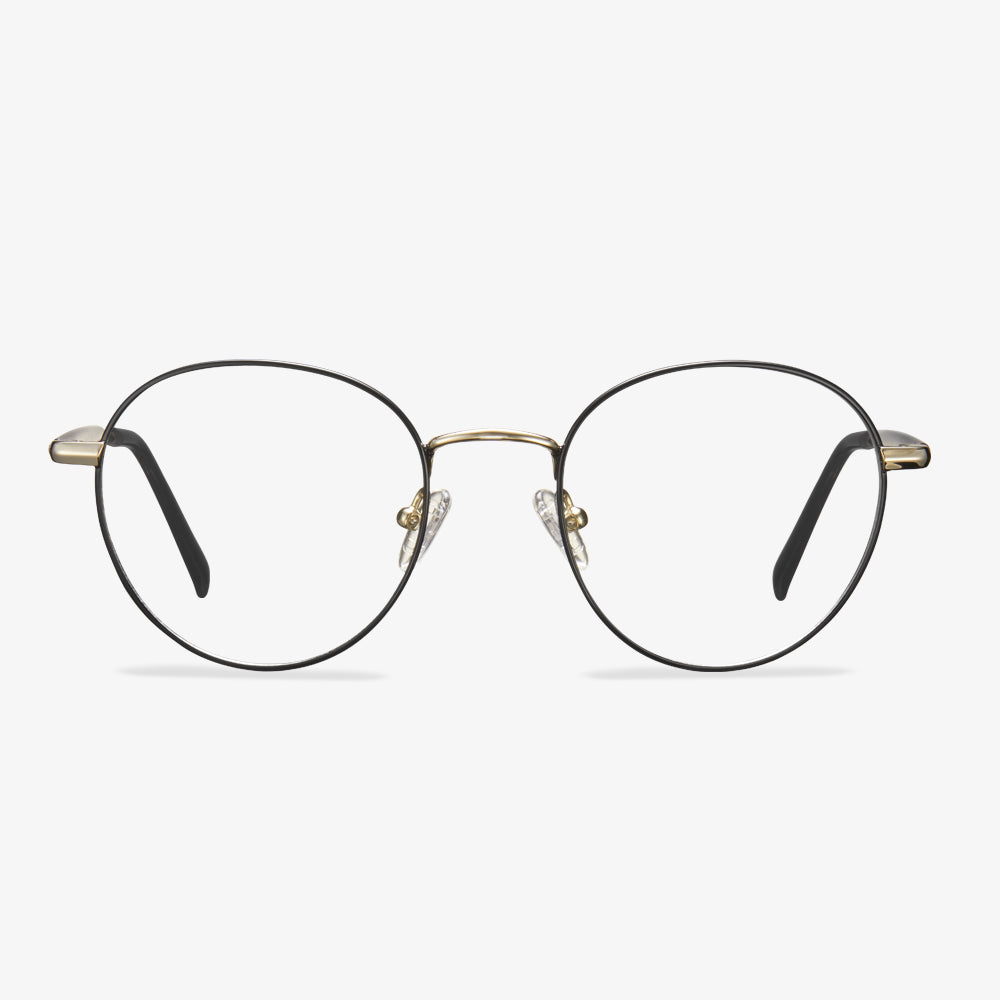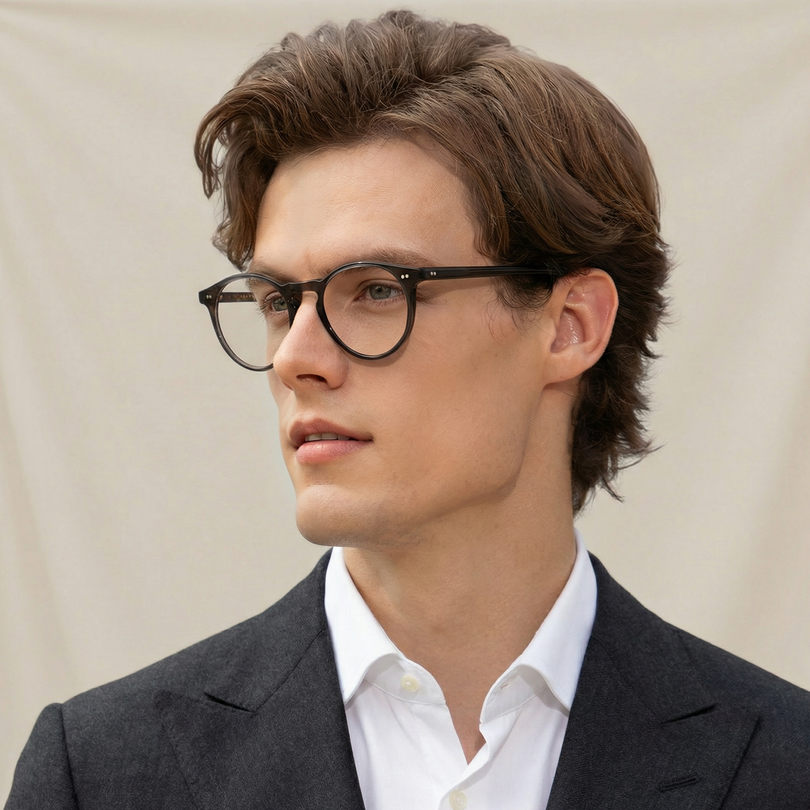

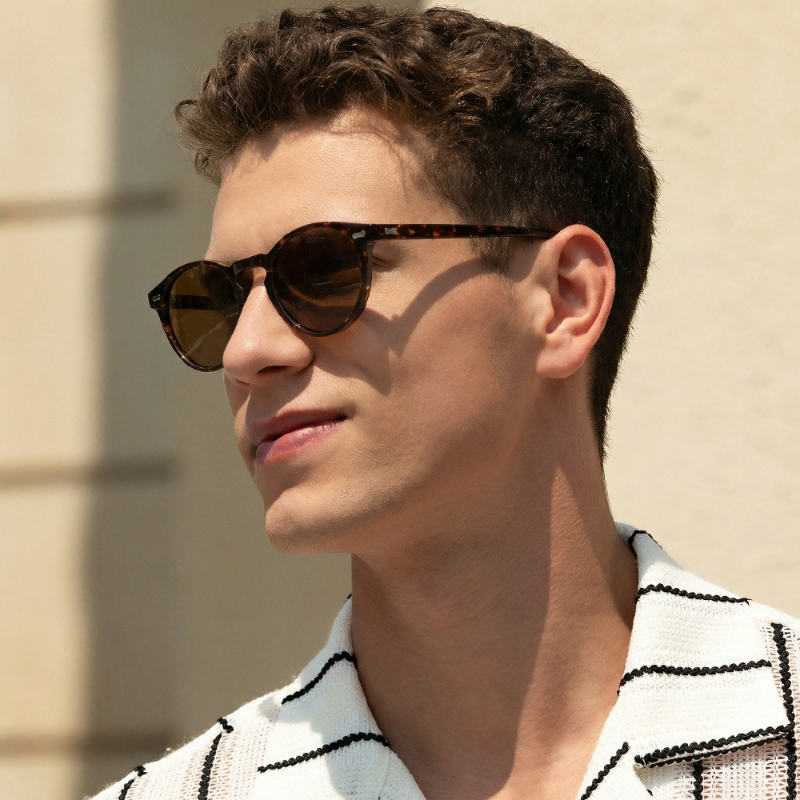



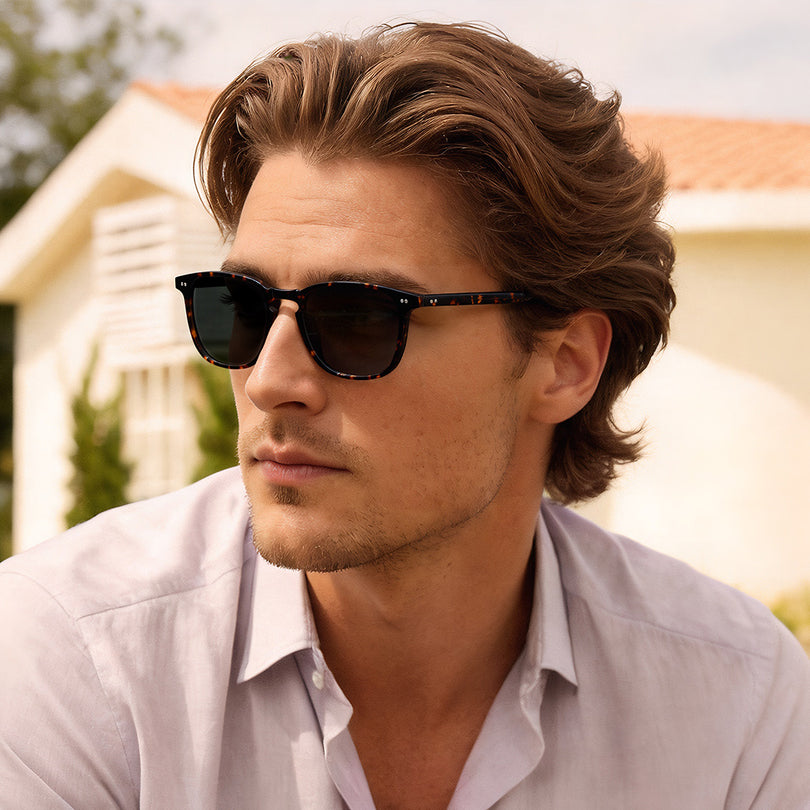
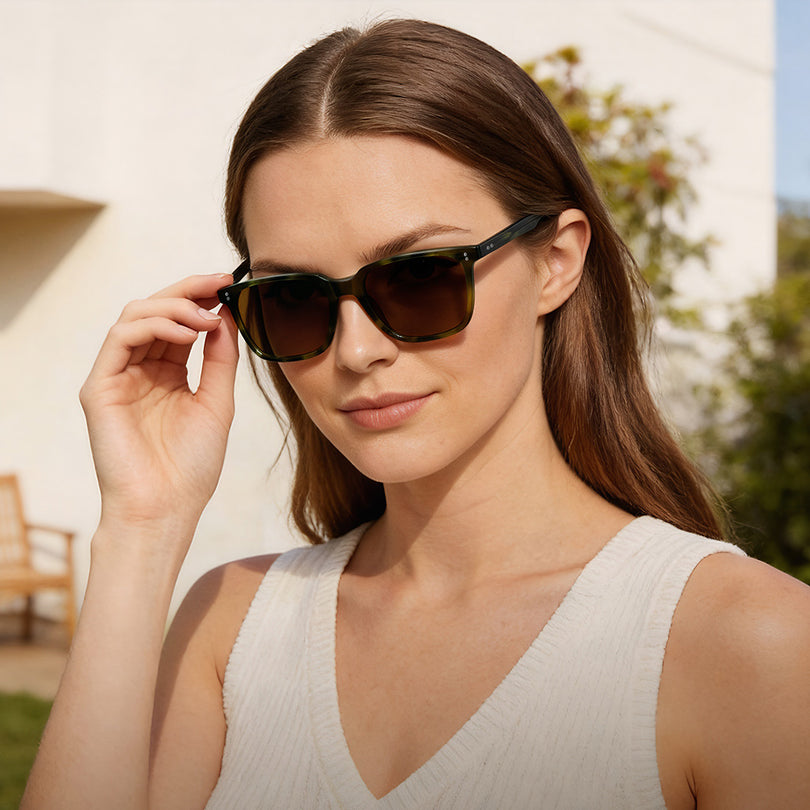
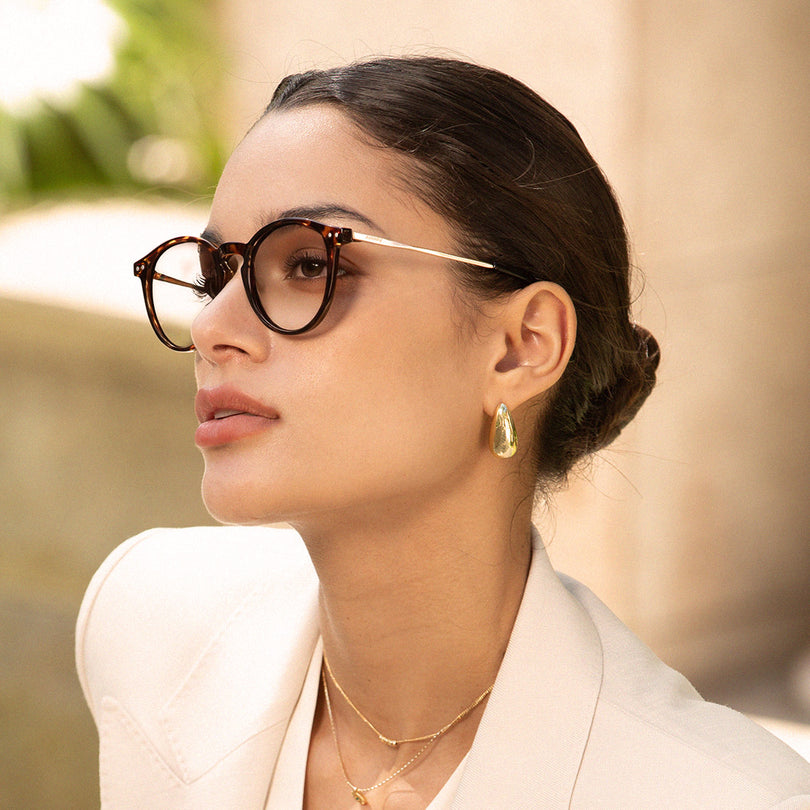


Four frames went live this week, and they split cleanly into two shapes: an aviator built on a 144 mm front, and a round on 140 mm. Two colours each. None of them is a reissue of something already in the catalogue.
The interesting part is not that they are new. It is that the two shapes solve opposite problems on a face. The aviator is the wider of the pair and puts its straight brow line high, which is why it reads slightly more formal than it looks in a photograph. The round is narrower, sits closer to the eye, and reads retro no matter what you wear with it. If you have been refreshing the new arrivals page waiting for something that is not another square, this is that week — but the choice between the two is a fit decision before it is a taste decision.
|
01
Drew-C03
Aviator · beige frame, amber lens
|
02
Drew-C06
Aviator · clear frame
|
03
Retro-C05
Round · gold frame
|
04
Retro-C14
Round · tortoise frame
|
Why these two shapes arrived together
Aviators and rounds are the two silhouettes that most often get bought as a second pair rather than a first. That is a useful thing to know before you read the rest of this, because it tells you what to compare them against. If you already own a square or a rectangle in a medium width, both of these will feel like a change of register rather than a change of size — the aviator because the brow line is straight where a square dips, and the round because the frame edge curves away from the cheek instead of sitting parallel to it.
Both are full-rim, which matters for a practical reason: a full rim holds the lens edge, so a tinted lens does not show its thickness at the corner the way a rimless or semi-rimless frame can. On the aviator that rim is thin at the brow and deeper at the base, and on the round it is even all the way around. You can see the difference in the aviator collection and the round collection side by side.
The four frames


Where the two shapes actually diverge
The aviator's advantage is vertical coverage. Its lens is deep at the centre and the brow is almost flat, so the top of the frame follows the line of your brow rather than cutting across it. On a face with a strong brow, that reads as deliberate. On a narrow face it can read as borrowed, which is why this one is cut on a 144 mm front with a shorter 145 mm temple — it is sized to sit inside the width of a medium face rather than to overhang it.
The round's advantage is the opposite. A 140 mm front with an even rim puts very little frame in your peripheral vision, and because the lens has no corner, there is nothing to catch the edge of a strong prescription. If you wear a prescription in your sunglasses, that last point is the one worth remembering: corners are where thick lenses announce themselves.
| Frame | Shape | Frame width | Lens | Temple | What it does |
|---|---|---|---|---|---|
| Drew-C03 | Aviator | 144 mm | deep centre | 145 mm | Straight brow, amber lens, warm palette |
| Drew-C06 | Aviator | 144 mm | deep centre | 145 mm | Same shape, clear frame, quietest of the four |
| Retro-C05 | Round | 140 mm | even | 145 mm | Gold front, saddle bridge, minimal peripheral frame |
| Retro-C14 | Round | 140 mm | even | 145 mm | Tortoise, warmer against most skin tones |
The bridge is the part you cannot see in the photo
The round frames in this drop sit on a saddle bridge with acetate nose pads, which is the reason they stay put on a low or narrow nose. It is a small design decision with a large effect: a saddle bridge distributes contact across the sides of the nose instead of two points, so the frame does not slide forward when you look down. If sliding is the reason your current pair annoys you, nose marks and bridge fit explains which bridge shapes cause it — and the answer is usually not the pads but the bridge width.
The aviators use a mixed construction rather than a single material, with metal detail at the front and acetate through the frame body. That is a look decision more than a fit one, but it does change the weight distribution slightly, and it is why the beige and clear versions read so differently from each other despite sharing a 144 mm front.
Which one, by the frame you already wear
- If your current pair measures around 142–145 mm across the front, the aviator will feel like the same fit in a new silhouette.
- If your current pair measures 138–141 mm, the round is the closer match, and the shorter front will keep the frame inside the width of your face.
- If you have a low nose bridge and your glasses slide, start with the round and its saddle bridge rather than the aviator.
- If you are shopping for a small face, both new frames are listed in size S — the aviator by width, the round by depth.
Ordering a shape you have never worn
Two measurements decide this, and neither requires a trip to a shop. First, pupillary distance: if the optical centre of the lens sits outside your pupils, the frame will feel wrong no matter how well it fits your temples. Second, the front width of a pair you already like. pupillary distance covers the first, how to measure a frame you own covers the second, and frame measurement has the diagram for both.
- Measure the front of a pair that fits you, hinge to hinge, in millimetres.
- Compare that number with 144 mm for the aviator or 140 mm for the round.
- Check the temple length against the pair you own — both new frames are 145 mm.
- If you wear a prescription, choose the round if your lenses have visible edge thickness at the corners.
A frame is not a picture. It is a measurement that happens to look like something.
Both shapes are available now. If neither width is right, the wider squares and the narrower rounds further down this page cover the two ends of the range — and the 14-day Fit & Style window is there for the case where the shape is right and the width is not.
If the shape is right but the colour is not
Colour is the variable people change last and regret most. Clear and beige read lighter on the face than tortoise or black, which is why the same 144 mm aviator looks like a different frame in Drew-C03 and Drew-C06. The acetate sunglasses collection has the translucent finishes grouped together if you want to compare them without scrolling, and the polarized collection is the shortlist if lens performance is the reason you are buying.
If you already know you want a round frame and this drop is not the one, the women's sunglasses page carries the round and oval shapes from earlier in the year, and the round collection above is the quickest way to see them alongside these two.
One thing to check before you commit to an aviator
The brow bar is the part that decides whether an aviator looks right, and it is the part nobody measures. On this frame the bar is almost straight, and it sits at the height your own brow would if you drew a line across it. If the bar lands above your brow, the frame shortens your forehead; if it lands below, the frame looks like it has slipped. Neither is a fit problem you can fix by tightening the temples — it is a proportion problem, and the only fix is a different shape.
The second thing to check is what happens when you look down. Both new frames have a 145 mm temple, which is the standard length, but a straight brow bar sits further forward on the face than a curved one. On a shallow nose that combination lets the frame slide when you tilt your head, which is why the round in this drop uses a saddle bridge and the aviator does not. If you spend your day looking down at a screen or a page, the round is the more practical of the two regardless of which one you prefer in a photograph.