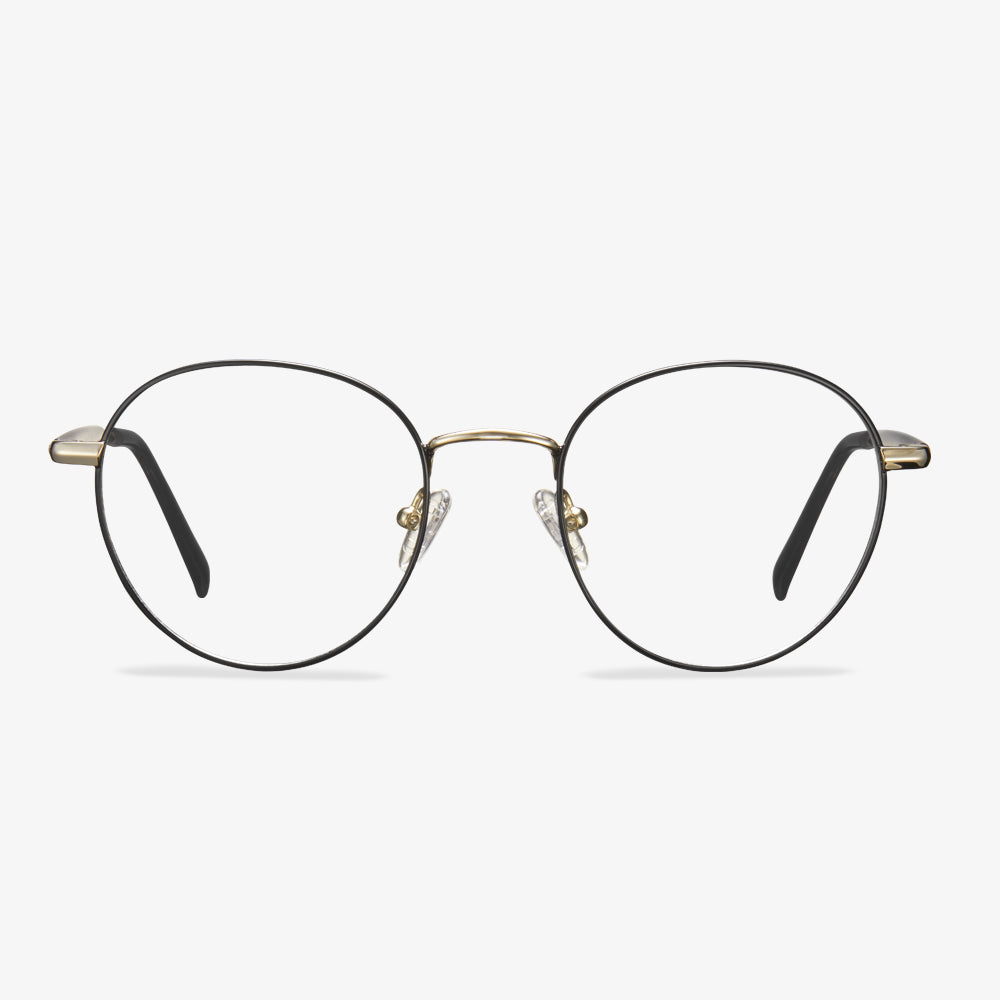










A metal frame is the easiest thing to sell in a photograph. It is a line around the eye instead of a shape, it weighs about as much as a pair of sunglasses you would forget in a bag, and it does not compete with your face. Most people who say they “do not like glasses on themselves” are describing a metal frame that got out of the way.
Then they wear it for a year. The complaints that come back are consistent, and they are rarely about the metal itself. They are about what a thin rim cannot do: hide the edge of a strong lens, keep a pair of moulded pads from leaving marks, and hold a shape after the hundredth adjustment. This article goes through where a thin rim stops paying for itself — and why acetate is usually the answer, even for people who start out wanting the lightest frame in the shop.
The material itself is covered separately in acetate versus plastic frames. Here the subject is narrower and more practical: what a rim one millimetre deep can and cannot do on a real face, and where the extra four millimetres of acetate earn their weight.
What a metal frame buys you, precisely
Three real advantages, no marketing. First, rim depth: a metal rim is roughly a millimetre deep, so the lens occupies almost the whole front and the frame reads as a line rather than a block. Second, weight: our full-rim metal rectangle comes in at 141 mm across with a 58 mm lens, and frames built this way sit at the bottom of the weight range. Third, thermal stability — metal does not soften in a hot car the way acetate can, so a metal frame left on a dashboard is usually still straight.

A 141 mm full-rim metal rectangle with a 58 mm lens, 45 mm lens height and a 16 mm bridge — the narrowest bridge and the widest lens in this article, and the plainest test of whether a thin rim suits you.
Frame width 141 mm · Lens 58 × 45 mm · Bridge 16 mm
A 58 mm lens in a 16 mm bridge is a wide, shallow front: good on a broad face that has been stuck between sizes, less good if your nose is narrow, because there is very little bridge to sit on. This is the first place a metal frame asks you to be precise about your own measurements rather than the frame’s style.
Rimless is the same argument taken to its end
A rimless frame removes the last of the material. The lens is drilled at the bridge and at the temples, and the frame becomes a bridge, two arms and four small pieces of hardware. Nothing is lighter or less visible. Nothing hides less, either.

A 136 mm rimless oval at 18 g — polished gold metal bridge, tortoiseshell acetate arms, 53 mm lens, 34 mm lens height — the lightest and least visible construction in this collection.
Frame width 136 mm · Lens 53 × 34 mm · Bridge 20 mm
The 34 mm lens height is the detail that makes the Bonterey work. A rimless lens has to be thick enough at the drill points to hold the hardware, and a shallow lens keeps the overall mass down. On a strong prescription, though, the edge of a rimless lens is fully on display — there is no rim to cover it. That is not a flaw in the frame; it is the trade the design makes, and it is the single reason some people try rimless once and never again.
Where the thin rim stops paying: the lens edge
Look at a pair of glasses from the side. On an acetate frame you see a band of material. On a metal frame you see the lens itself, edge on. With a low prescription that edge is a couple of millimetres and nobody notices. As the minus power rises, the edge thickens, and by the time you are choosing between lens indexes the frame has become a display case for the thickest part of the lens.
There are two honest fixes. One is a higher-index lens, which reduces edge thickness at the cost of a flatter, more reflective surface — the trade-offs are set out on our lenses page. The other is a deeper rim, which hides the edge instead of thinning it. Most people end up doing both, and the second one is free.
Where the thin rim stops paying: pressure
Metal frames carry their weight on two small pads. That is why they can be adjusted to sit exactly where you want them, and it is also why a metal frame that is slightly too heavy or slightly misadjusted leaves two marks on the sides of the nose by four in the afternoon. Acetate spreads the same load across a much larger contact area, because the frame rests on the nose through the moulded bridge rather than through two points.
If marks are already your main complaint, the mechanics and the workarounds are covered in how to get rid of glasses marks on your nose — including the one adjustment that fixes more cases than any other.
Where the thin rim stops paying: colour and adjustment
Metal is offered in finishes, not in colour depth. Acetate is offered in blocks: opaque black, tortoise, translucent gold, transparent grey, and laminations where several colours are pressed into one sheet. If the frame is meant to be part of the look rather than a neutral tool, metal runs out of options quickly.
Adjustment is the other limit. Acetate can be heated and reshaped, so a temple that presses behind the ear can be curved properly, and a front that sits too low can be brought up. Metal is bent cold, and every bend works the material. A metal frame can be adjusted many times; it cannot be adjusted indefinitely, and the hinge area is where it eventually gives.
What acetate does with the same brief

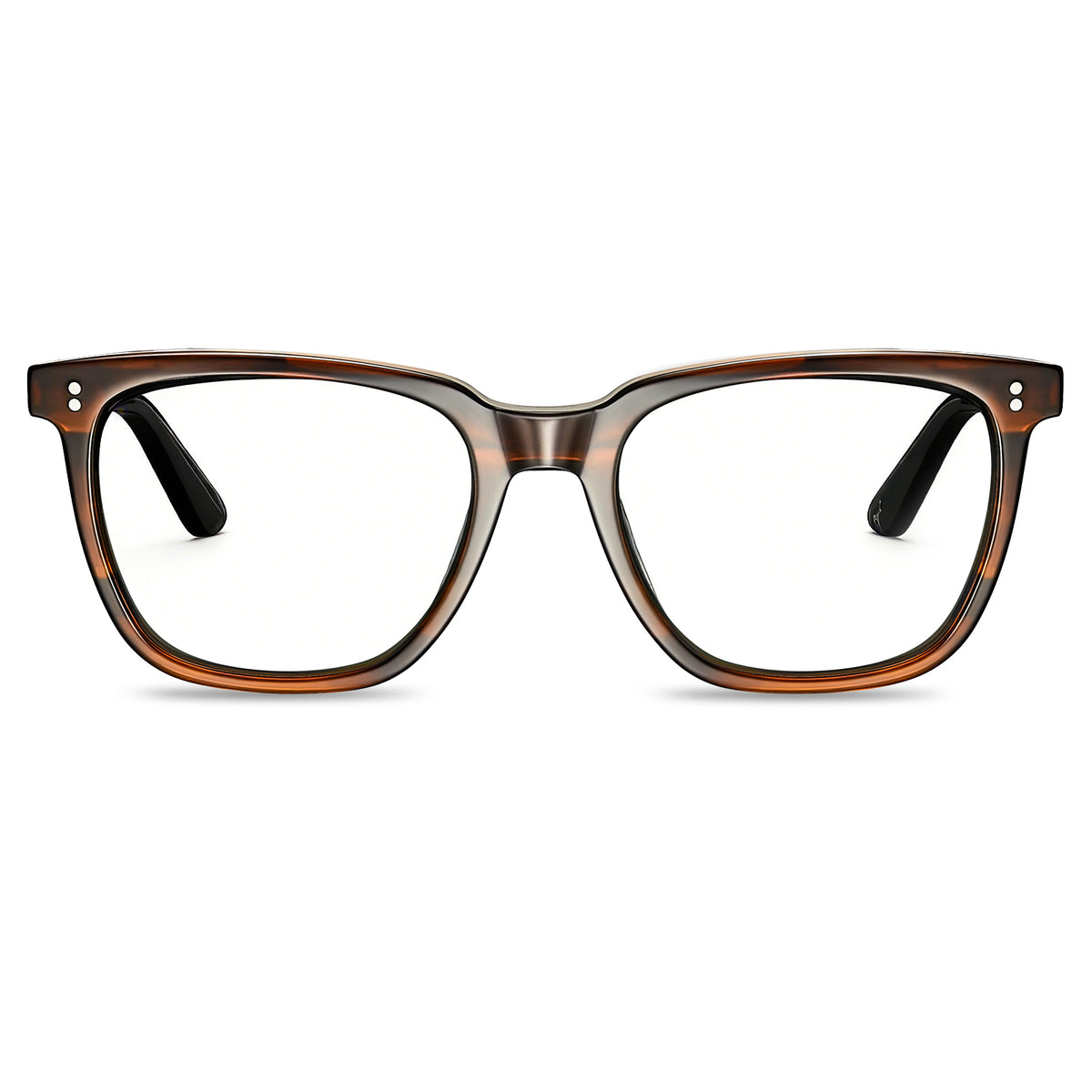
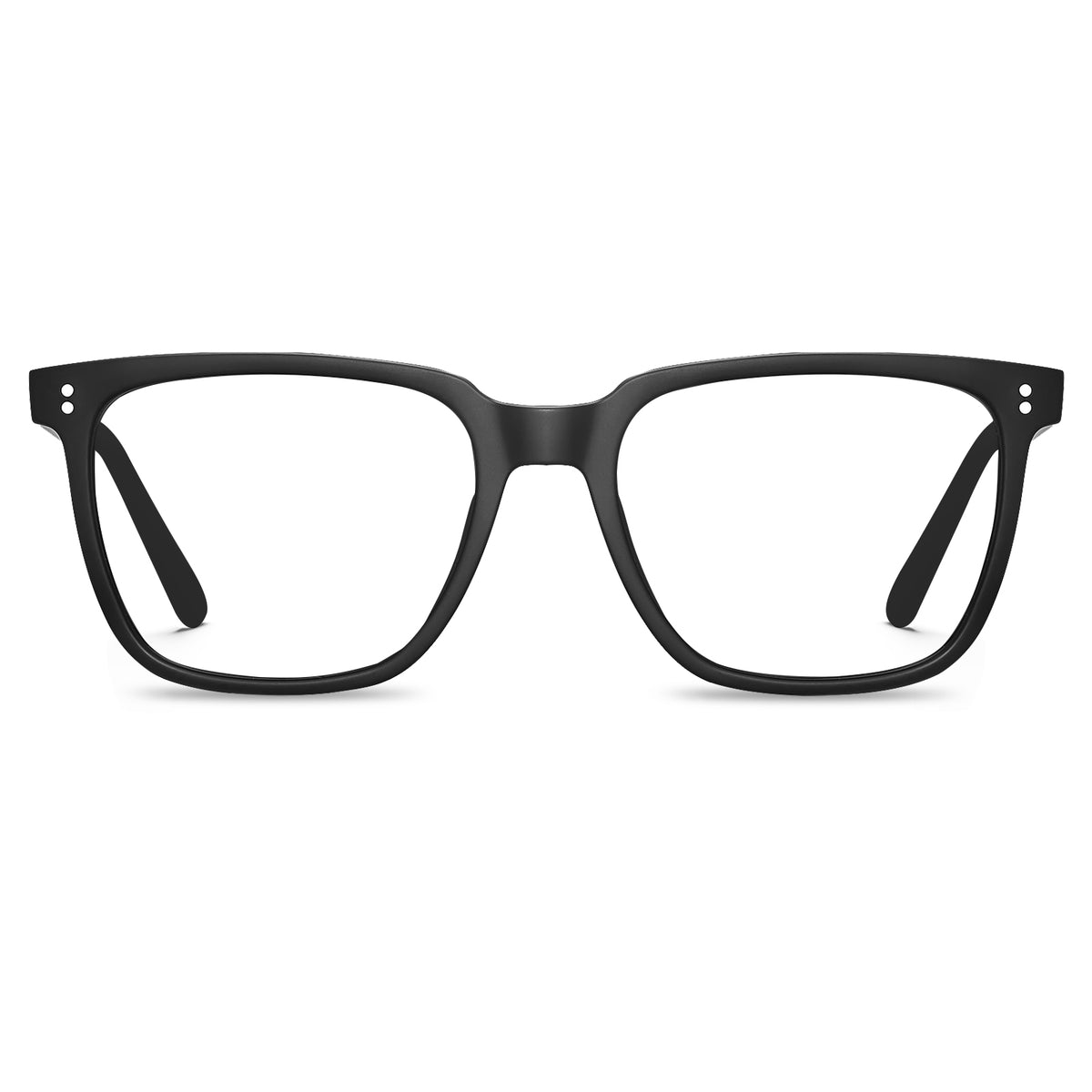
A 145 mm square in acetate — 51 mm lens, 43 mm lens height, 21 mm bridge — with the deepest rim front here, a 145 mm width for a broader face, and clean geometric lines instead of decoration.
Frame width 145 mm · Lens 51 × 43 mm · Bridge 21 mm
The Architect is the direct counter to the metal rectangle on the previous card: same idea, same squared silhouette, but the rim is deep enough that the lens disappears into it. If you like the look of a thin frame and your prescription is above about −4.00, this is the compromise that usually satisfies both wishes — the geometry stays sharp, the edge stops being visible.

A 142 mm round in acetate with a 50 mm lens, 44 mm lens height and a 22 mm bridge — the deepest lens here, and the shape that best disguises a thick edge on a round face.
Frame width 142 mm · Lens 50 × 44 mm · Bridge 22 mm
The Concord’s 44 mm lens height matters more than its width. A round frame with a tall lens puts more material between the viewer and the edge of the lens at every angle, so a strong prescription looks calmer in it than in a shallow rectangle of the same width. This is why “which shape” and “which material” should be decided together rather than one after the other.
The middle ground is real, and it is usually the best answer
The frames that satisfy both camps are hybrids: a metal front for the thin look and the rigidity, with acetate temples for comfort, colour and a hinge that can be replaced. One of ours does exactly that at 18 g — the same weight as the rimless frame above, but with a full rim around the lens.

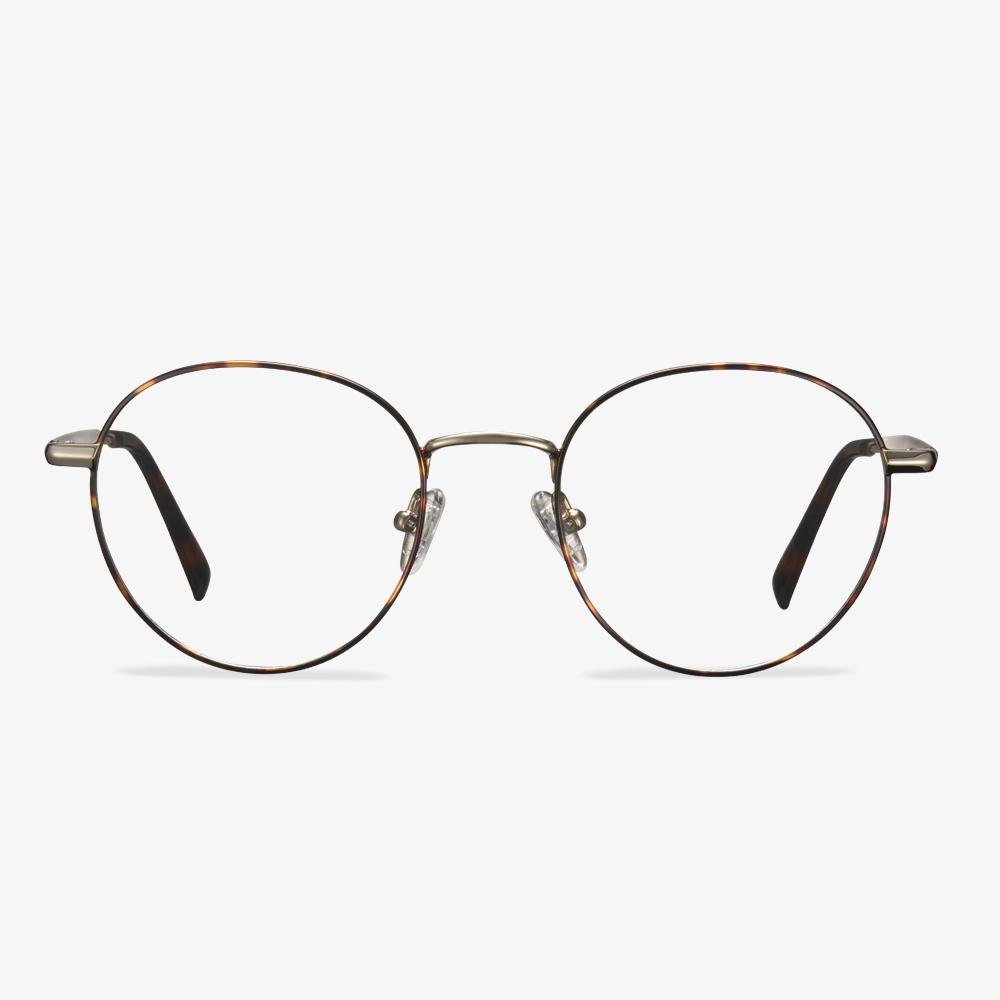
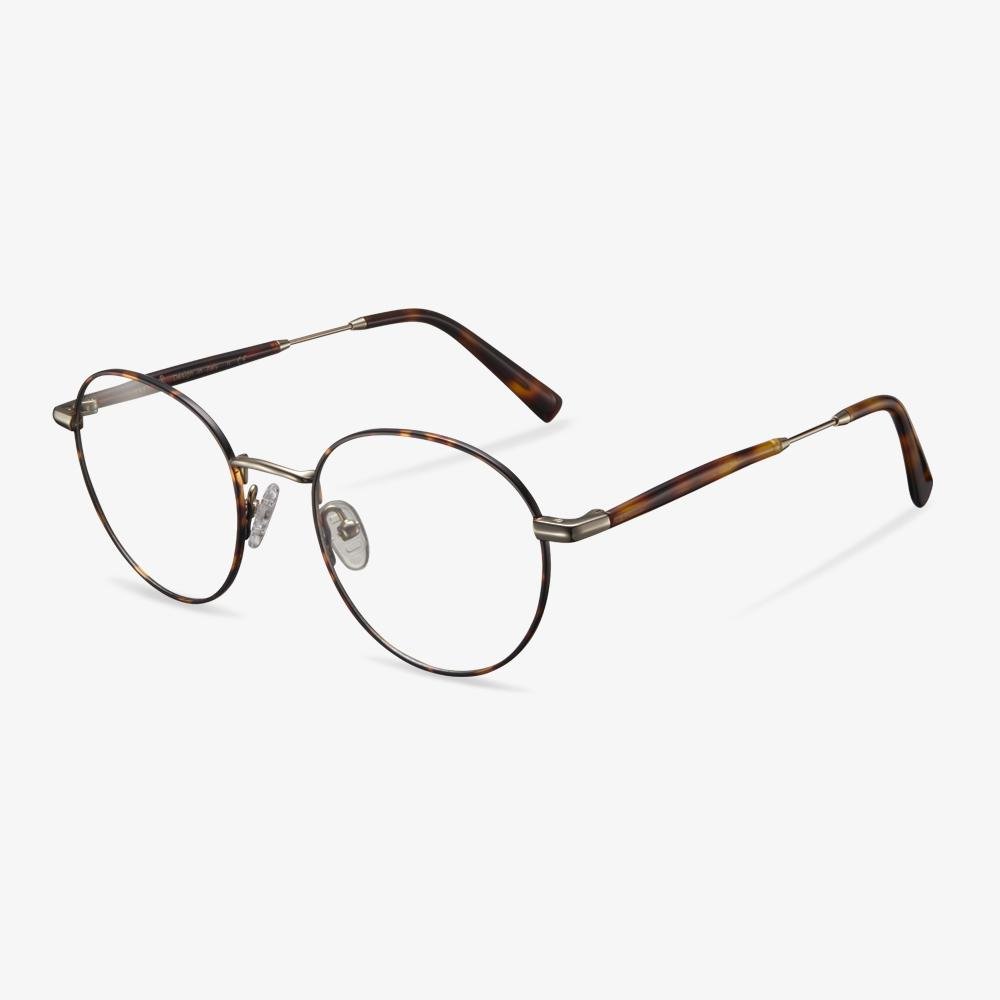
A 137 mm round at 18 g with a metal front and acetate temples — 49 mm lens, 20 mm bridge, 145 mm temple — the lightest full-rim option in this article.
Frame width 137 mm · Lens 49 mm · Bridge 20 mm
That is the honest summary of this comparison. The weight argument for metal is smaller than it looks once acetate temples are involved, because the front is not where most of the mass sits. What you are really choosing between is a rim that hides and a rim that disappears.
A thirty-second test before you decide
- Hold the frame you are considering at arm’s length, side on. If you can see the lens edge clearly, that is what you will see in the mirror every morning.
- Look at the bridge. Under 18 mm suits a narrow nose; over 22 mm suits a wider one; the rest is adjustment.
- Check the frame width against a pair that fits, not against your face in a photograph.
- Decide whether you want the frame to be noticed. If yes, acetate has more to work with; if no, metal does.
If your face is the part you are unsure about rather than the material, start with frames for face shapes and come back with a silhouette in mind. Then compare it in metal eyeglasses and in acetate eyeglasses — the same shape in both materials is the fastest way to see the difference this article is describing.
If you have read this far and still want the thinnest possible frame, buy it. Just buy it in a small, shallow lens and a high-index material, so the two things a thin rim cannot hide are as small as they can be. If you would rather stop thinking about your glasses by week two, start from the full eyeglasses collection and sort by the rim you actually like looking at.