







Lens Height Explained: 34 mm vs 46 mm on the Same Face
Two frames can be the same width, the same colour and the same price, and still feel like completely different glasses, because of a number that almost never appears in product marketing: lens height.
Lens height — sometimes called the B measurement — is the vertical distance of one lens, from the top edge to the bottom edge, at its tallest point. On our fifteen best-selling prescription frames it runs from 34 mm to 46 mm. That 12 mm range changes how much lens sits below your pupil, and therefore how much lens you have to look through when you look down.
What lens height actually controls
Width gets the attention because it decides whether a frame fits your face. Height decides something narrower and more practical: how much vertical room you have inside the lens.
- Reading and near work. When you drop your eyes to a page or a phone, you look through the lower part of the lens. A shallow lens gives that part very little room.
- Progressive lenses. A progressive is divided into distance, corridor and near zones, stacked vertically. The frame has to be deep enough to hold all three.
- Field of view when walking and driving. A deeper lens keeps the bottom edge of the frame out of your downward sightline.
- How much frame sits on your face. Depth is the single biggest factor in how “heavy” a frame looks, independent of its colour.
The progressive question, stated plainly
A progressive lens is not a single lens — it is three zones arranged top to bottom, with the near zone at the bottom. Lens labs commonly specify a minimum fitting height in the low thirties of millimetres, measured from the pupil down to the lowest point of the lens. Below that, the near zone gets cut off or squeezed, and the wearer ends up lifting their chin to read. If you are still deciding which lens type you need at all, single vision vs progressive is the place to start.
That number matters here because our shallowest best-seller is 34 mm. It is not impossible to fit a progressive into a 34 mm lens, but there is almost no margin: the pupil has to sit high in the frame, and any error in the fitting height eats directly into the reading zone. At 46 mm, the same lens has room to spare. The lens itself — corridor length, material, coatings — is covered on our progressive lenses page.
If you already wear progressives, this is the one measurement worth checking before you fall for a frame. If you wear single vision, lens height is a comfort and style decision rather than a functional limit. If you are choosing a first pair of progressives, the frames under progressive eyeglasses are the ones to start with.
The range across five frames
| Model | Lens height | What that depth is good for |
|---|---|---|
| AvonPaK-FL02 | 46 mm | The deepest in the top fifteen — the most room for a progressive or for long reading sessions |
| Blivier-FL02 | 44 mm | Deep enough for a full progressive corridor with a little margin |
| Albany-FC11 | 42 mm | The practical middle: works for progressives, still reads as a normal frame |
| Hemet-FL01 | 40 mm | Fine for single vision and for shorter reading, tighter for a progressive |
| Bonterey-FC03 | 34 mm | The shallowest we sell in volume — a single-vision frame that keeps the face open |
Note what this table does not say: it does not say deep is better. A 46 mm lens in a strong prescription is a heavier lens with more material to grind. Depth is a tool, and the right depth depends on what you are putting inside it. Shallow frames are their own category, and the rectangle eyeglasses range is where the shallowest of them sit.
Five frames across the depth range

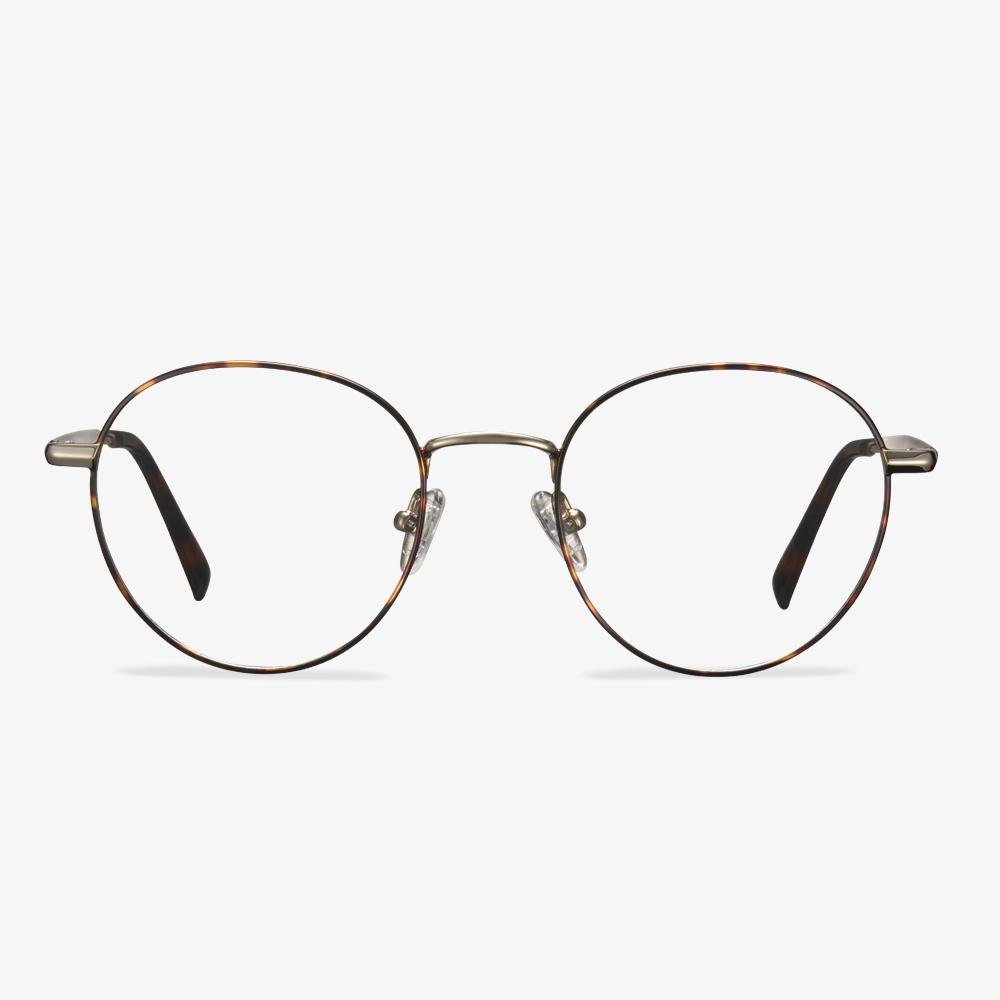
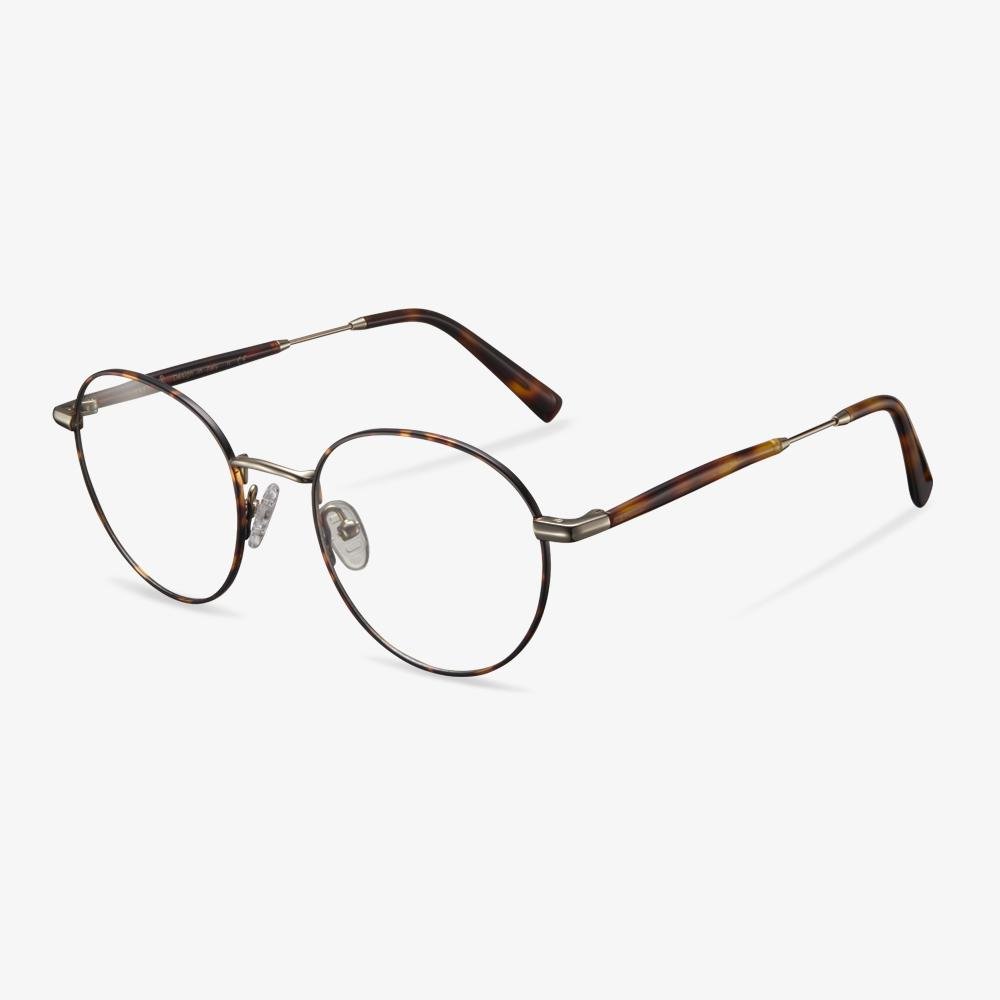
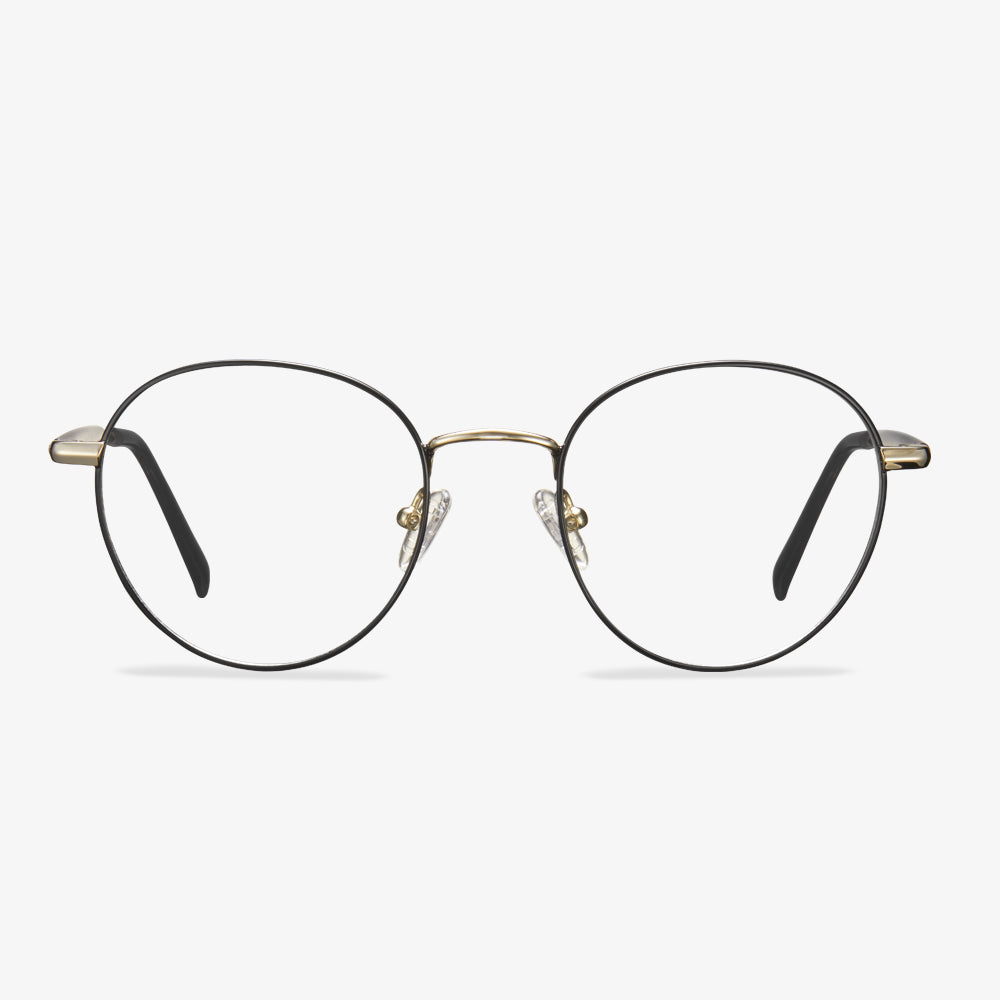
At 46 mm, the deepest lens in the top fifteen. A round double-bridge frame that looks smaller than it is, because the height is carried by the lens rather than by a thick rim.
Frame width 139 mm · Lens 47 × 46 mm · Bridge 24 mm

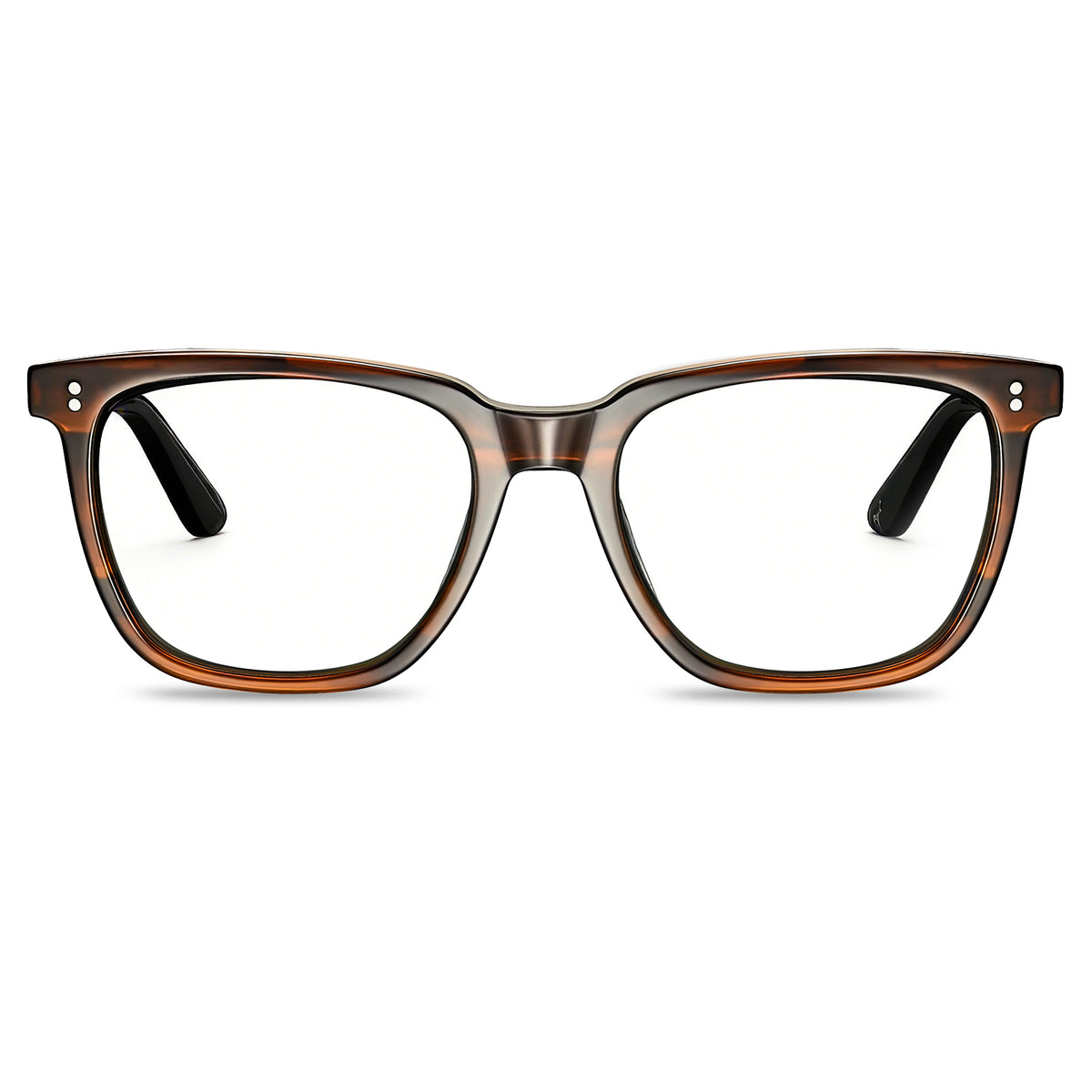
44 mm with a 50 mm lens — close to square proportions, in a translucent gold that keeps the frame from reading as heavy despite the depth.
Frame width 142 mm · Lens 50 × 44 mm · Bridge 22 mm

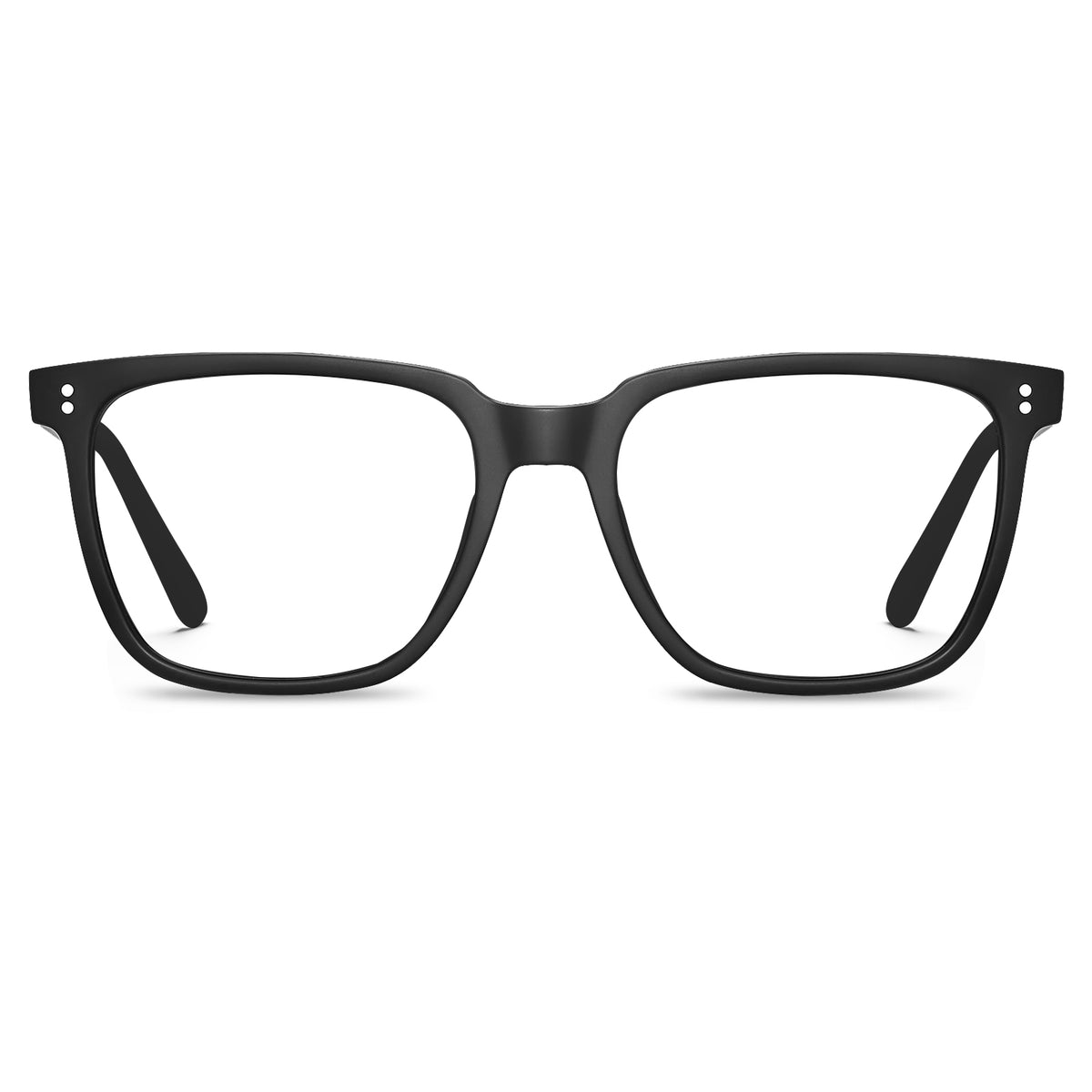
42 mm on a square frame with a 52 mm lens. The most balanced geometry in this list: deep enough for a progressive, shallow enough to look ordinary in a good way.
Frame width 141 mm · Lens 52 × 42 mm · Bridge 18 mm

40 mm and a 53 mm lens — a wide, shallow rectangle. Good for single vision in a wide face, where extra depth is not needed but extra width is.
Frame width 142 mm · Lens 53 × 40 mm · Bridge 19 mm

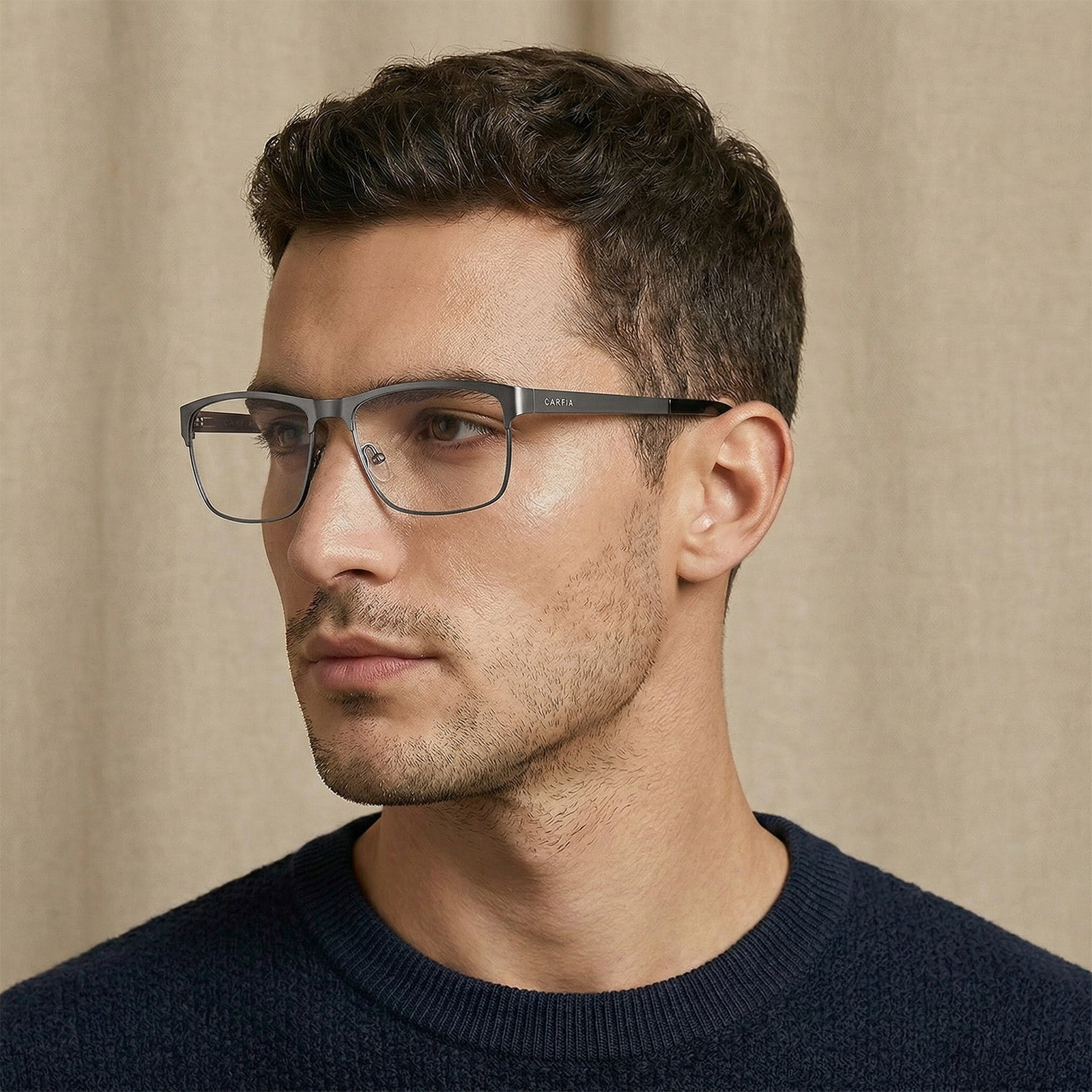
34 mm, and rimless. The shallowest lens we sell in volume, and the frame that proves the point: with no rim around it, 34 mm does not read as small, it reads as open.
Frame width 136 mm · Lens 53 × 34 mm · Bridge 20 mm
Why a shallow lens can look better, not worse
A deep lens puts more material between your brow and your cheek, and that reads as more frame — even when the rim is thin. This is why a 34 mm rimless oval can look lighter on the face than a 43 mm acetate square, despite the square having a smaller total area of lens.
The trade is straightforward: depth buys you lens, and lens buys you presence. If you want the frame to disappear, take it out of the height before you take it out of the width — width changes how the frame fits, height changes how much it shows. Wider lenses do the opposite job, and the eyeglasses collection shows both proportions side by side.
How to measure the lens height of a pair you own
- Close the frame and lay it flat on a table, lenses facing up.
- Measure the tallest vertical distance of one lens, inside the rim — not including the rim itself.
- Compare it with the frame's printed numbers if you have them; the second and third numbers give lens width and bridge, and the height is usually the fourth number or not printed at all.
- If you wear progressives and the number is under about 36 mm, measure where your pupil sits inside the lens before ordering the same depth again.
Lens height is the measurement most often left off a product page, which is exactly why it is worth checking on the frame you already own. Two frames that look the same size can differ by 10 mm in depth. If you want the full method rather than the short version, how to measure frame size covers width, height and bridge together.
Matching depth to what goes in the lens
| What you wear | What to prioritise | Depth to look for |
|---|---|---|
| Single vision, distance | Frame sit and field of view | Any; 34–43 mm covers most faces |
| Single vision, near or desk work | Room below the pupil | 40 mm and up |
| Progressive, first pair | Fitting height margin | 42 mm and up |
| Progressive, existing wearer | Same depth as the pair that works | Match your current frame, within 2 mm |
| Anti-fatigue or office lens | A little extra below centre | 40–44 mm |
The pattern is simple. The more of the lens that is doing different jobs at different heights, the more depth you need. A single-vision lens does one job and can live in a shallow frame; a progressive does three and cannot. Office and anti-fatigue lenses sit between the two, and what anti-fatigue lenses are explains where the difference lies.
Depth, weight and the bottom rim
A deeper lens is a bigger piece of material. In a strong prescription that material has thickness, and thickness has weight — which is why a 46 mm lens and a 34 mm lens in the same prescription can differ by several grams per side, and why a pair that felt fine in a shop can feel different by the evening.
If you wear a strong prescription and want a deep frame, two things pay for themselves: a higher-index lens, which is thinner for the same power, and a well-fitted temple, because a heavier front needs more support behind the ear to stay in place.
The bottom rim is the other consequence. It is the edge your cheek meets when you smile, and the edge that lands in your line of sight when you look down at a keyboard. Depth increases the chance of both. If you have high cheekbones or a low brow, a deep frame can be perfectly comfortable standing still and busy in use.
Reading a frame specification in the right order
- Frame width first — it decides whether the frame fits your face at all.
- Lens height second — it decides what you can do inside the lens.
- Lens width third — it decides the proportion of the front, and how thick a minus lens becomes.
- Bridge fourth — the number that keeps the whole thing in place.
Most product pages list these in a different order, or leave two of them out. The order above produces fewer returns, because it moves from the constraint that cannot be adjusted to the one that can.
The one mistake worth avoiding
Choosing a frame for its shape, then discovering it is 34 mm deep when you wear progressives. It is the most common mismatch we see, and it is invisible in photographs — which is why the number belongs in the buying decision, next to the width, and not in the small print after it.