






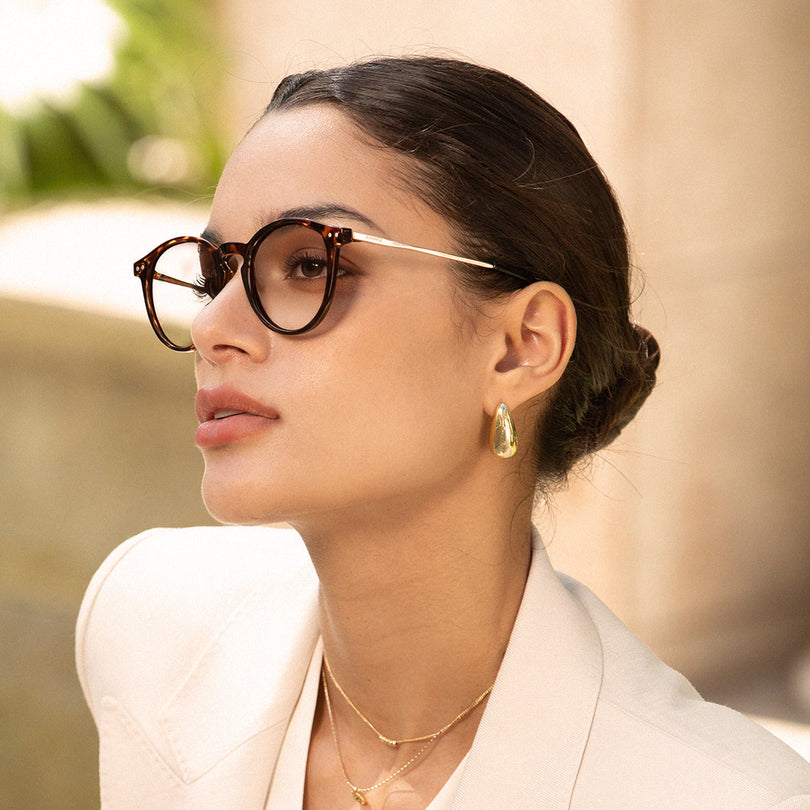

Round Eyeglasses
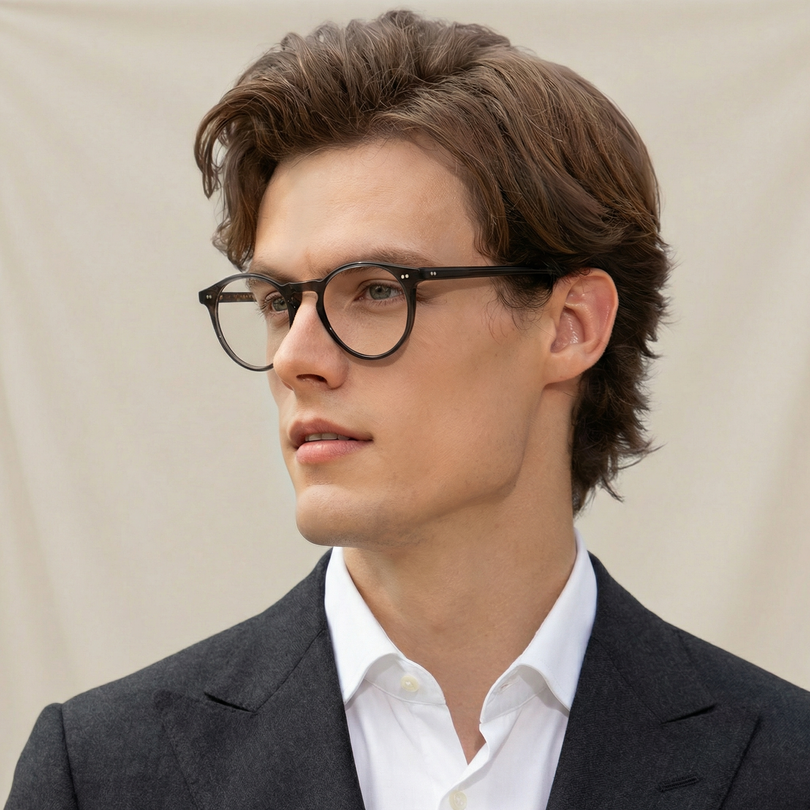
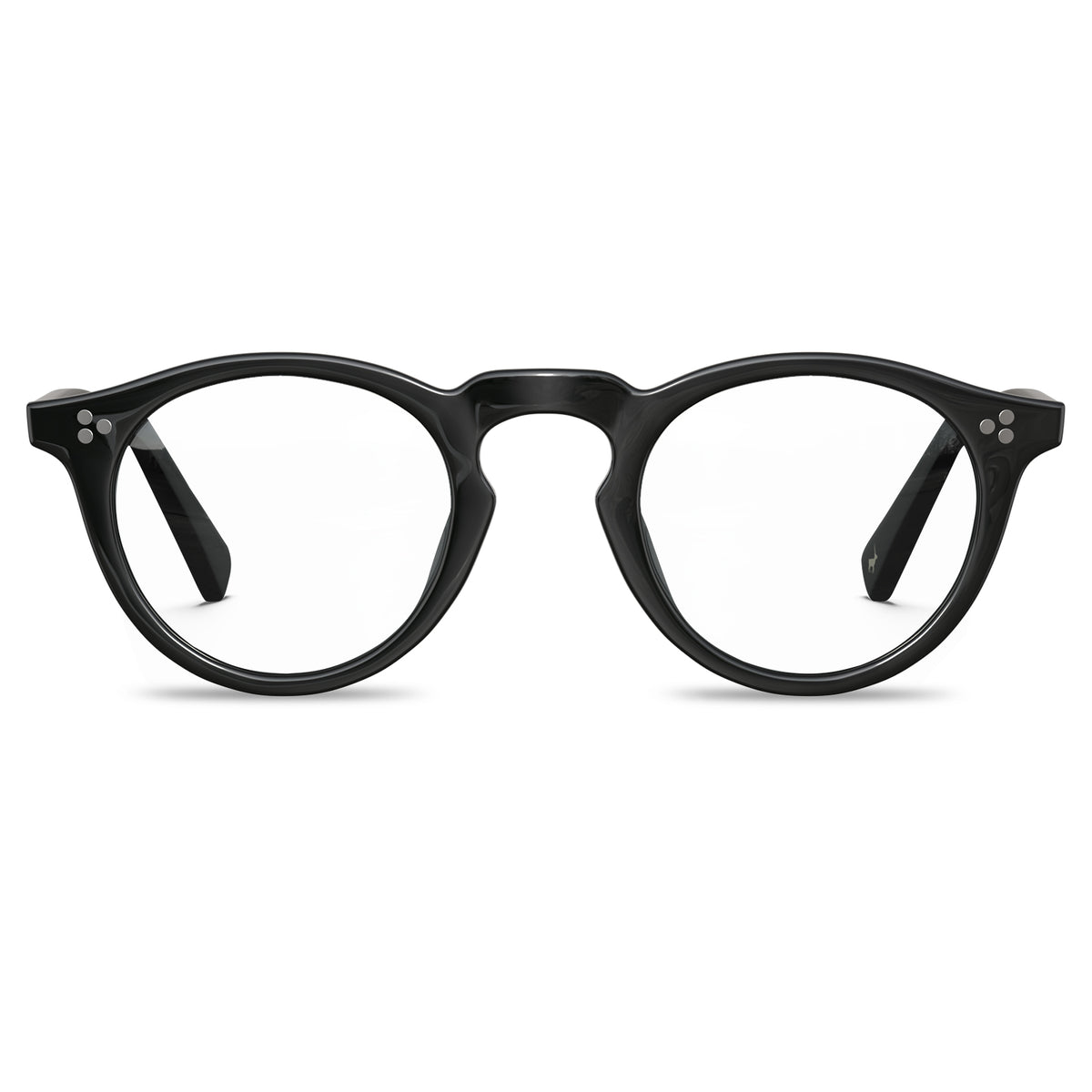
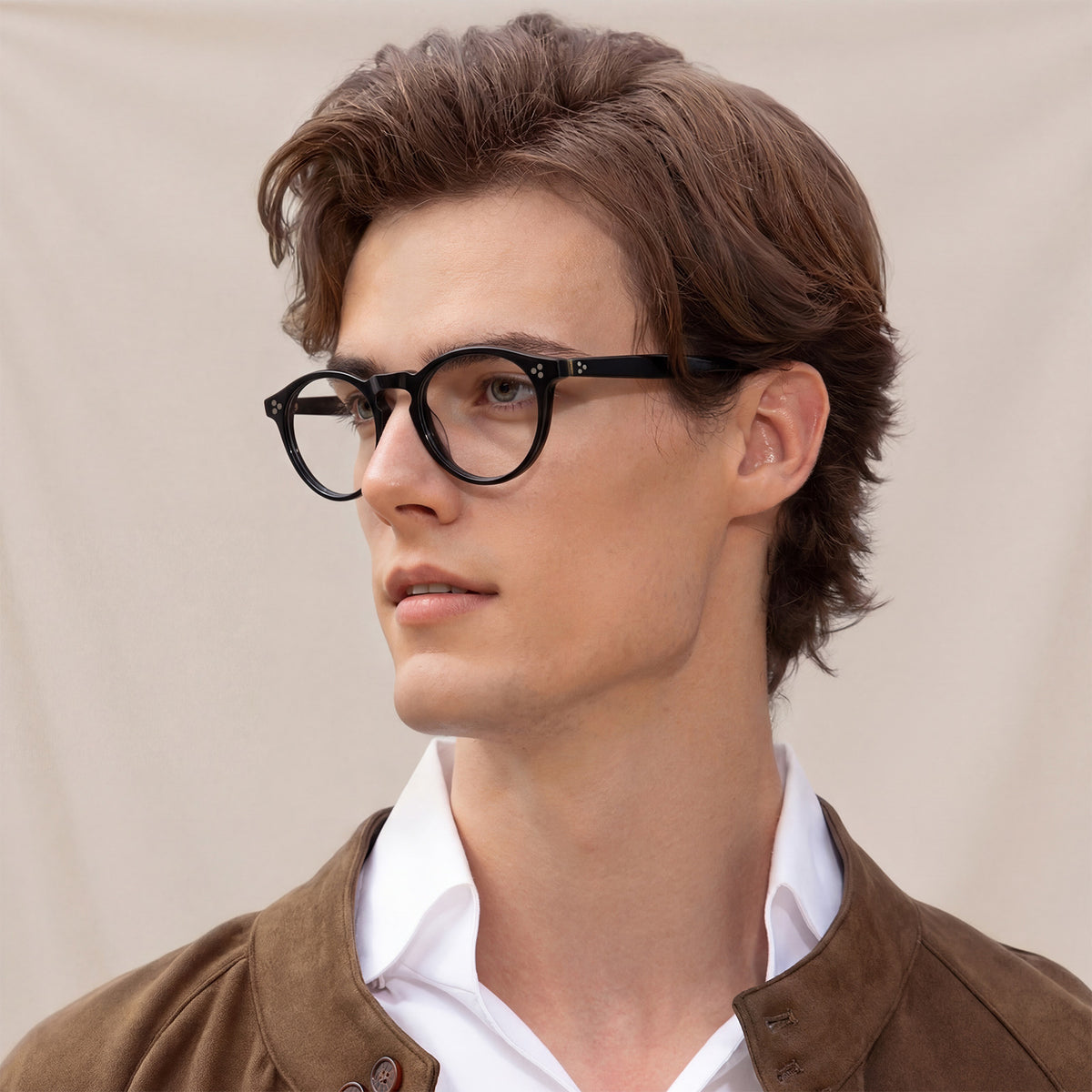
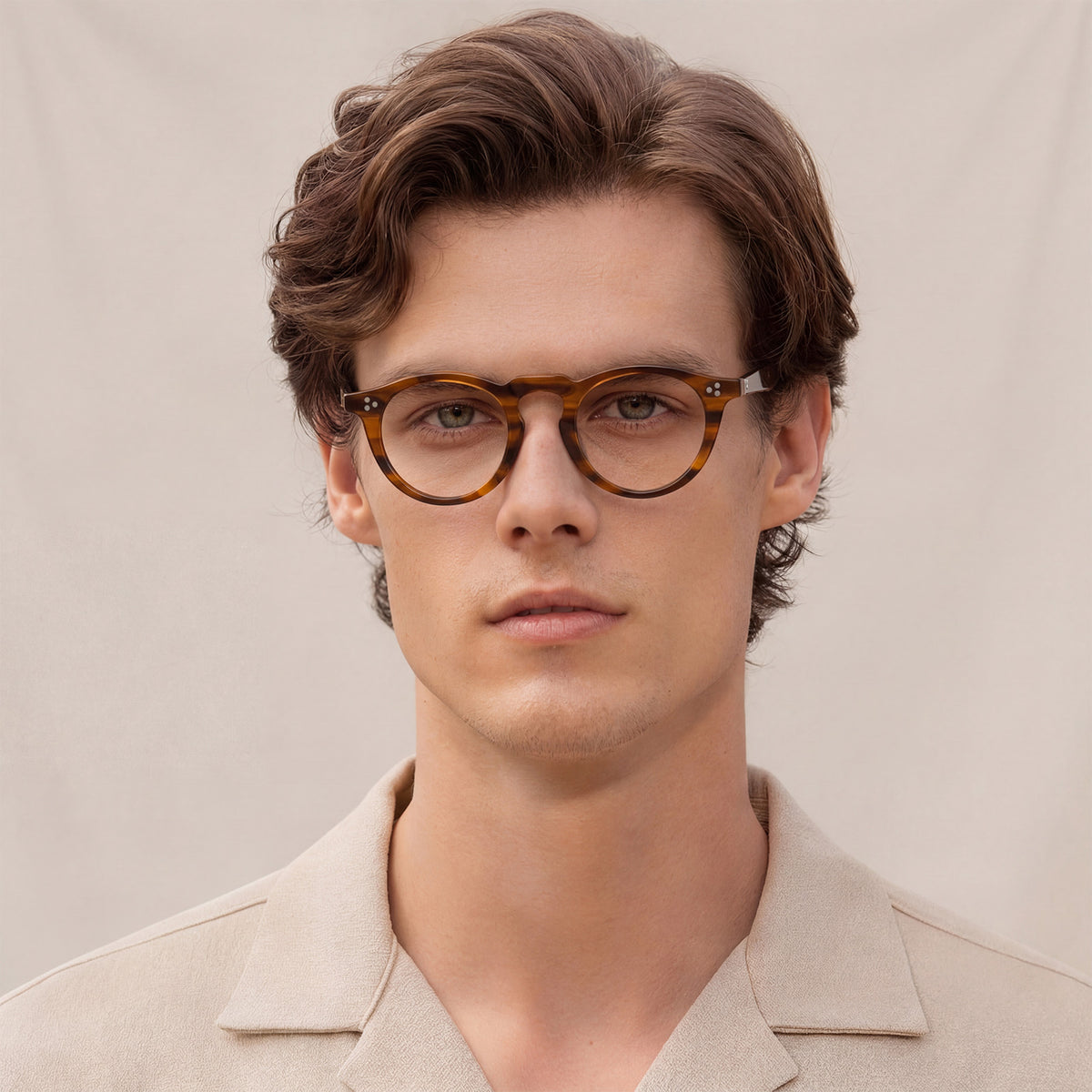
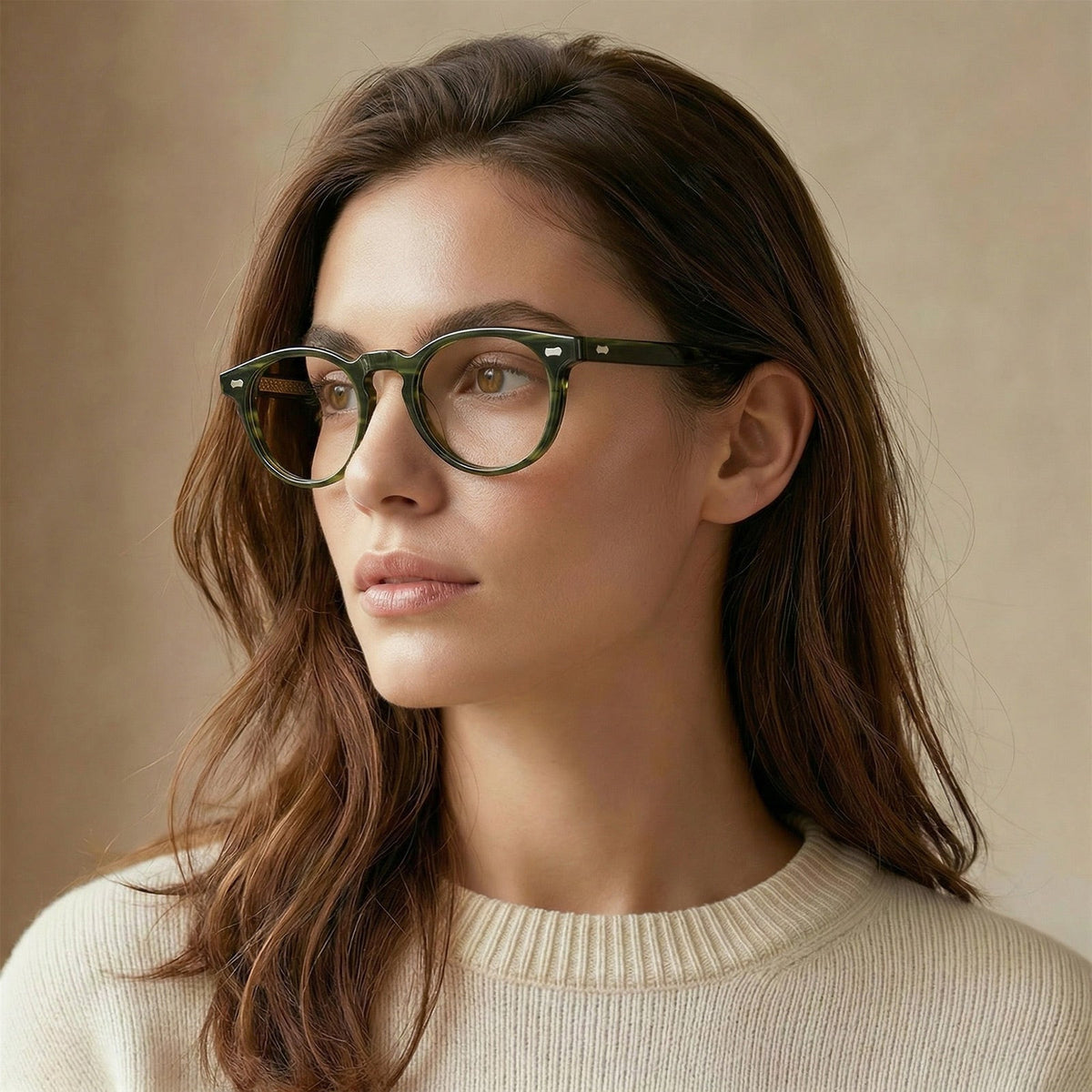
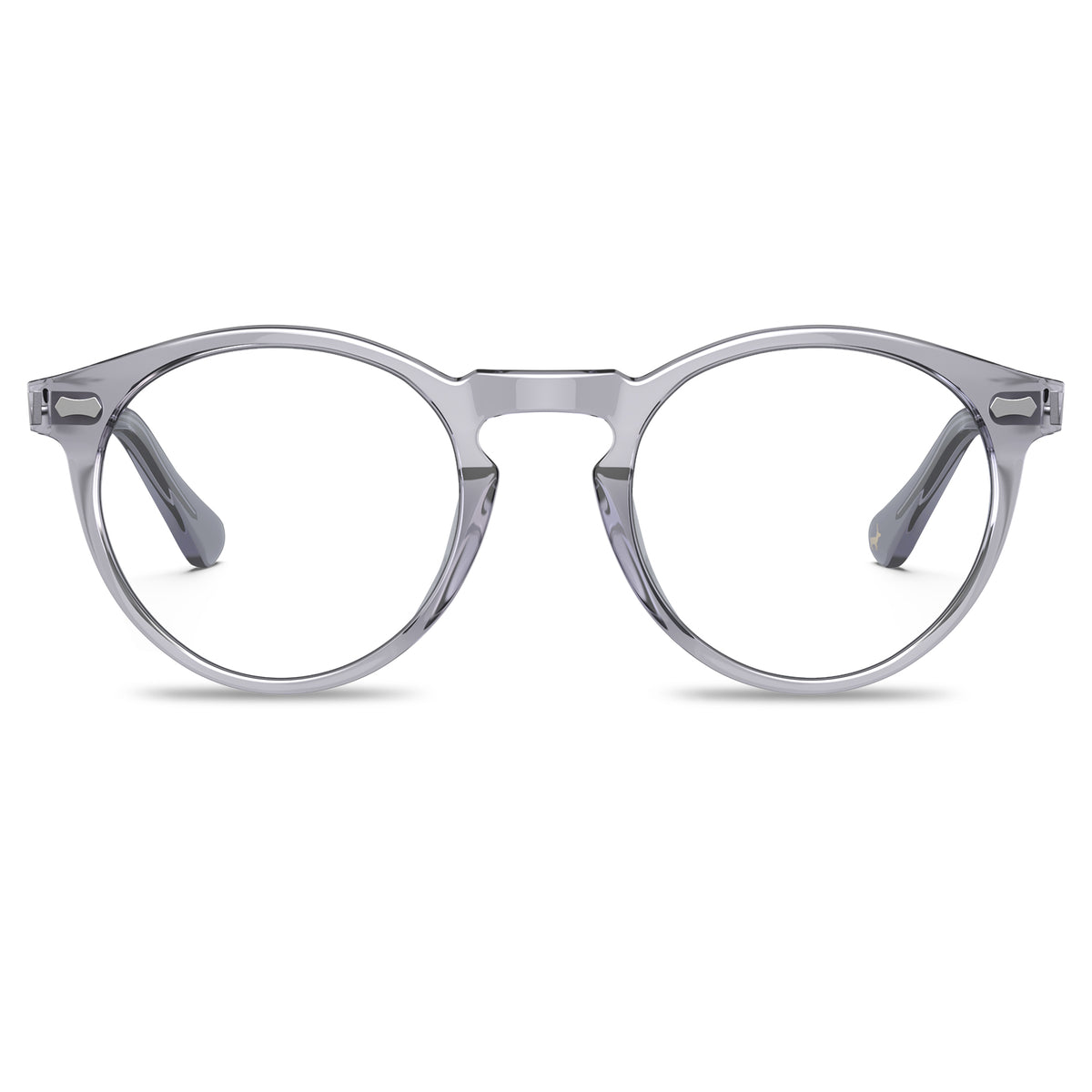
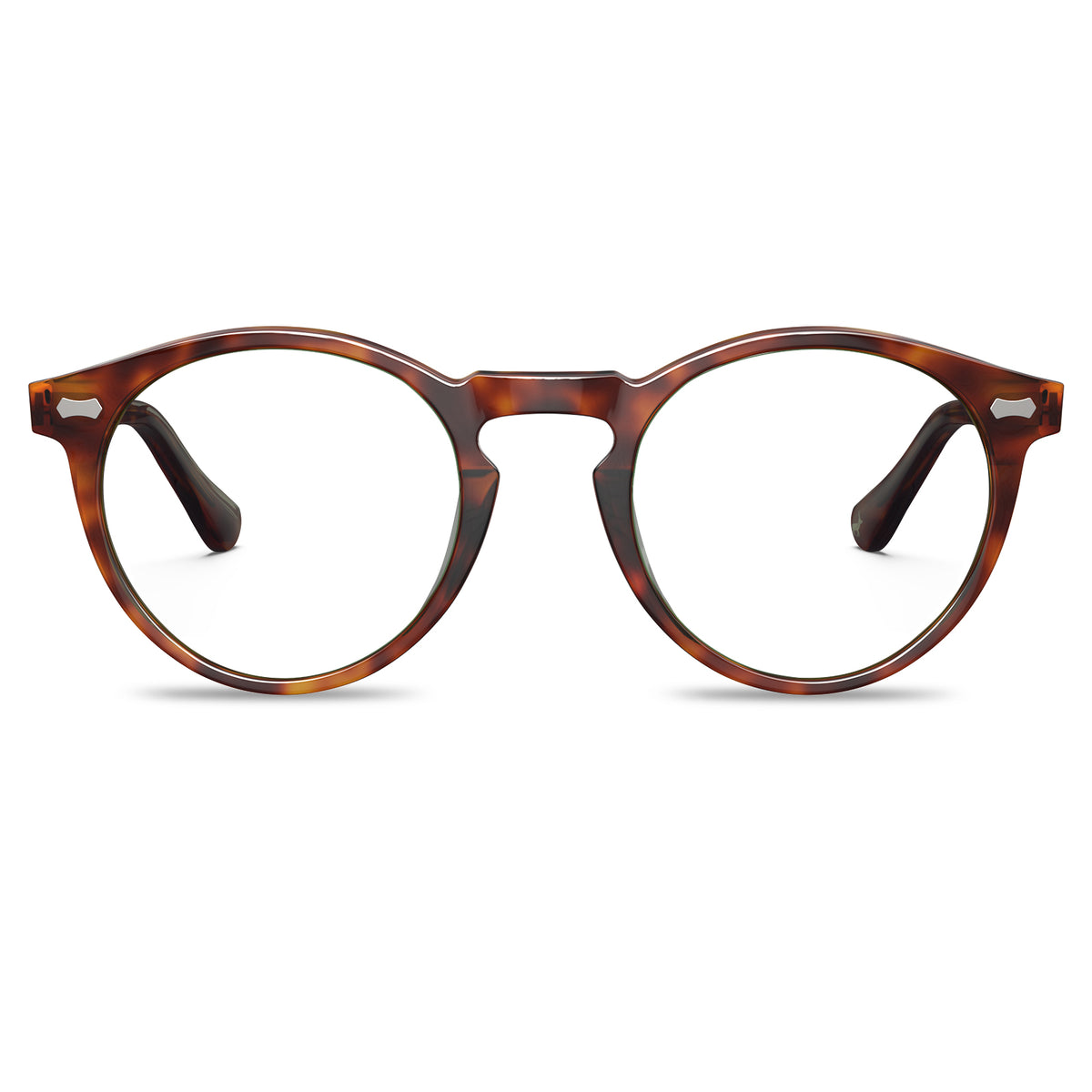
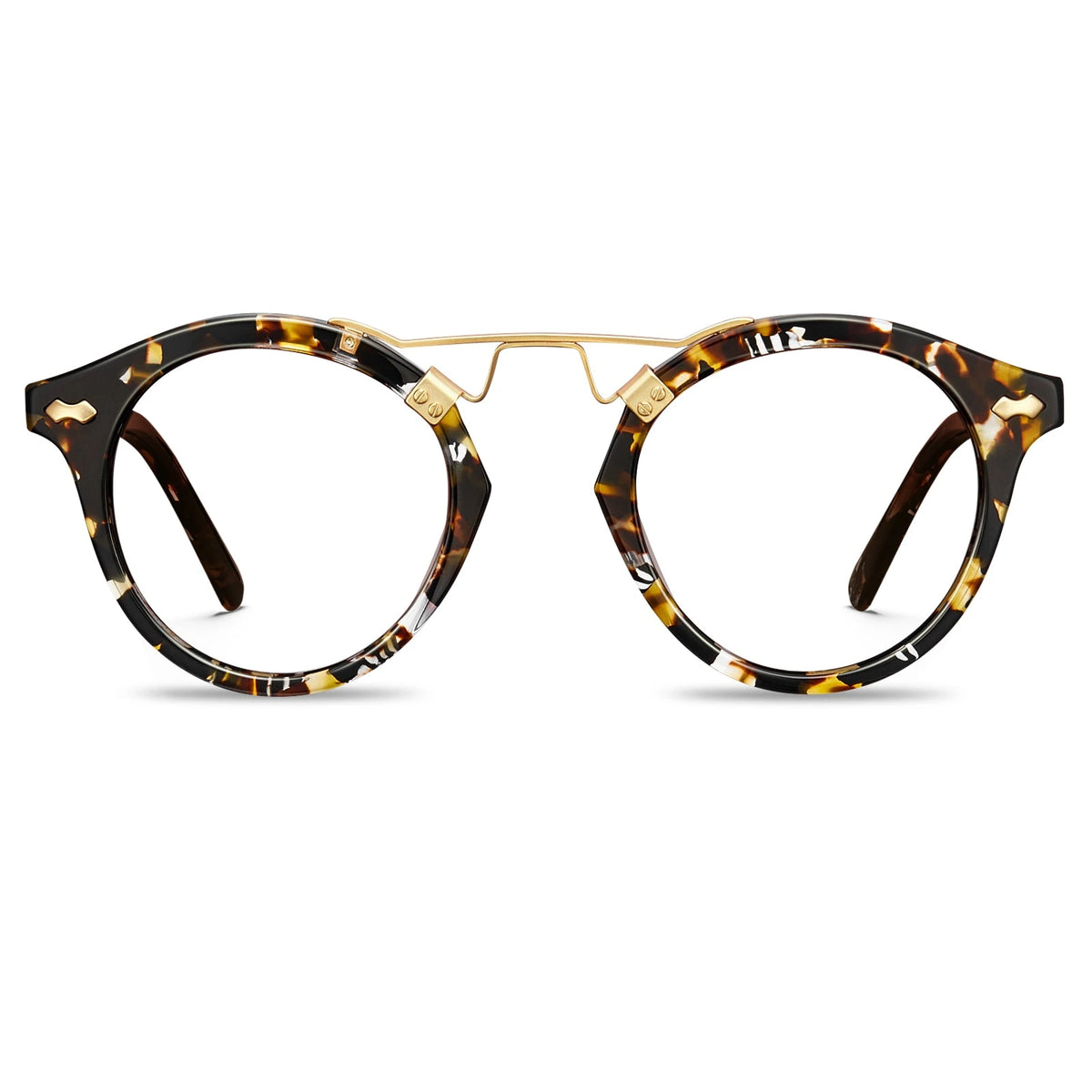
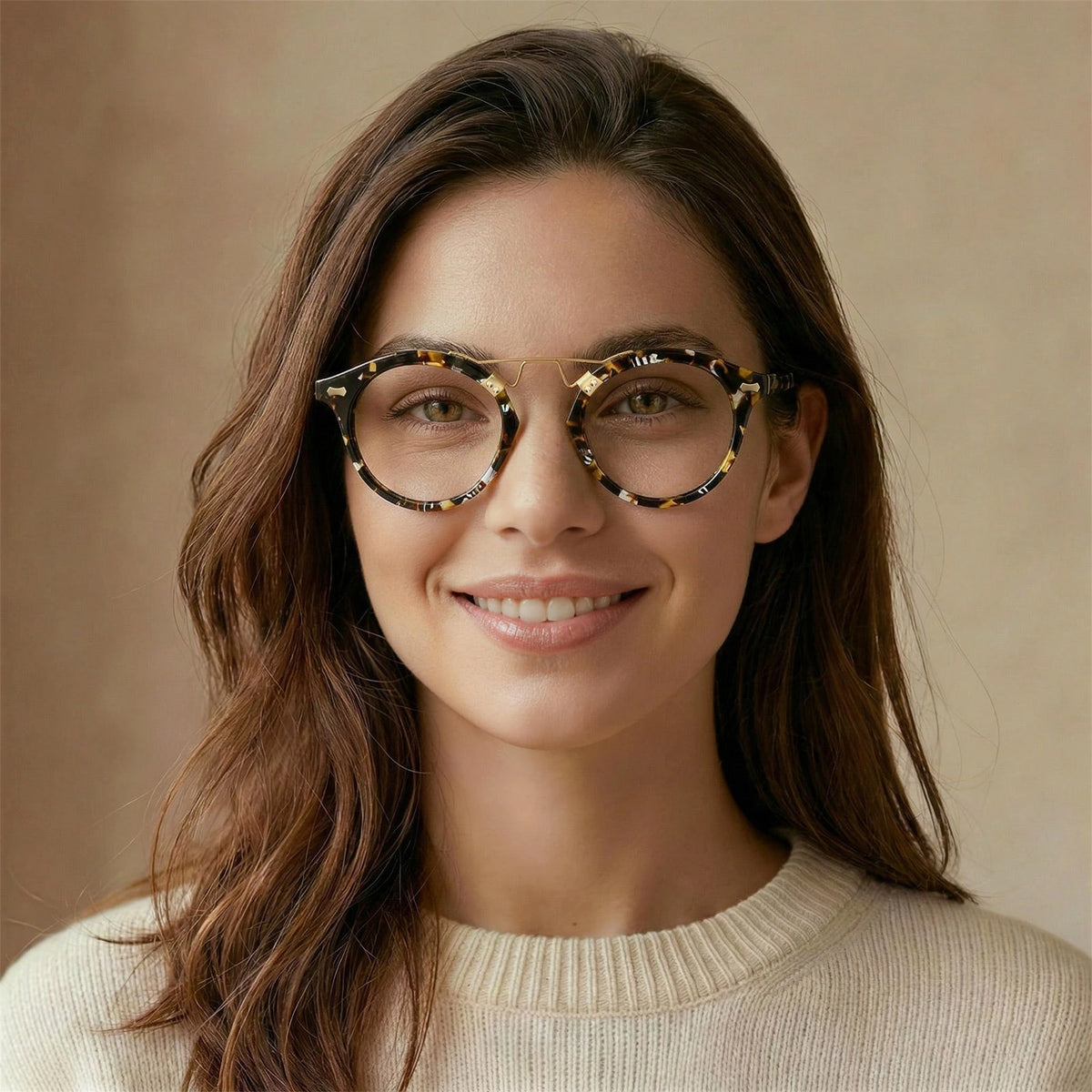
Round eyeglasses give off a classic, retro feel reminiscent of such figures as John Lennon and Steve Jobs.












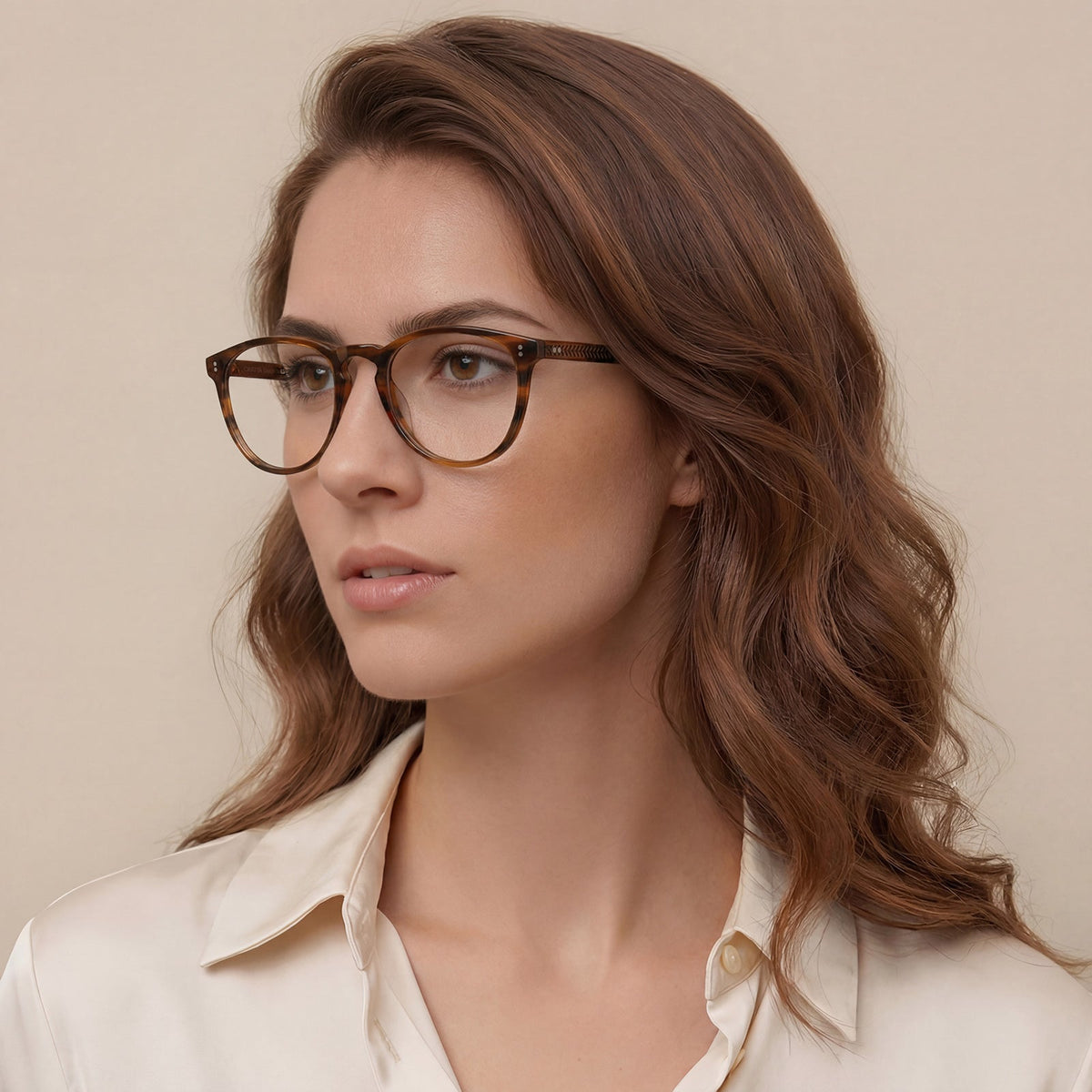
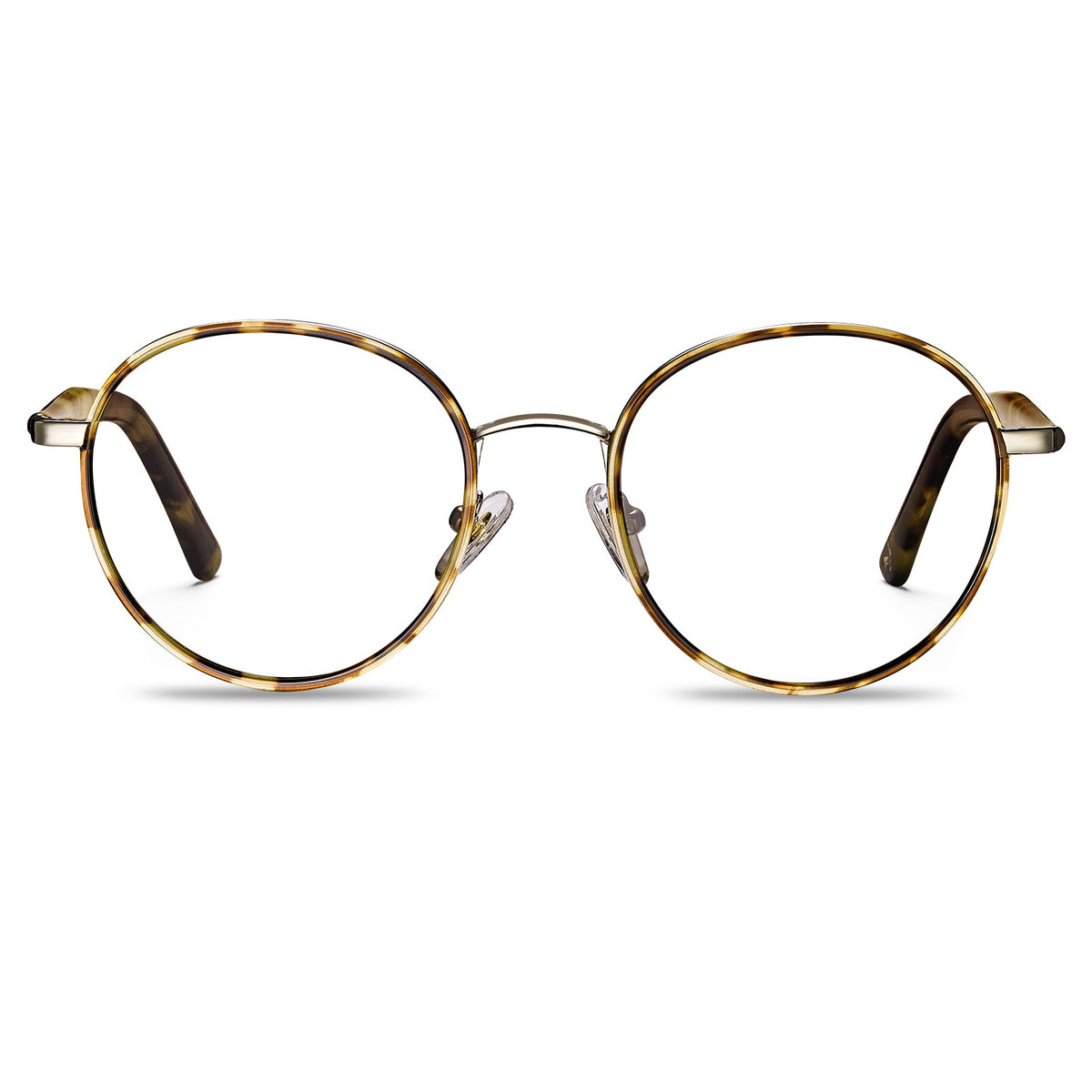

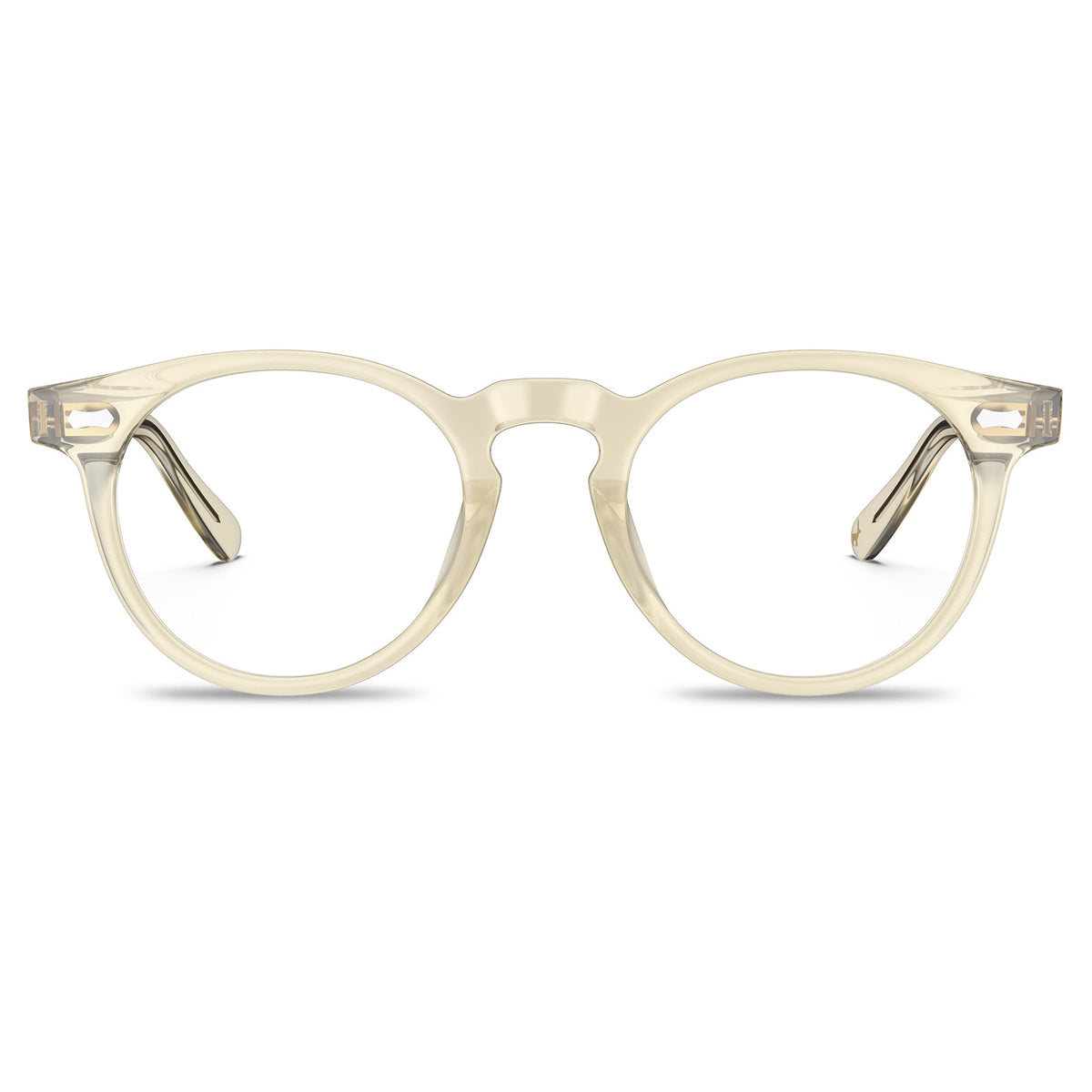
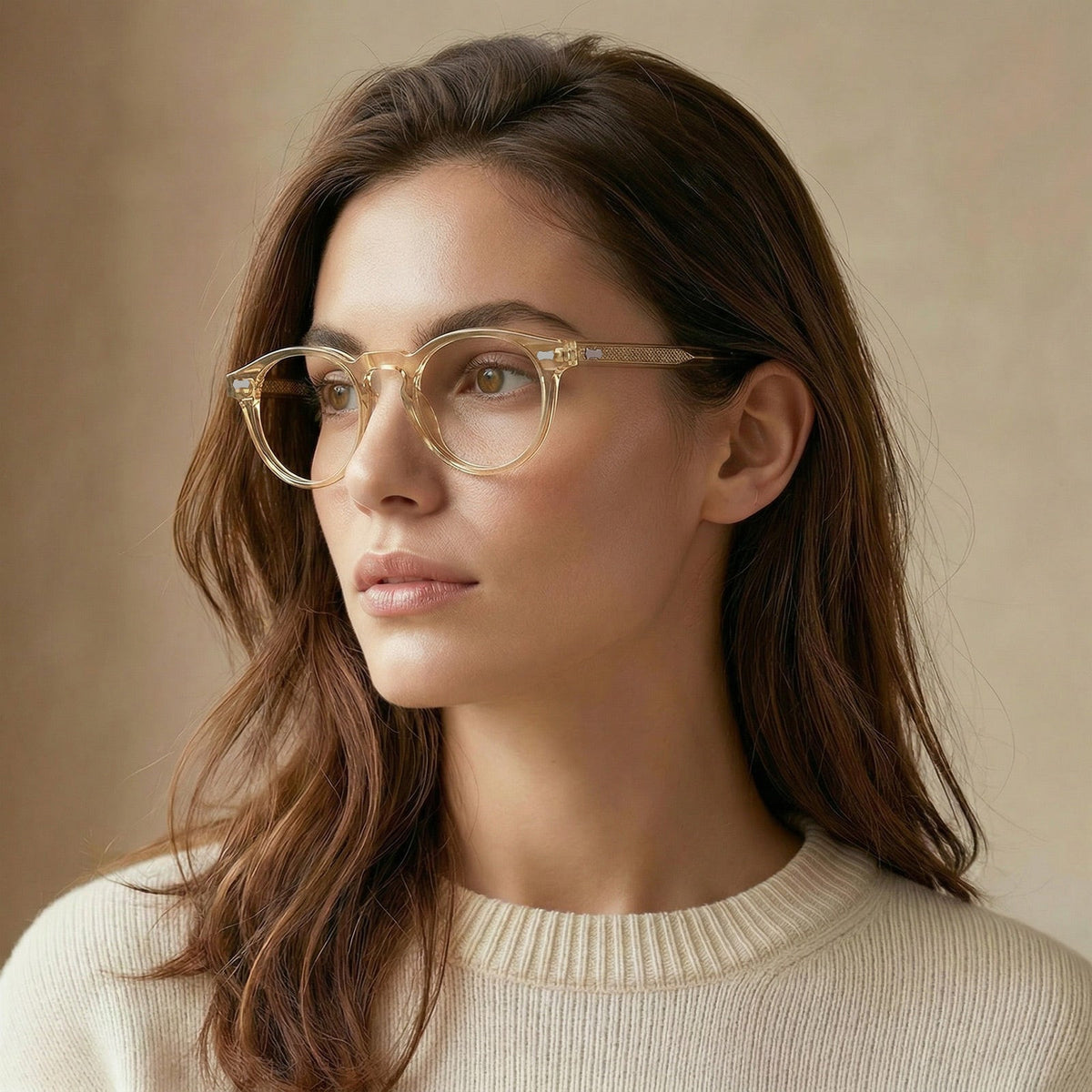










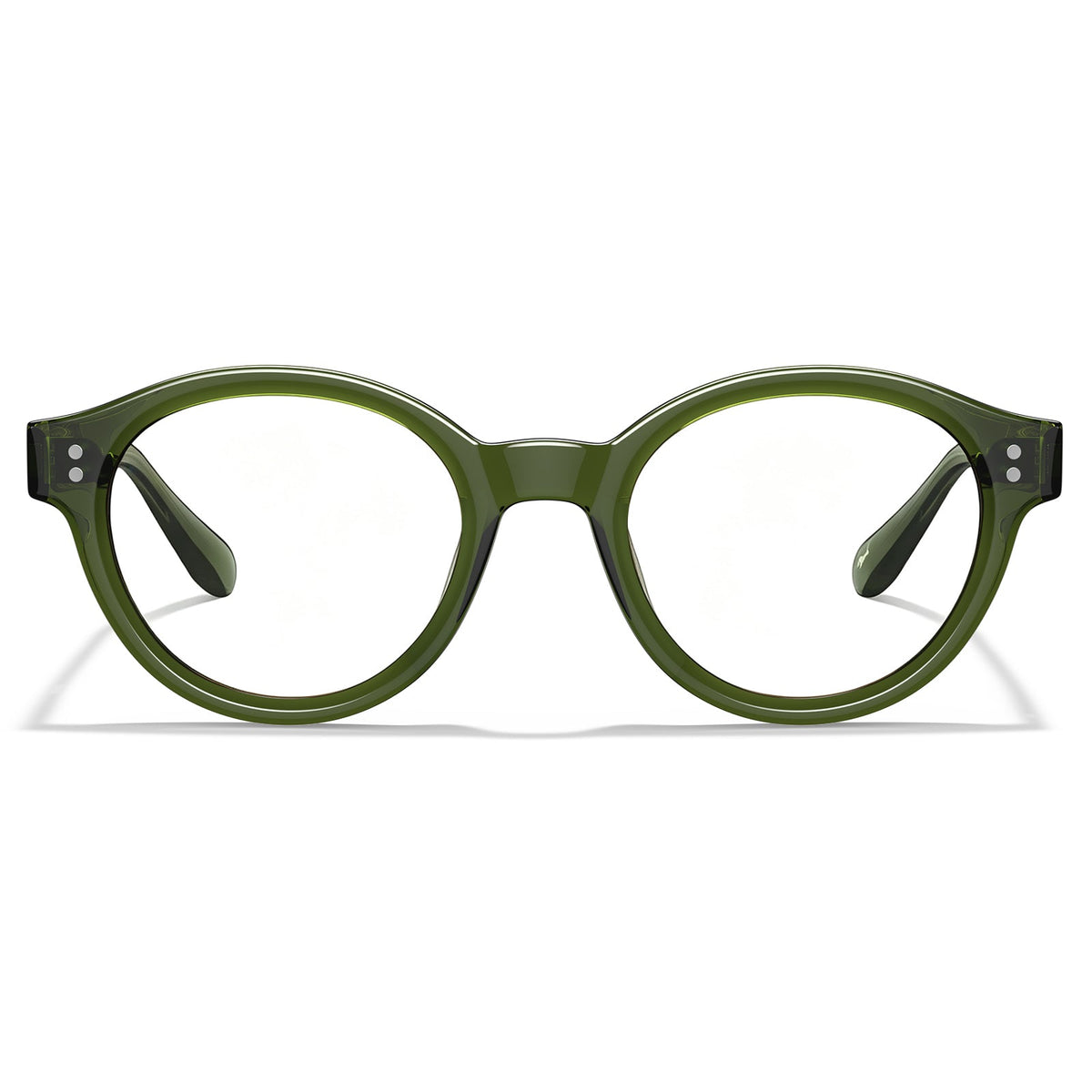
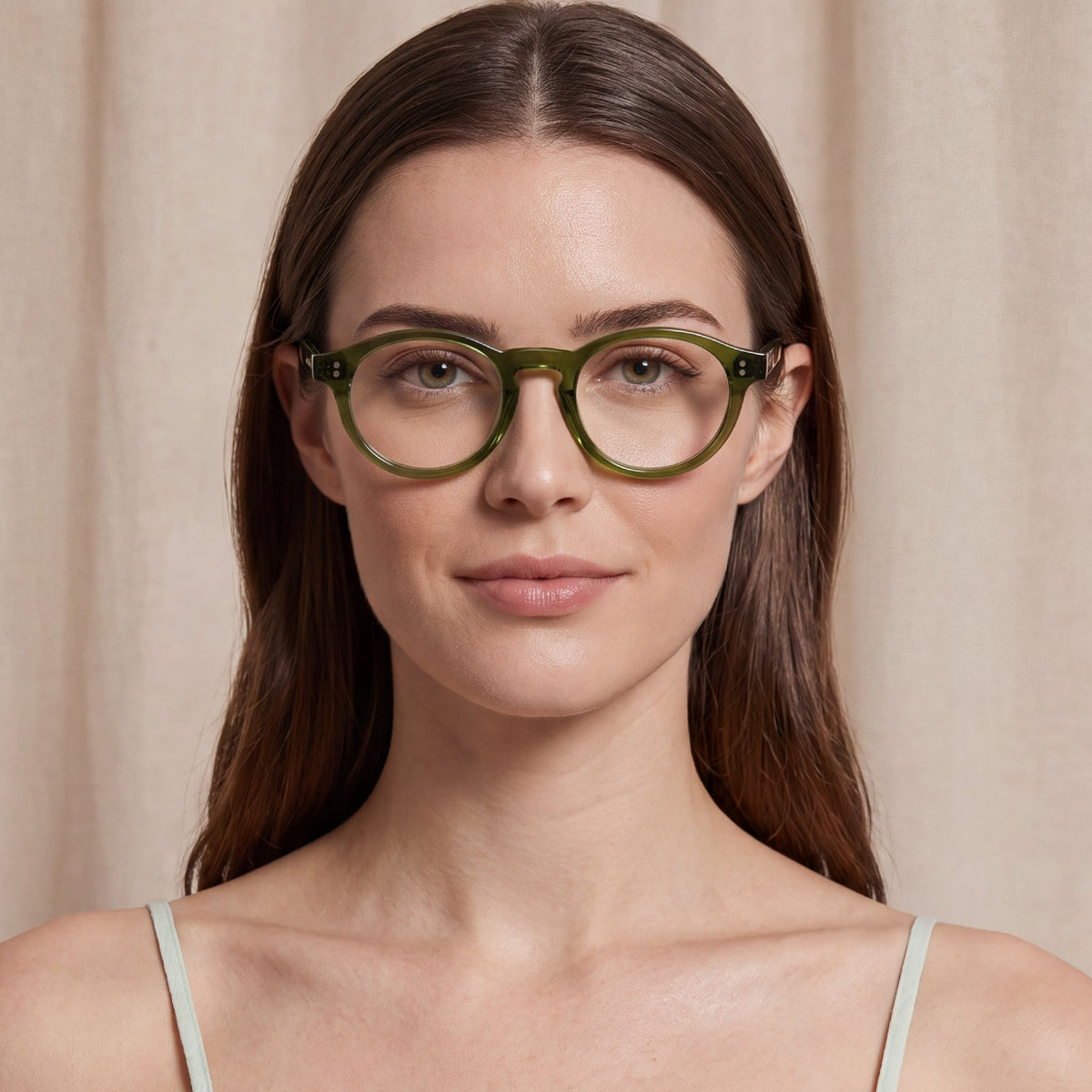
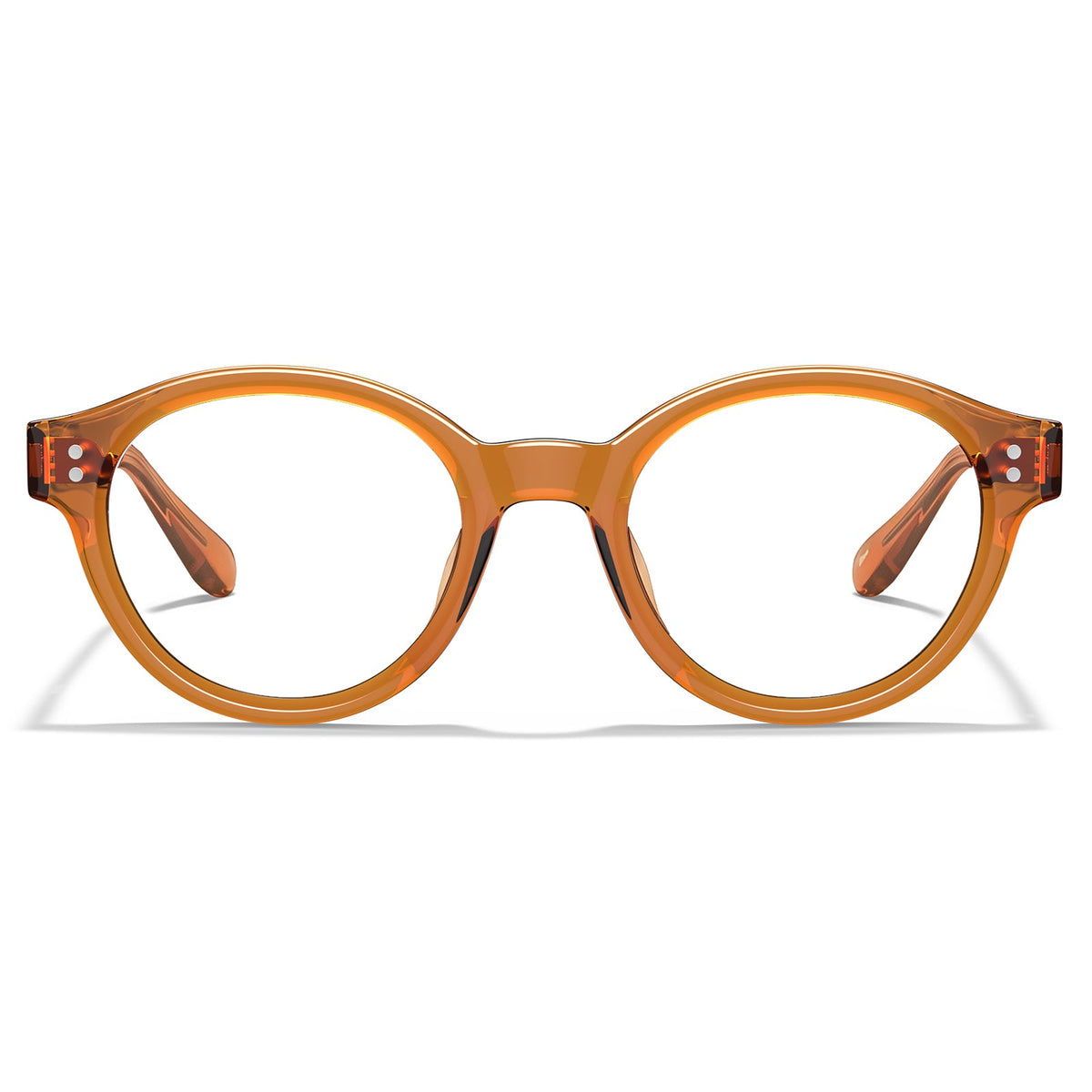
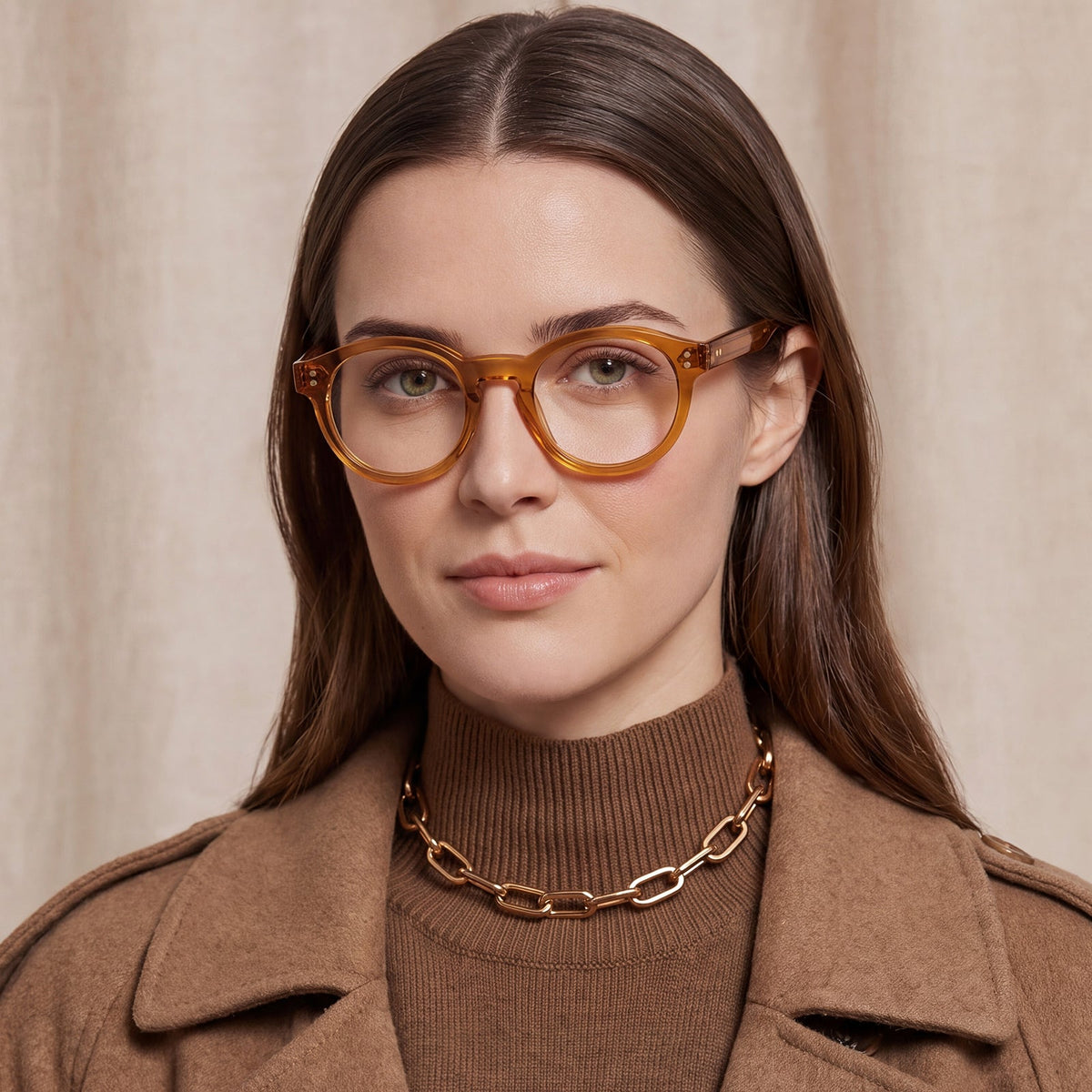


FAQ
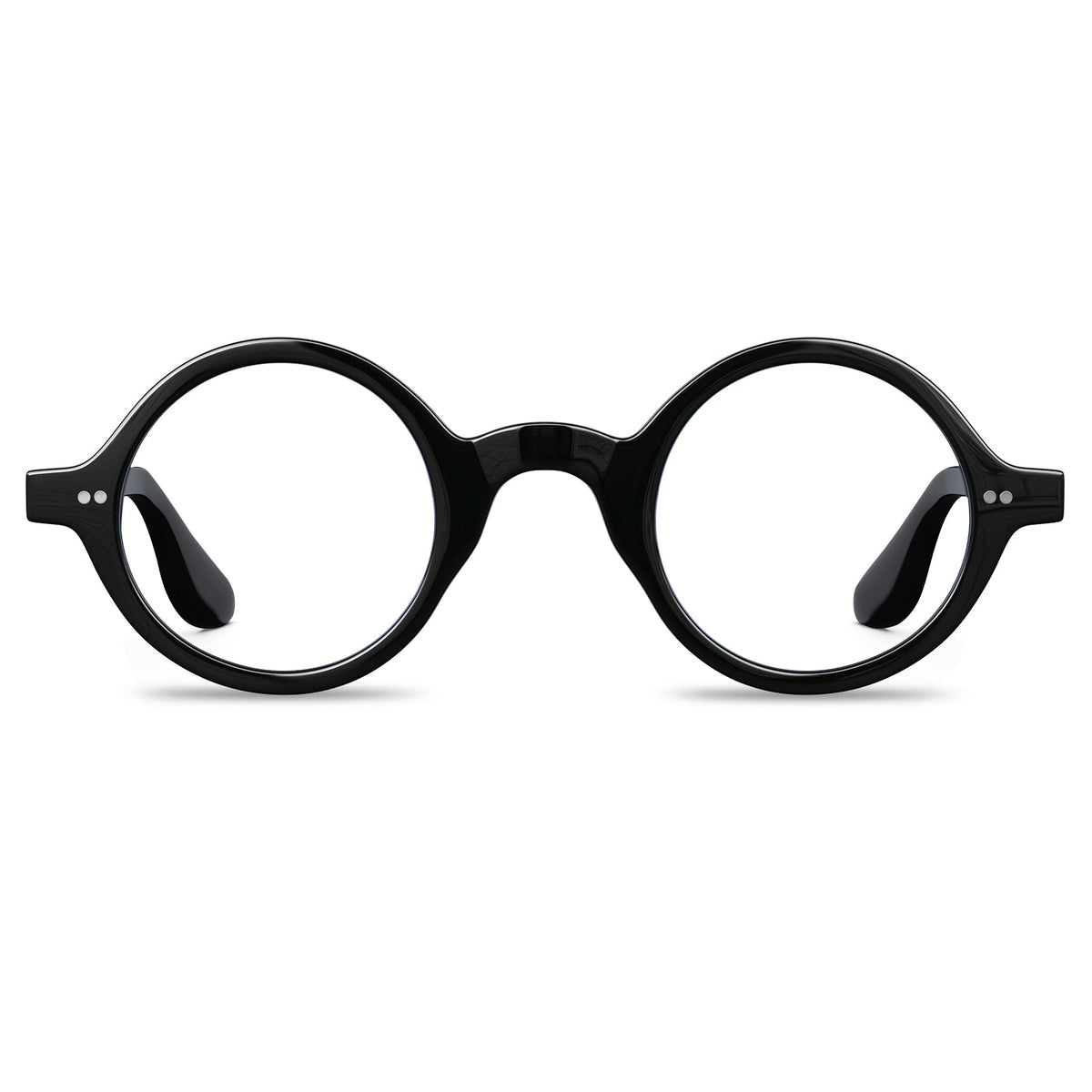
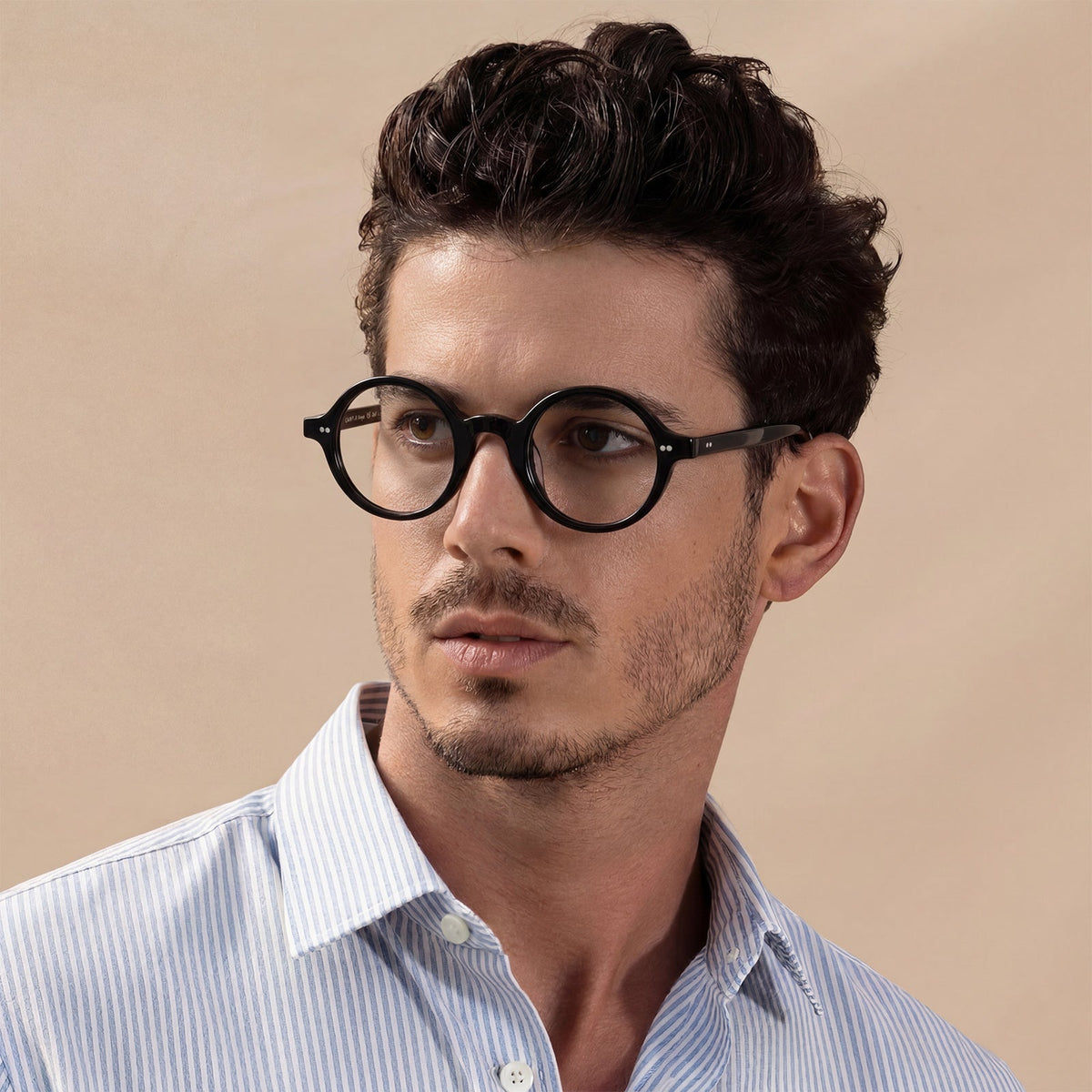
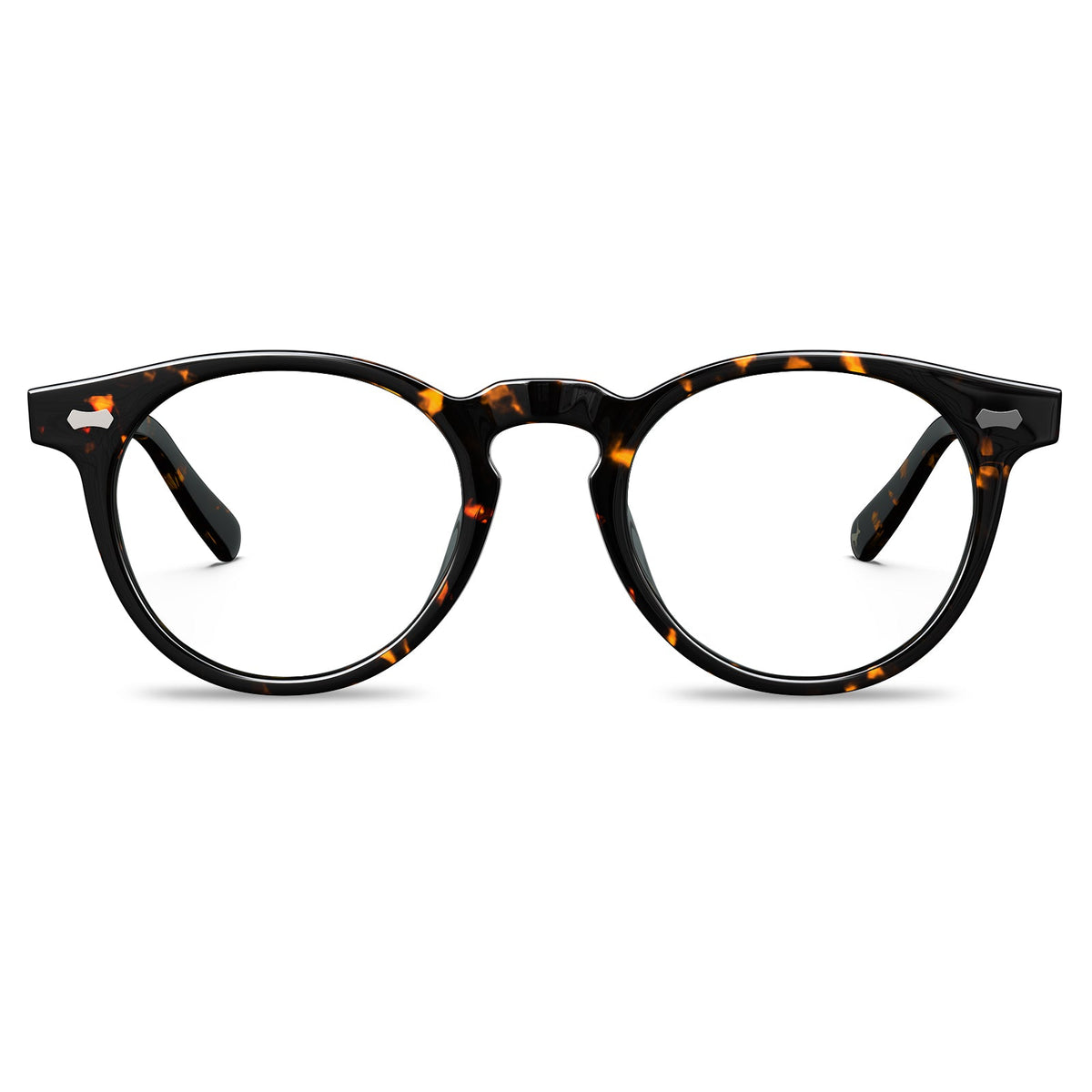
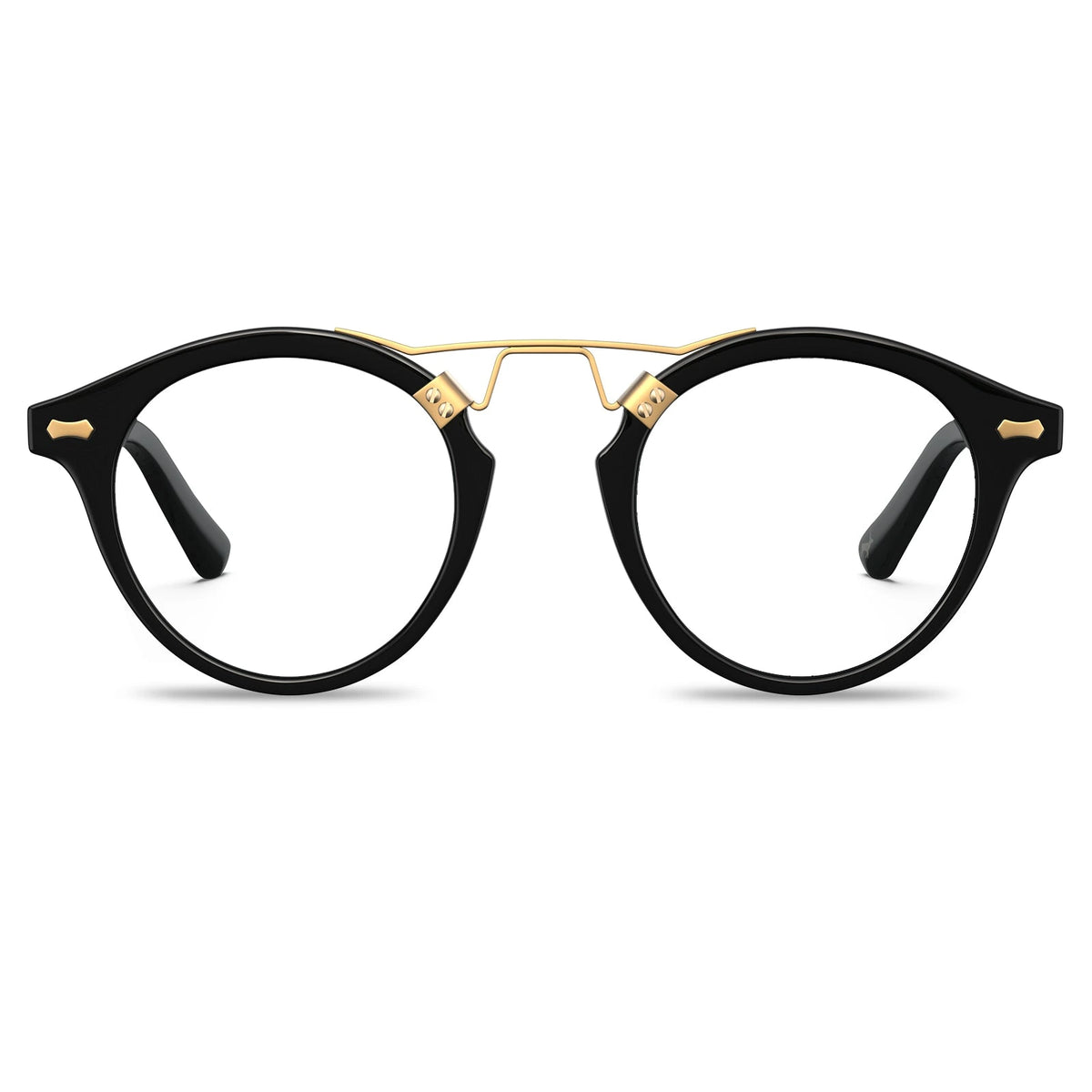
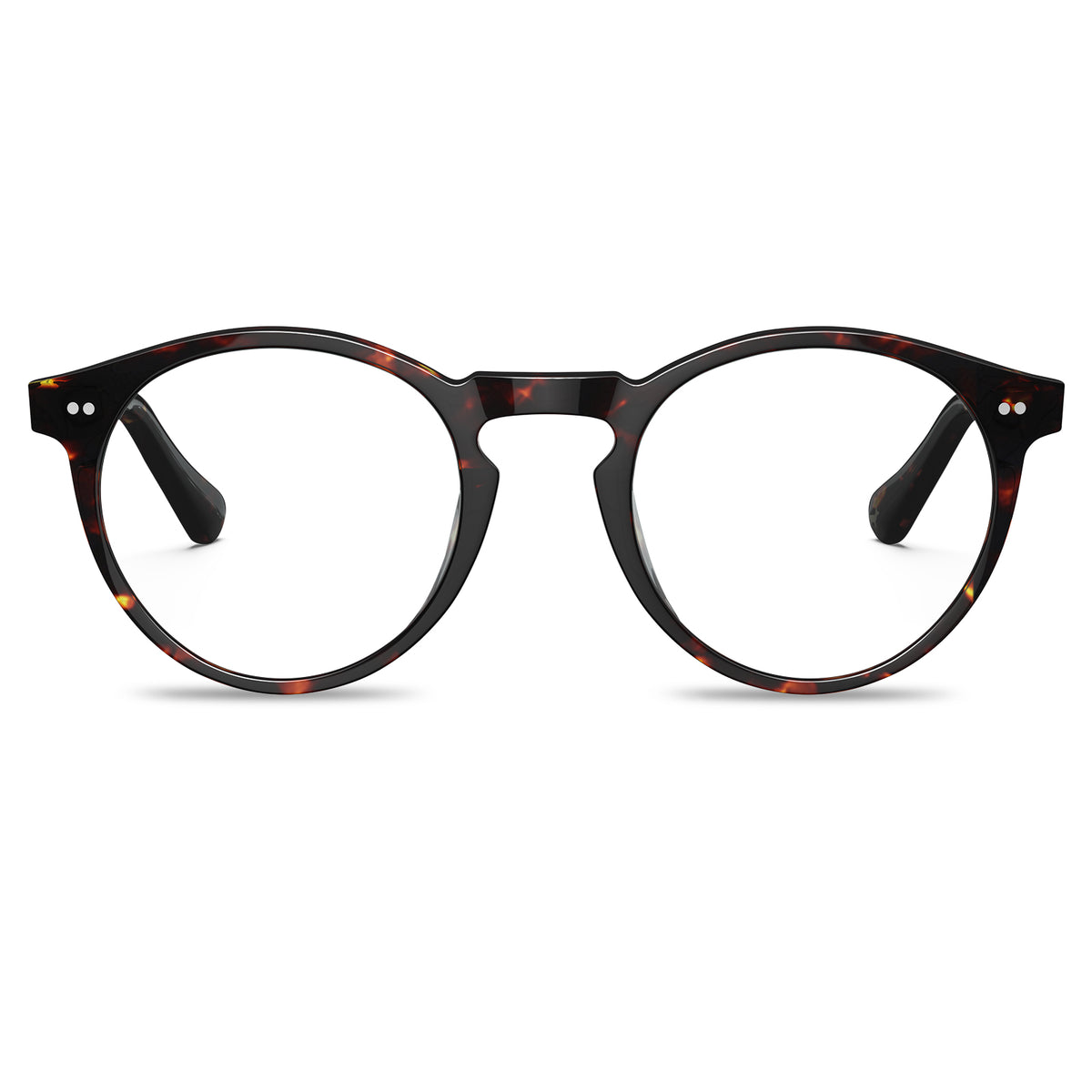
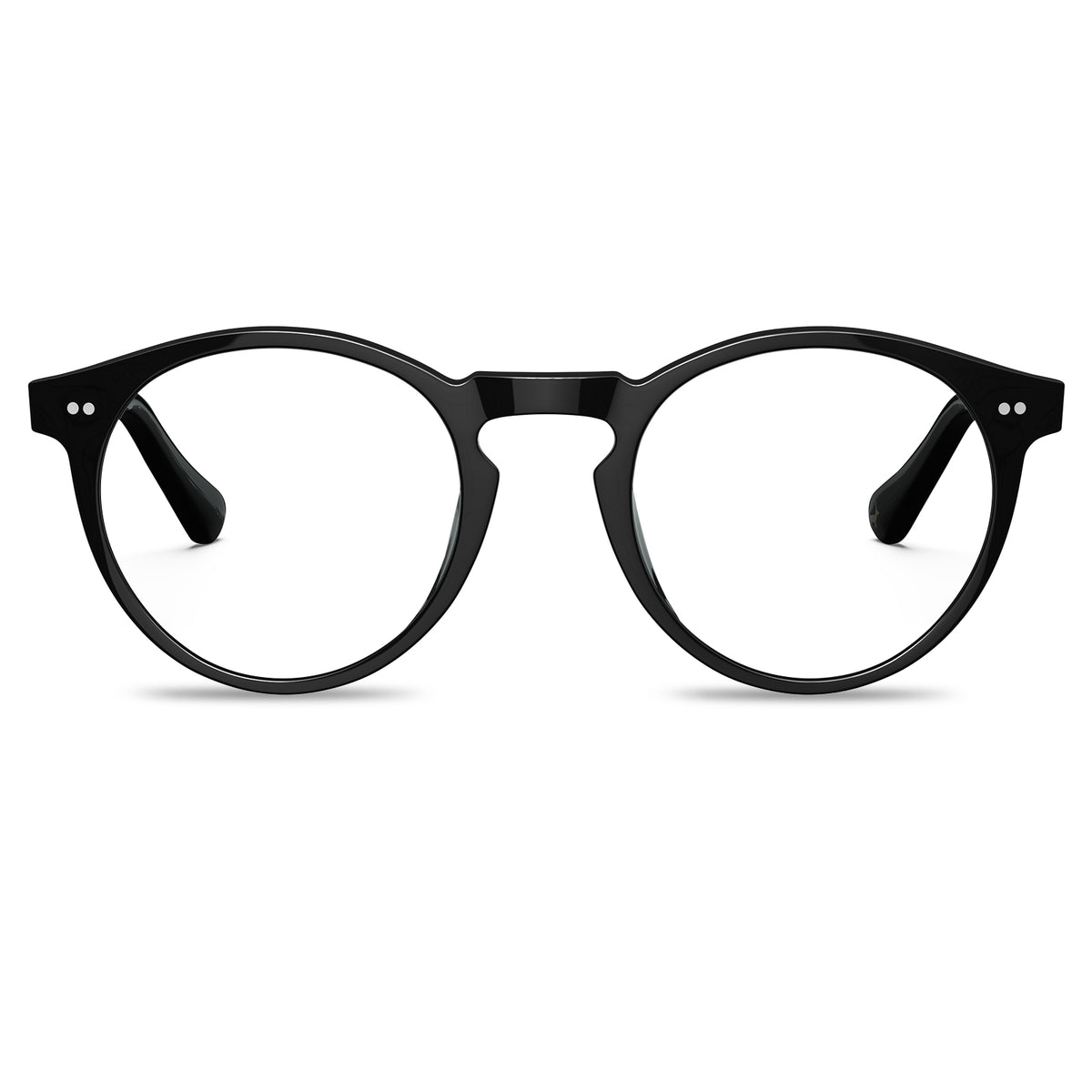
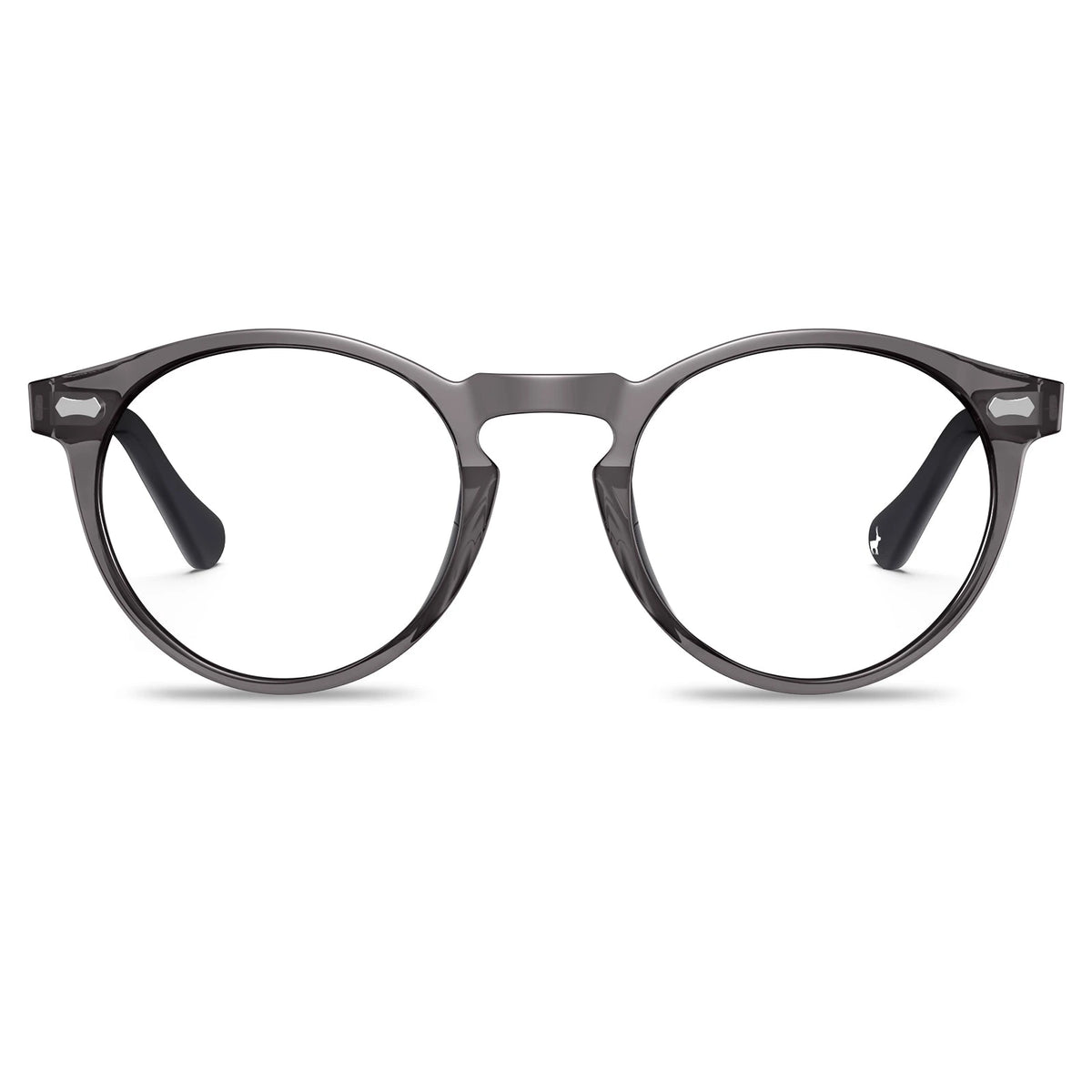
Carfia Round Eyeglasses
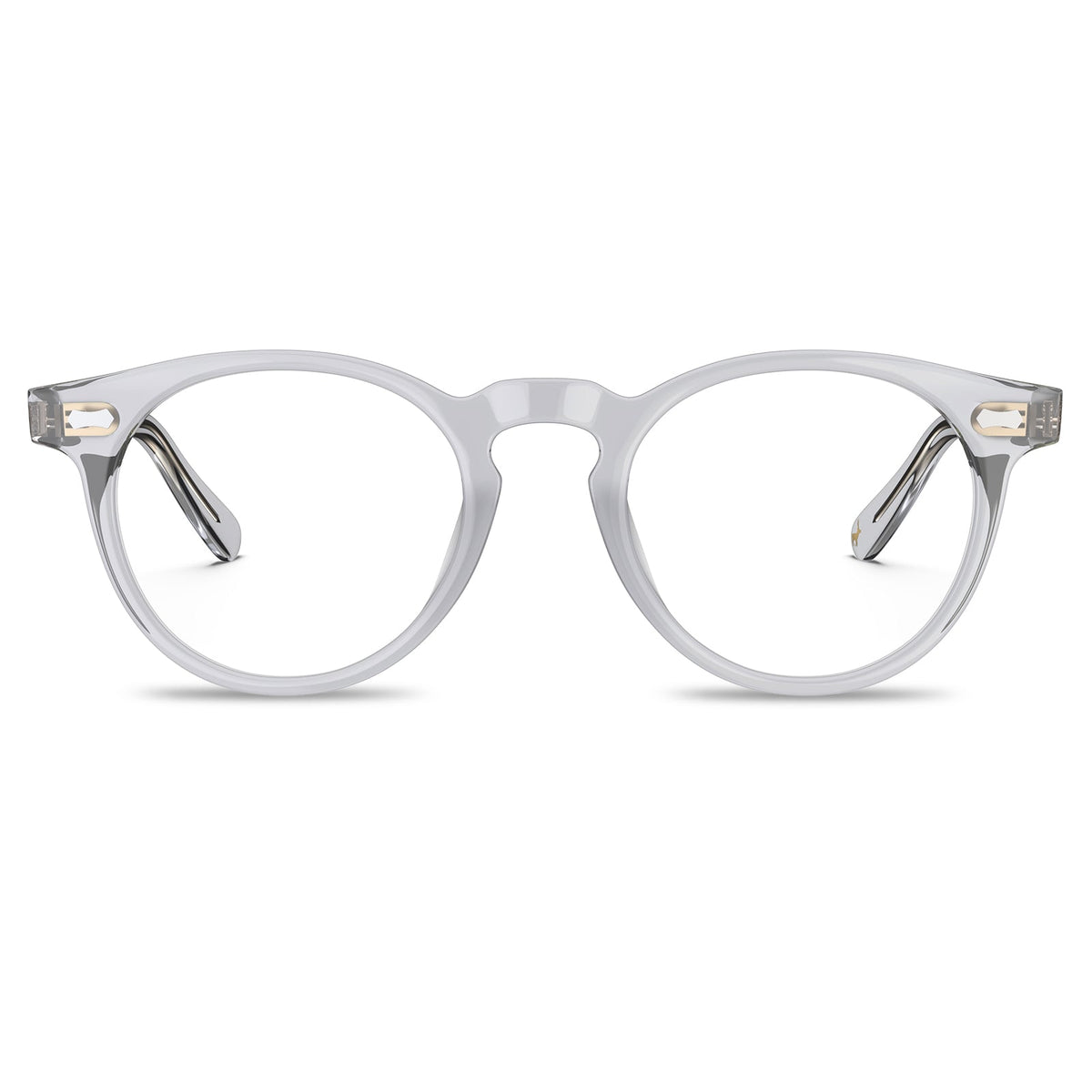
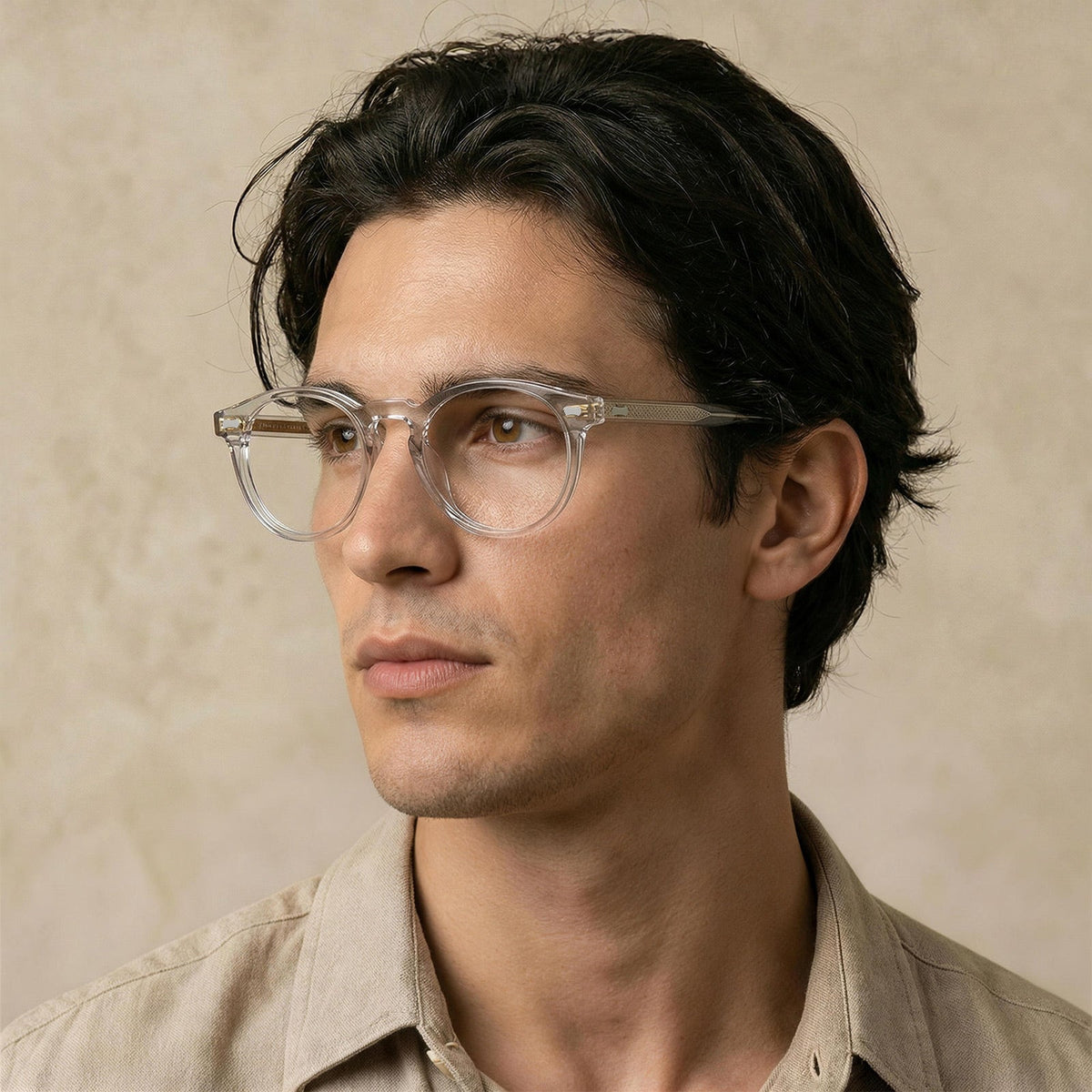
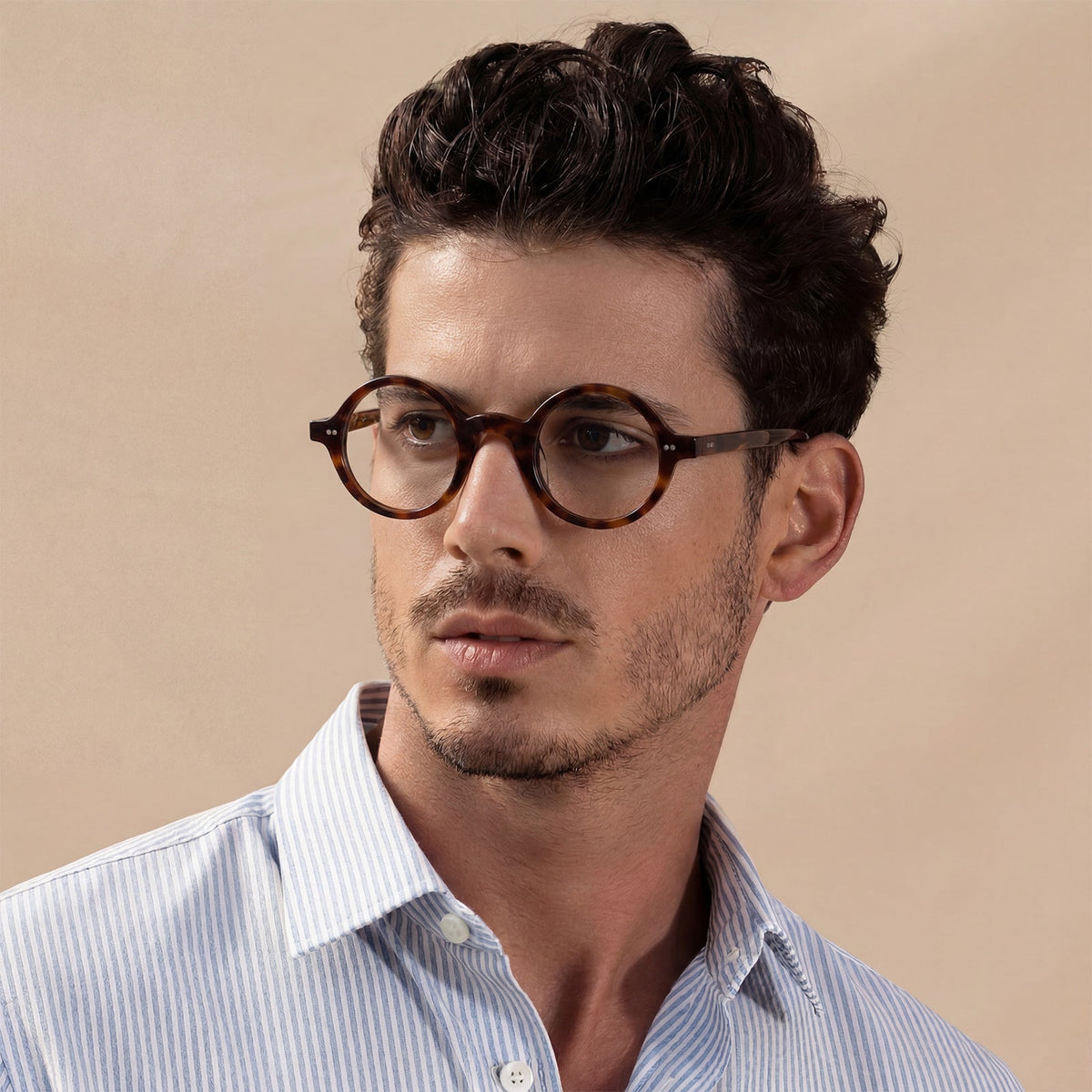
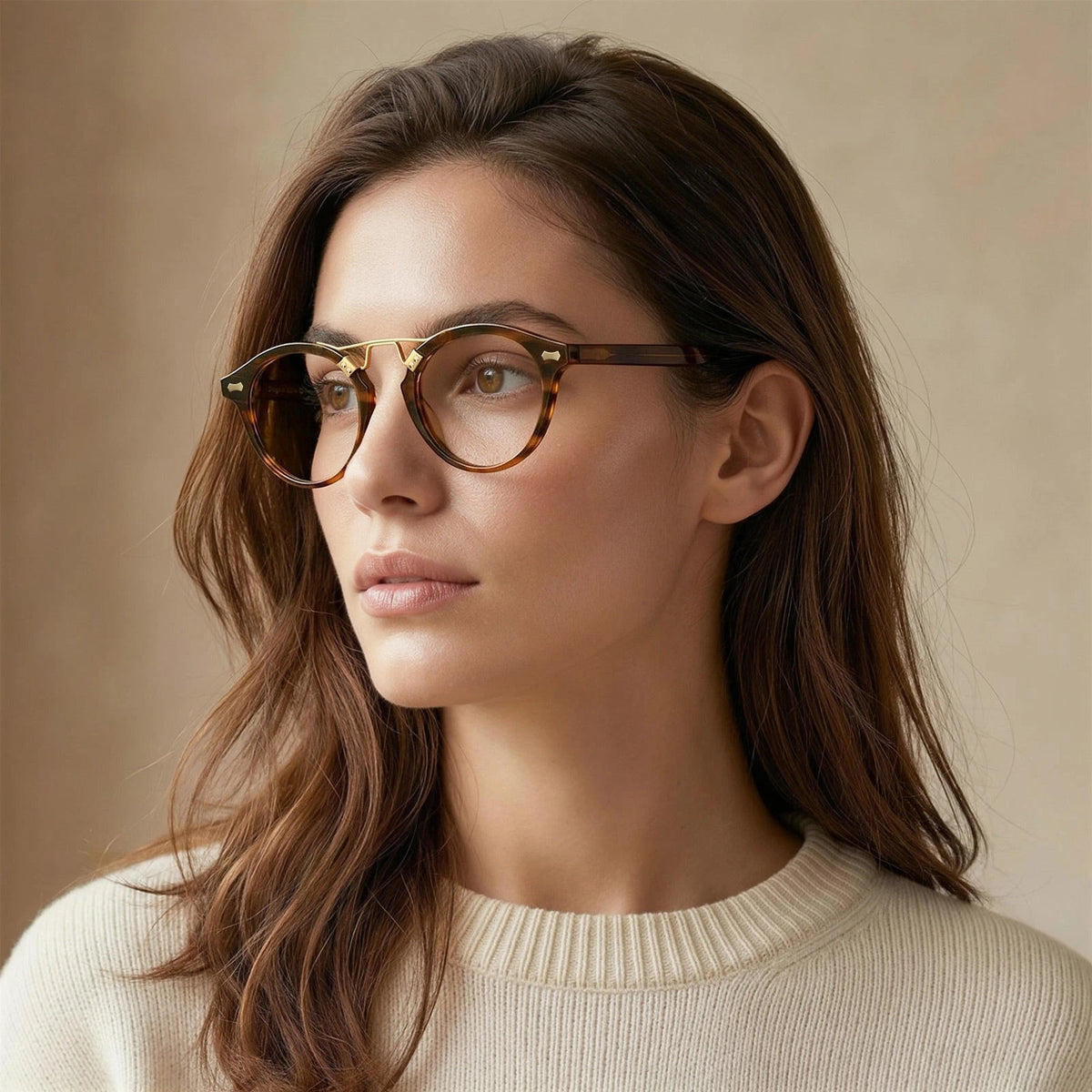
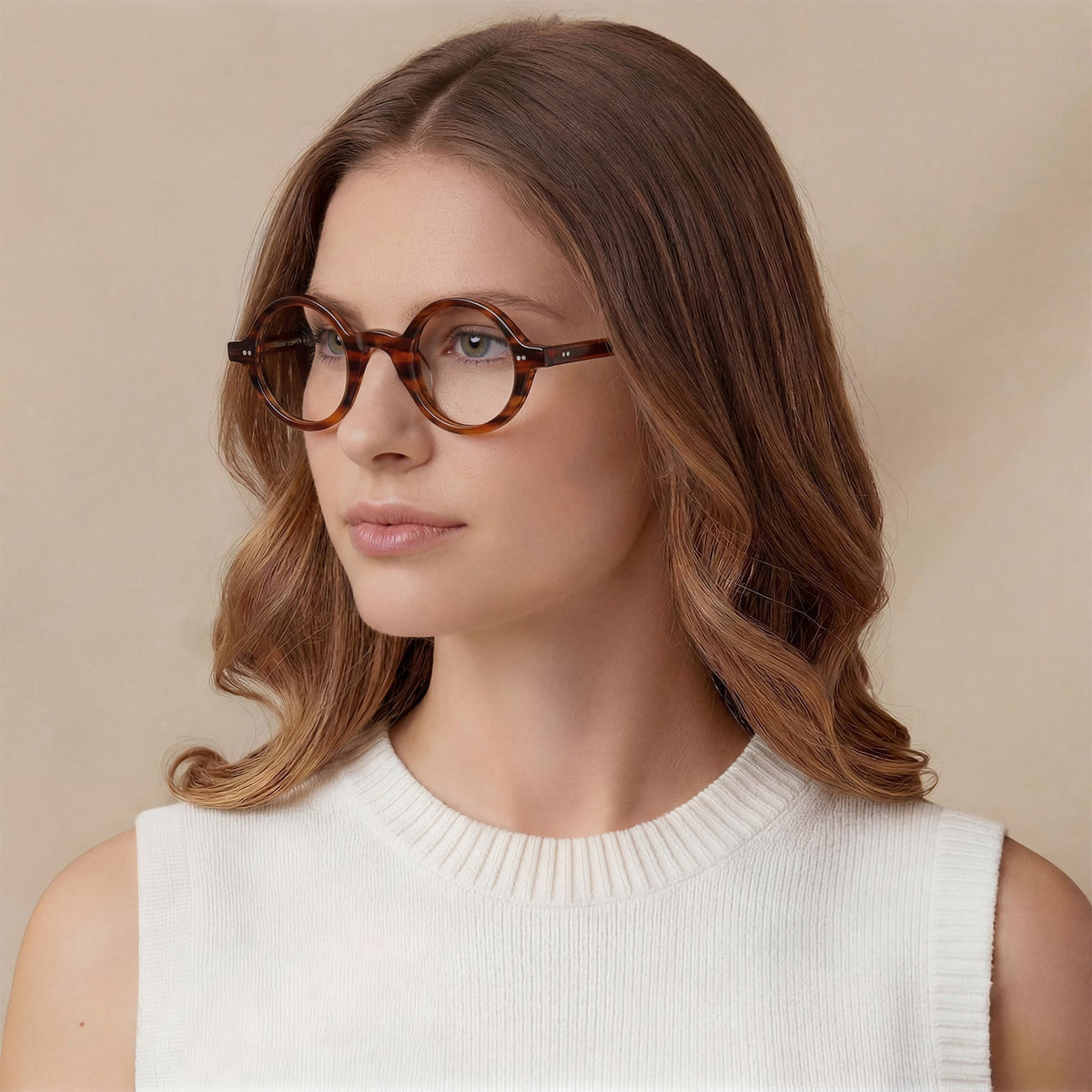
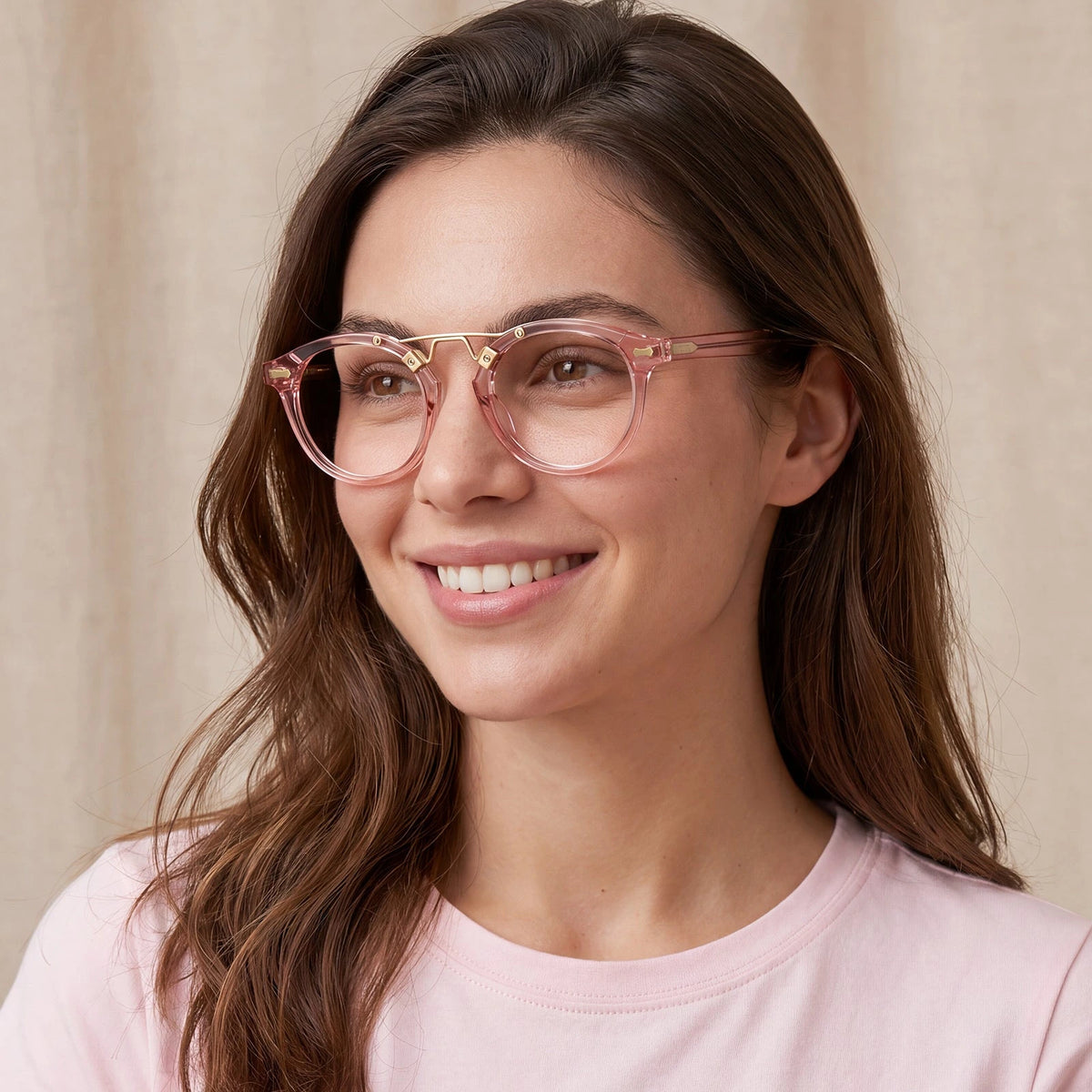
Round frames are the classic contrast to angular features, so they flatter more faces than almost any other shape — but there is one case worth thinking through carefully. If you have a square face (an equally wide forehead, cheekbone and jaw line) or a diamond face (narrow forehead and chin, wide cheekbones), round glasses are a strong choice: the curves soften sharp angles and pull attention to the centre of the face. An oval face is the easiest of all — our Frame & Face Shapes guide puts round, square, rectangle and oval frames all in play, so you can simply choose by scale. A long face also works well in round frames, because the taller lens adds visual fullness. Two situations to handle with care: a round face, where a perfectly circular frame can echo the roundness instead of balancing it — choose a panto-style round, a frame slightly wider than it is tall, or one with a keyhole bridge that visually breaks up the circle; and a triangle face (narrow forehead, wider jaw), where the guide advises against a round frame whose top half is narrower than the forehead. This collection gives you 70 styles to choose from, and the vintage, retro look is exactly why round eyeglasses have stayed in fashion from the John Lennon and Steve Jobs eras to today.
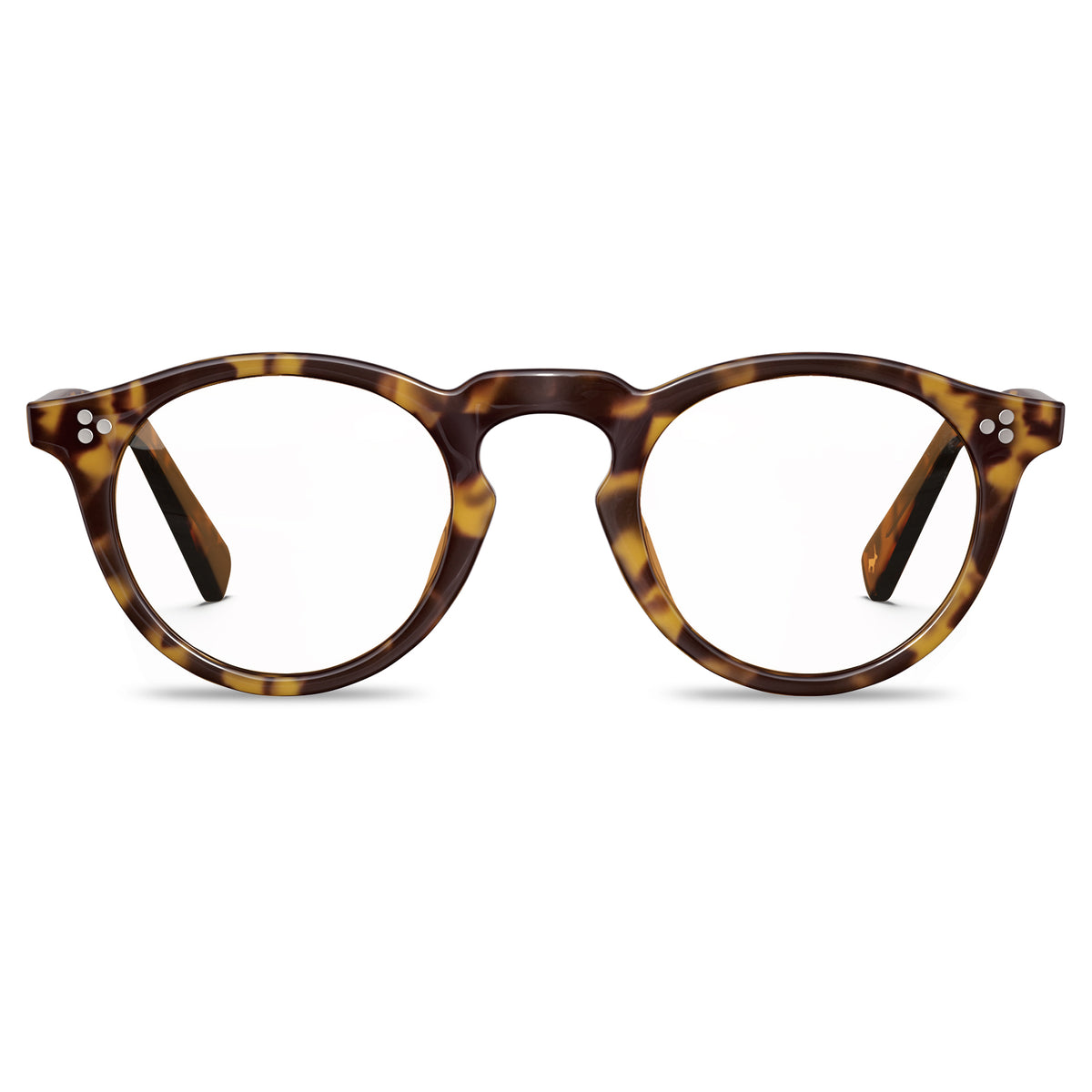
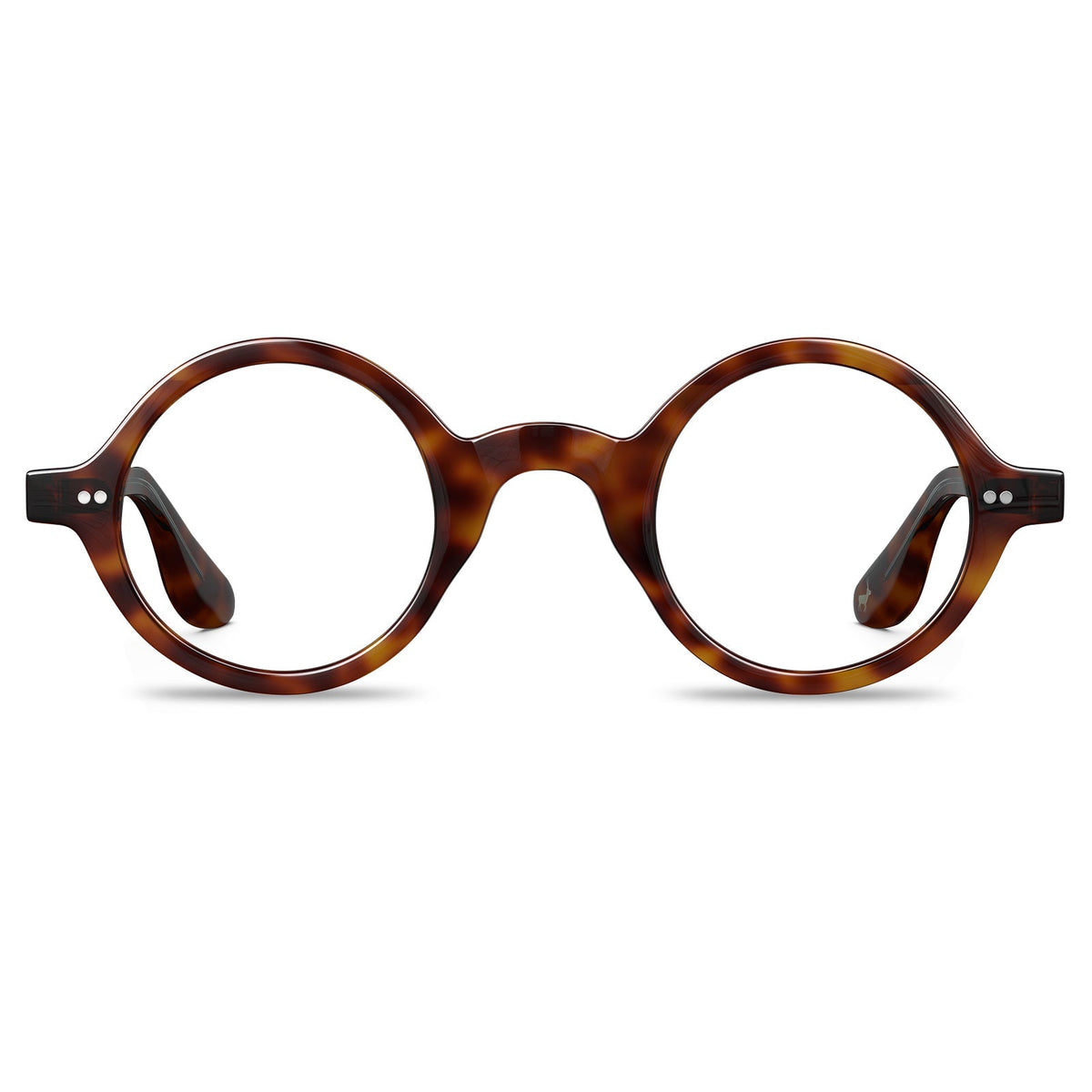
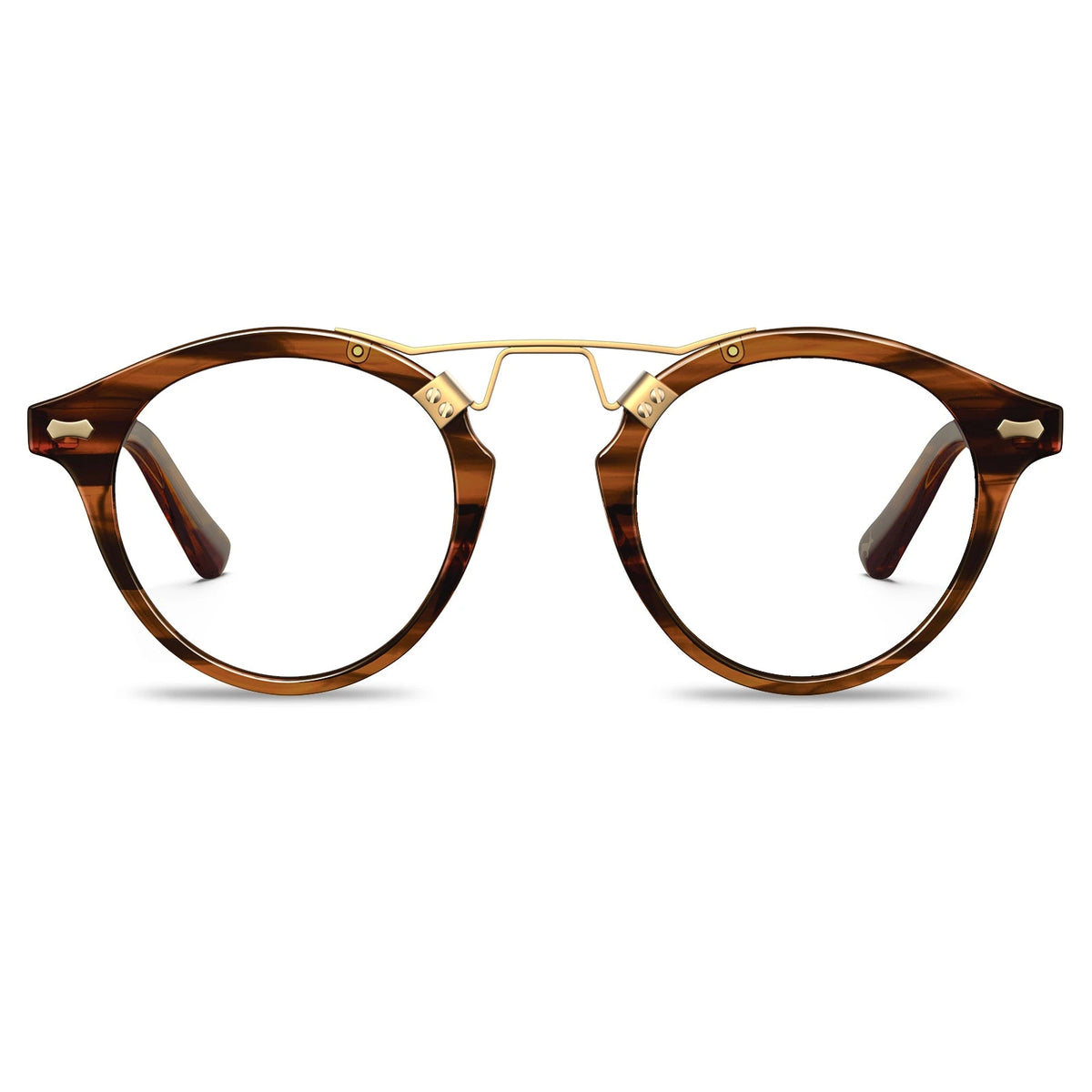
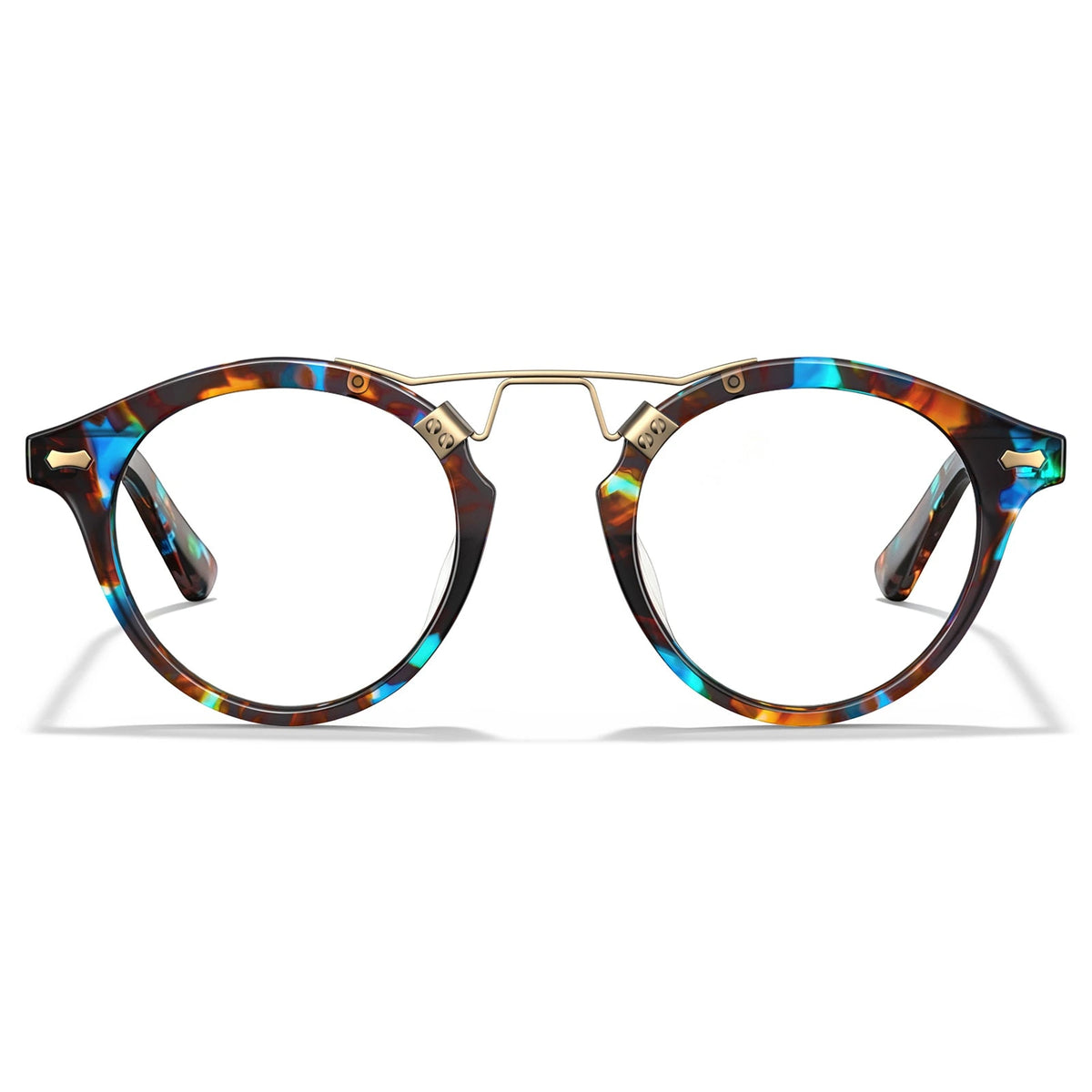
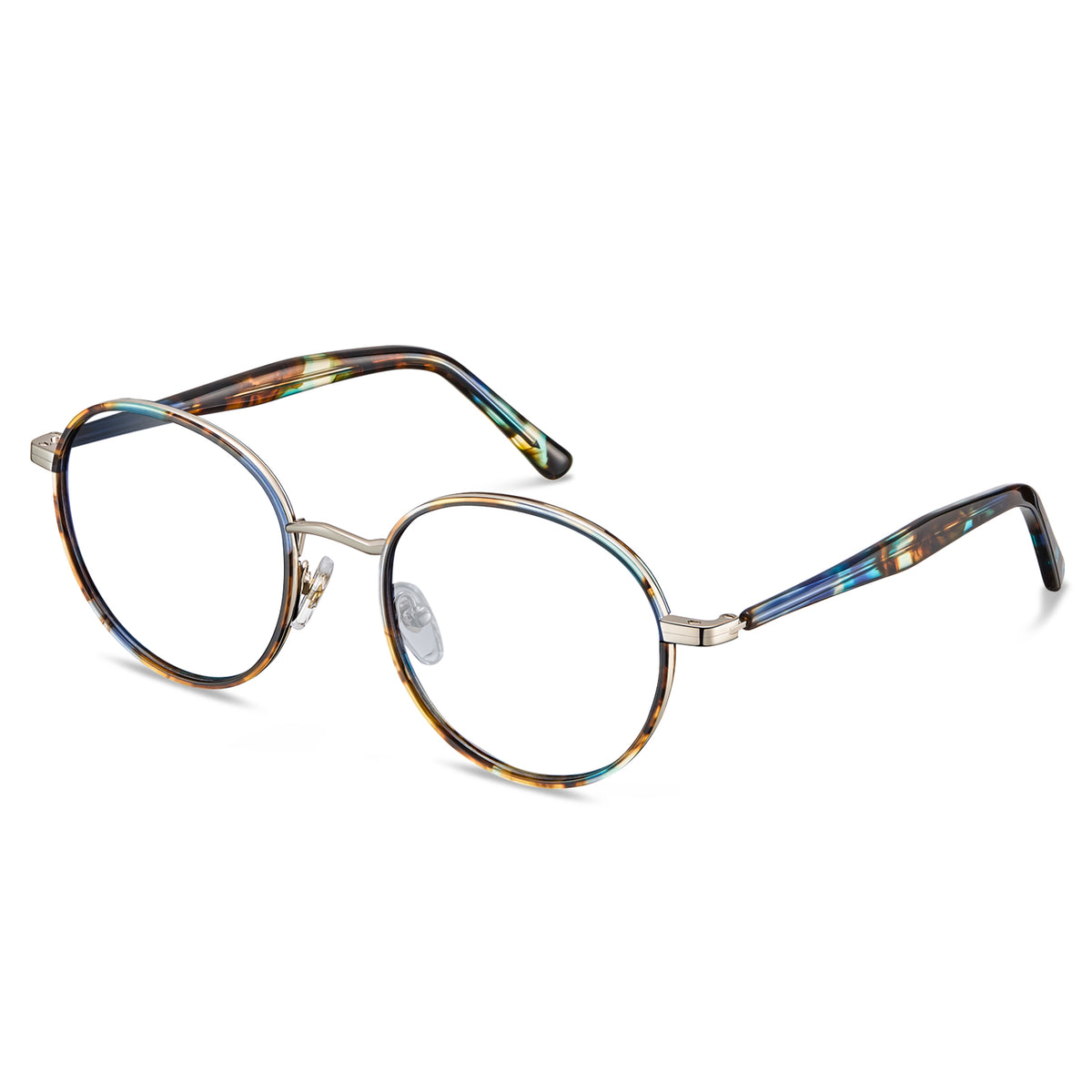
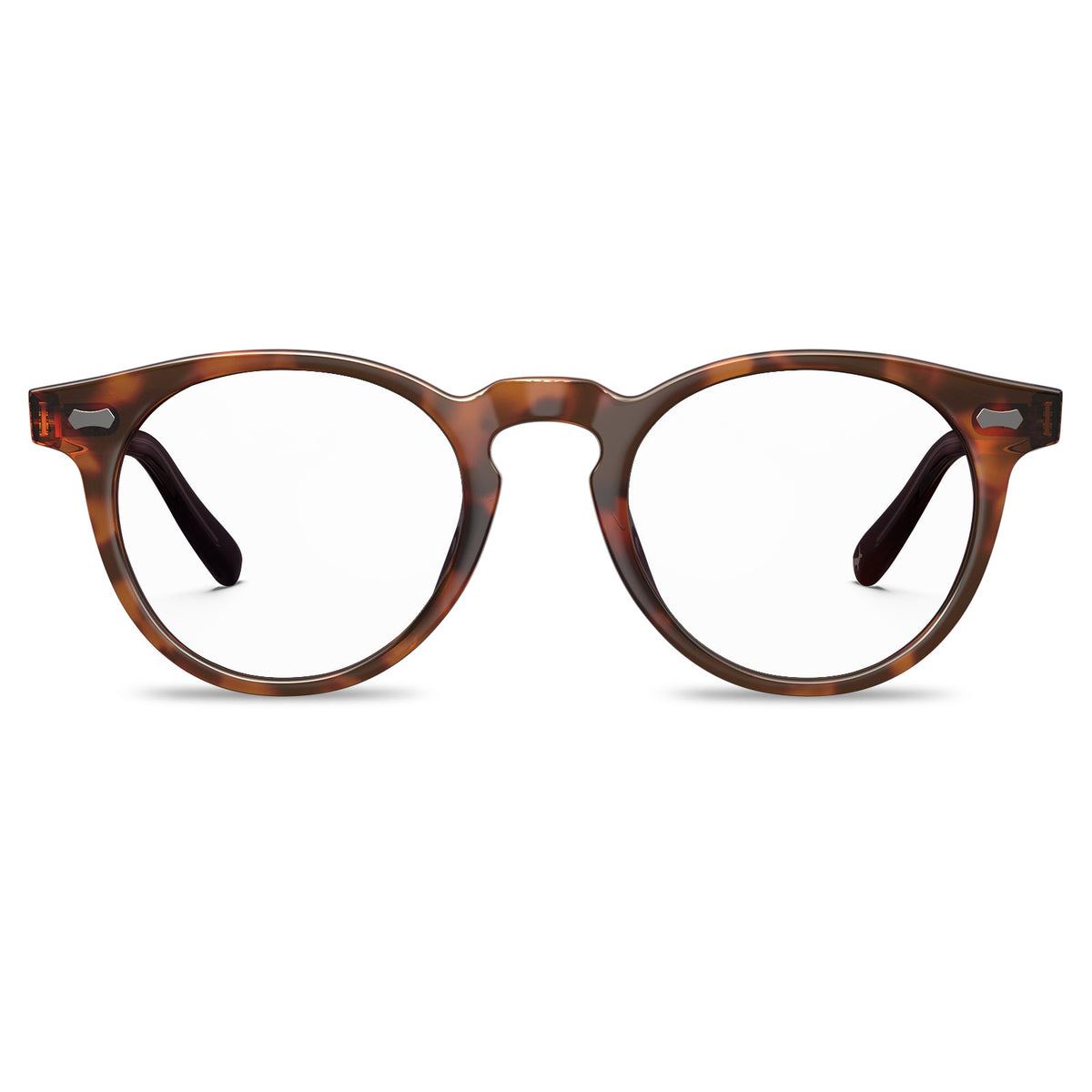
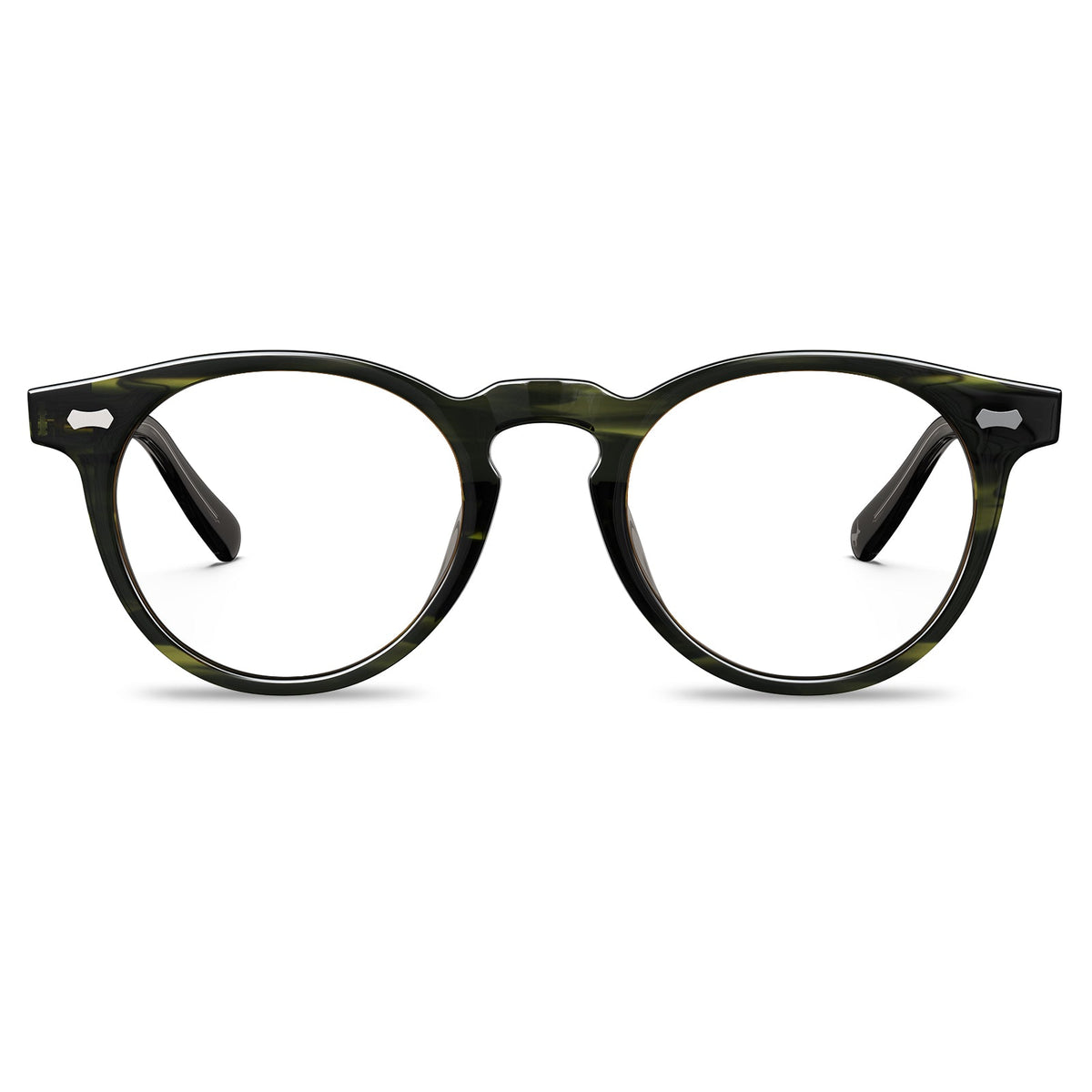
The three shapes solve different problems. Round frames are circular, with a lens roughly as tall as it is wide, which is what gives them their retro, expressive, slightly academic feel. Oval frames are gently wider than they are tall, so they soften and lengthen a face a little — an easier everyday alternative to a perfect circle. Square and rectangular frames add horizontal width and hard structure, which is why they are the usual recommendation for a round face. In eyewear you will also come across the terms panto and P3 — both describe a round lens with a flatter top and a curved lower rim, an easier entry point into the vintage round look than a perfect circle — and keyhole bridge, a bridge shaped like an old keyhole that lets light through and breaks up the circular silhouette. Whichever term you search for, the fitting test is the same: hold the frame up and your eyes should sit close to the centre of the lens, with the top rim roughly level with your eyebrows. This collection is built almost entirely on classic circles — 69 of the 70 available styles are round, plus one soft-oval metal style (Adrey-FC03) — and full-rim construction is standard throughout.
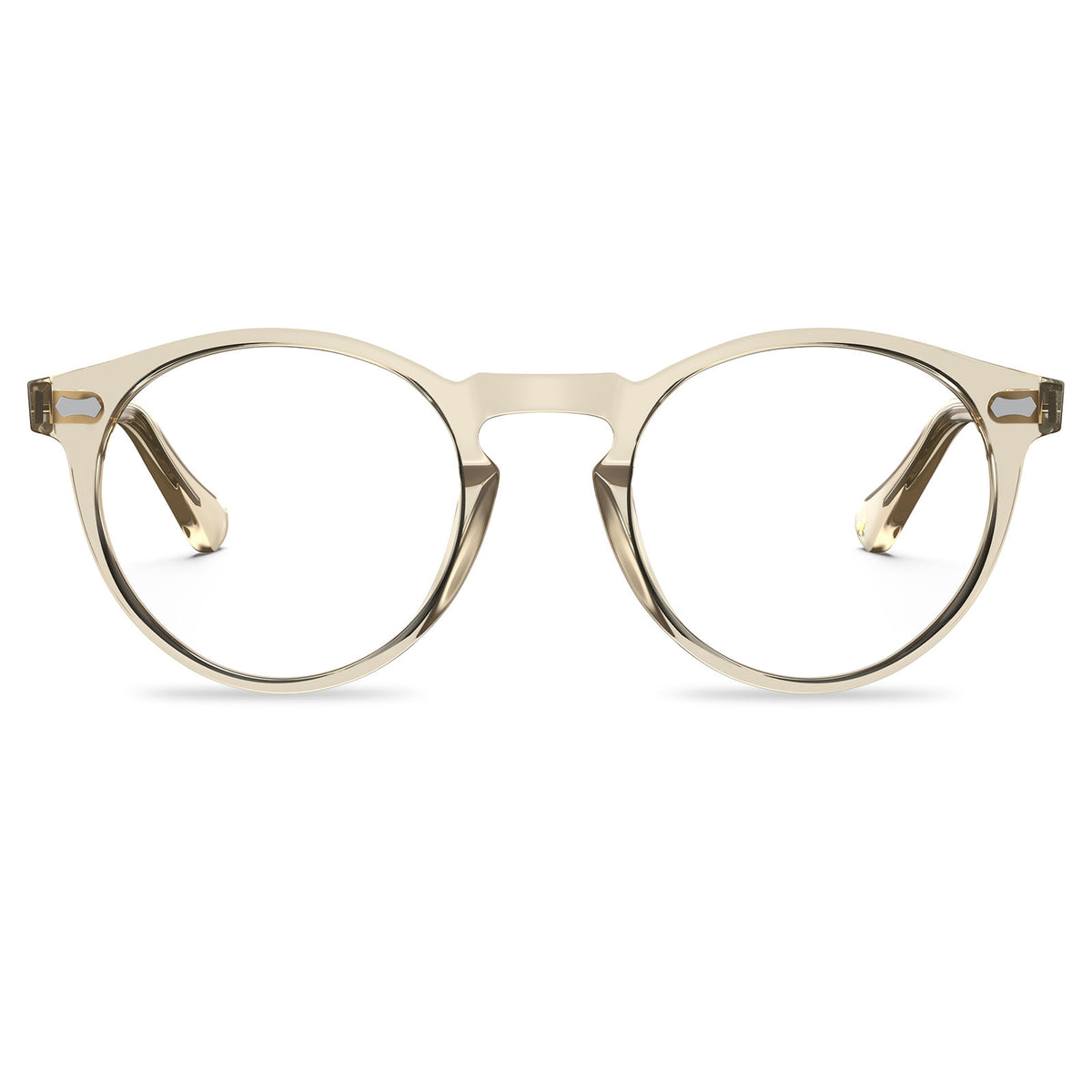
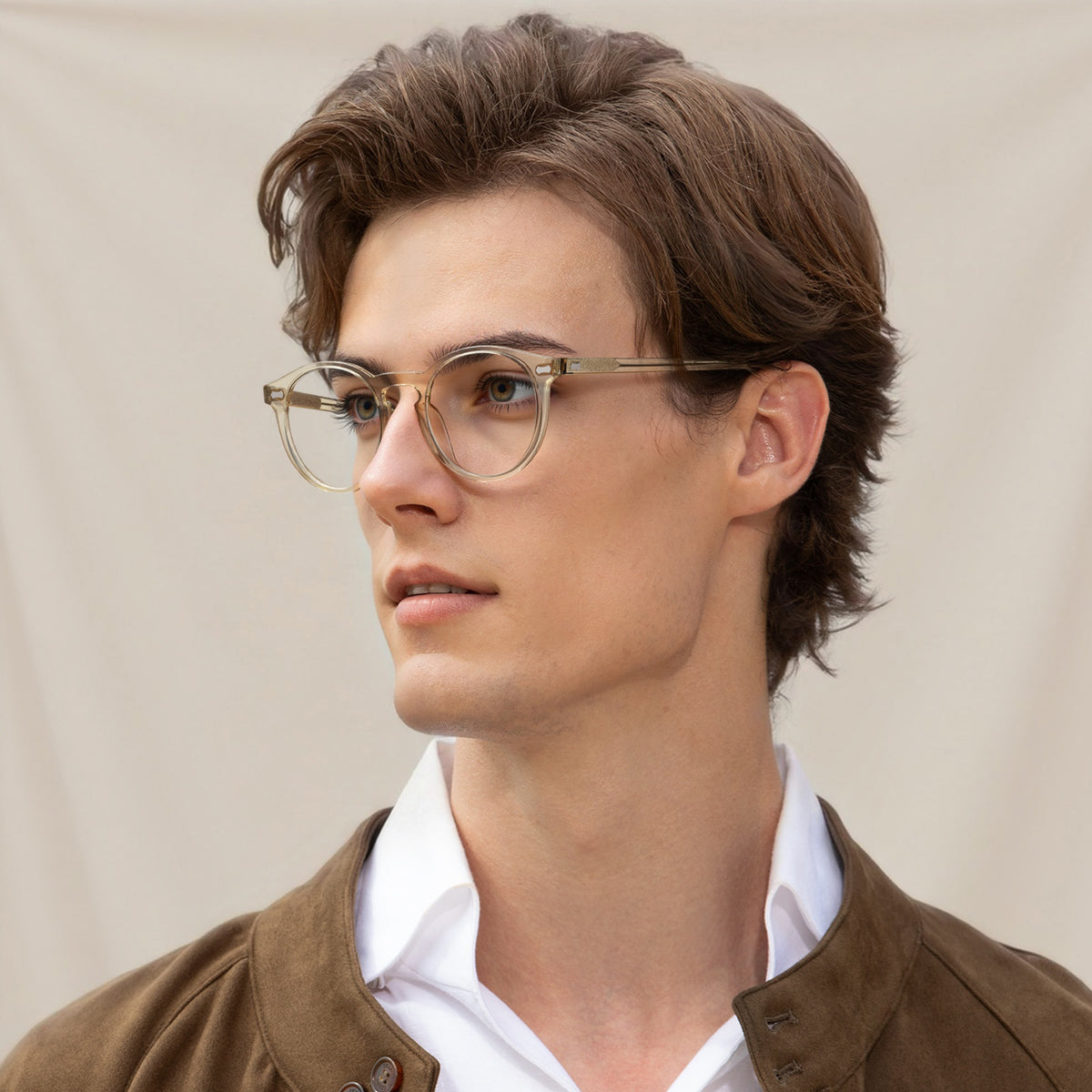
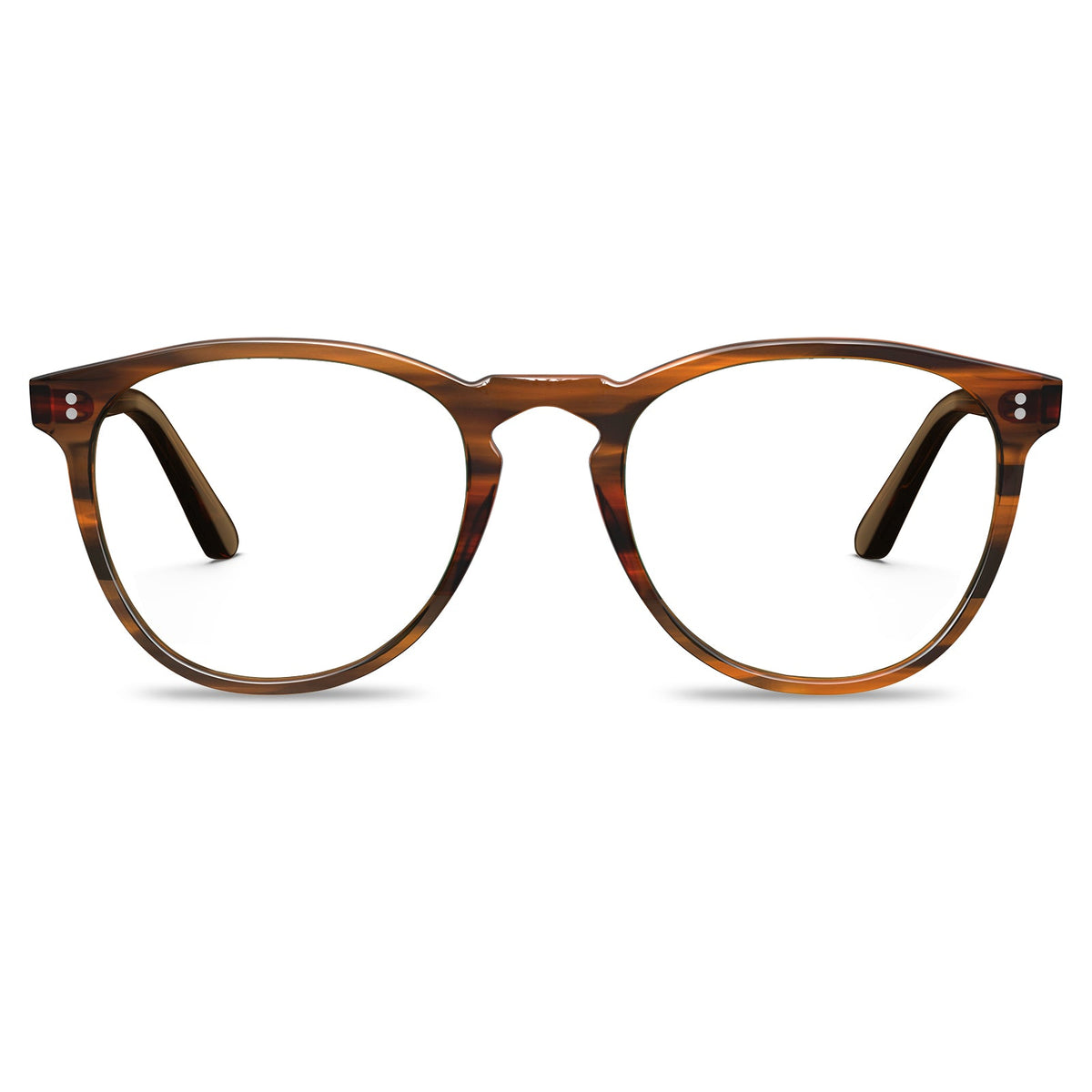
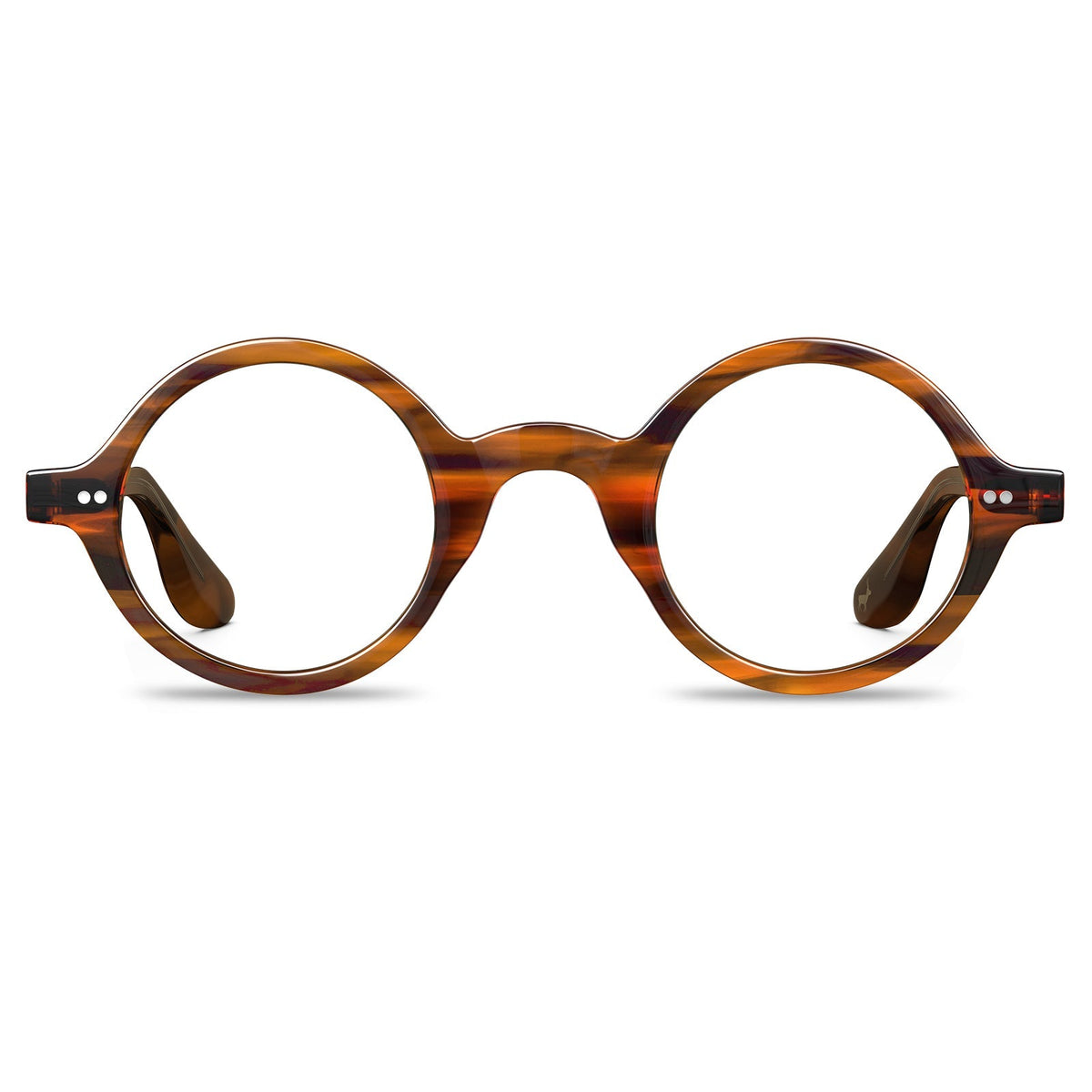
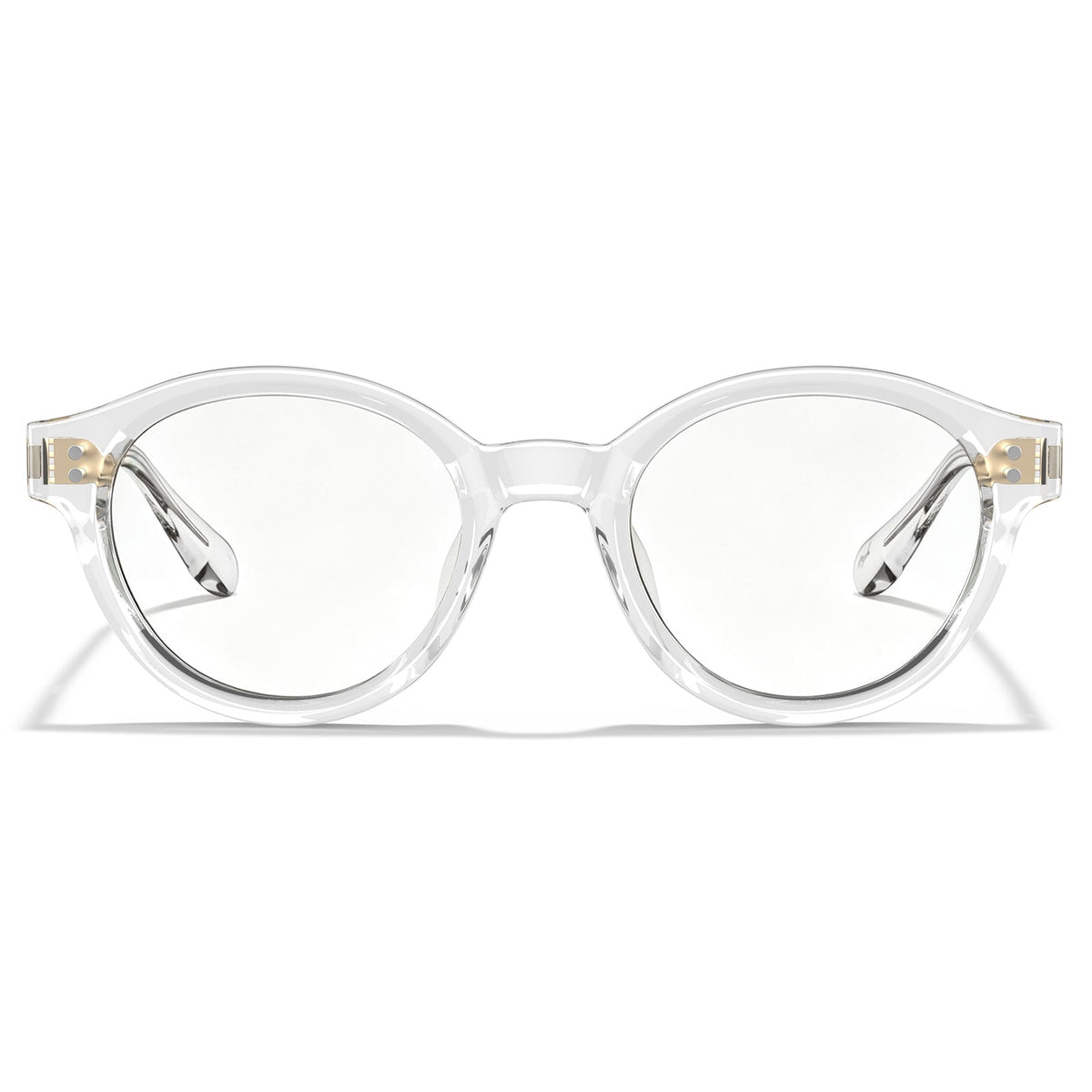
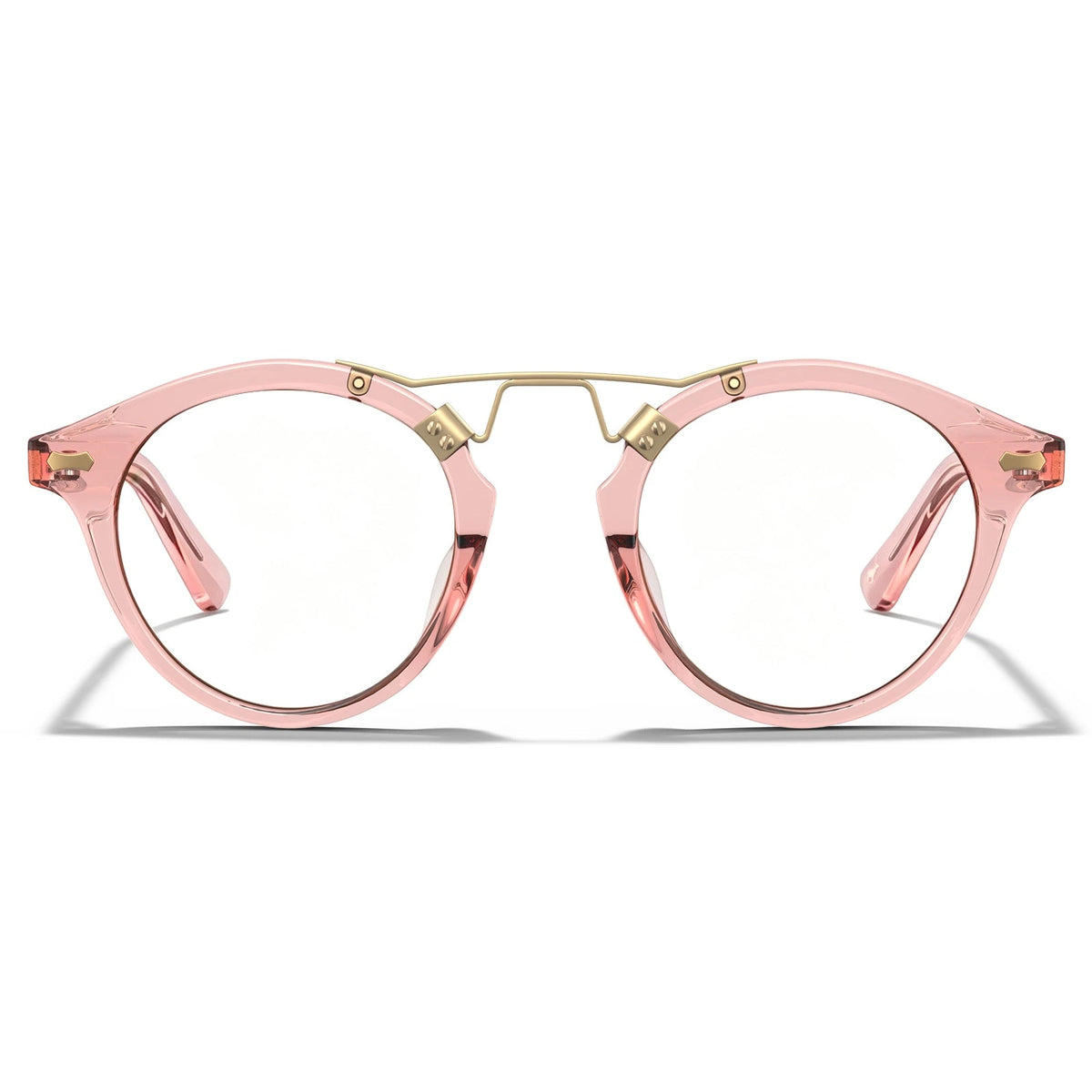
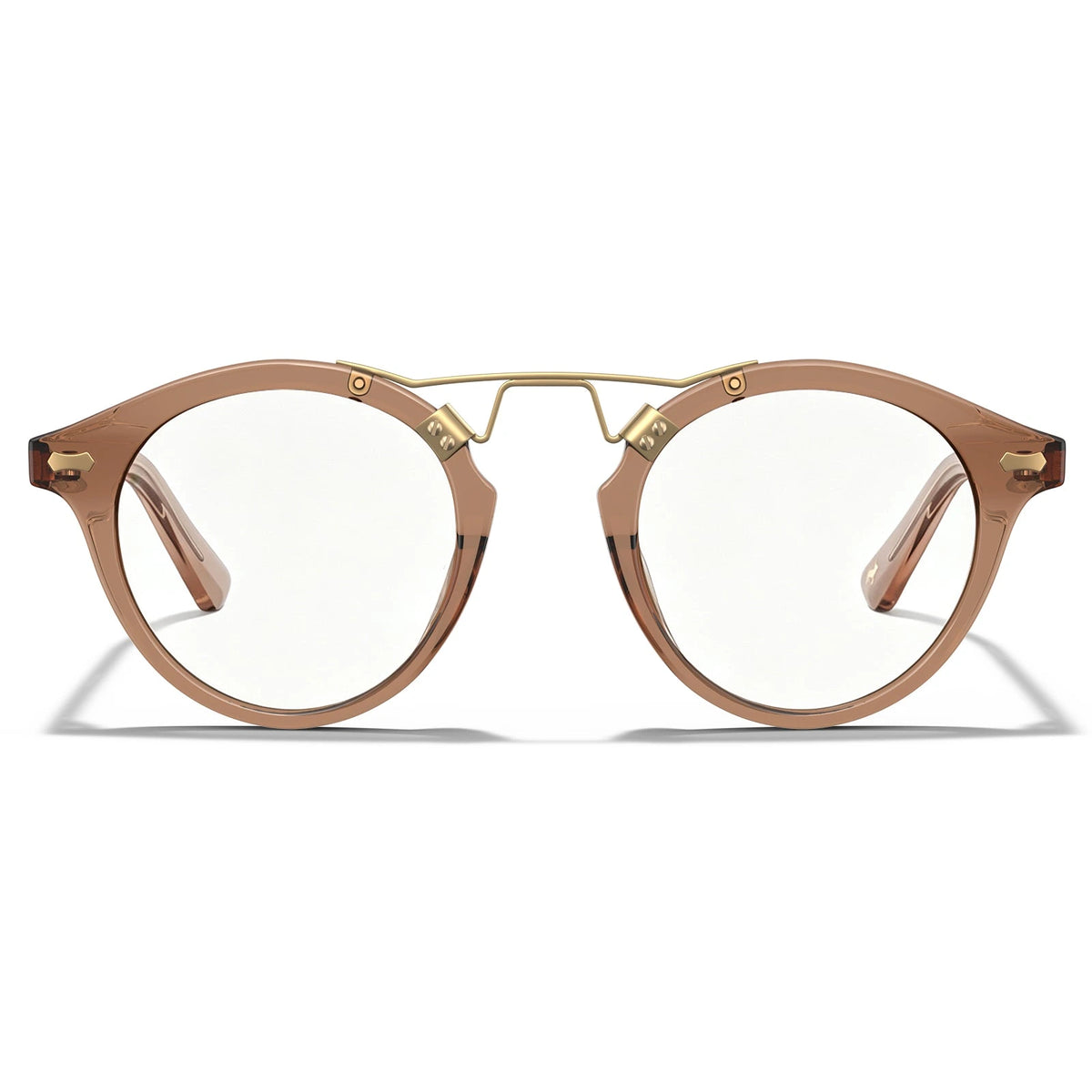
Almost all of our round eyeglasses are made from acetate — 68 of the 70 available styles — with just 2 thin metal frames (Monterey-FC05 and Adrey-FC03). Acetate is the material behind the classic vintage round look: it is warm to the touch, holds colour and depth beautifully, and gives the frame a little substance on the face. Metal rounds are lighter and more minimal, and they carry the library-and-lecture-hall feel that made round wire frames famous. On colour, the palette centres on tortoiseshell and tortoise, black, brown, clear or transparent, and softer tones such as pink. Tortoise is the most classic pairing for round acetate, because the pattern stops a circular frame from looking flat; a clear or transparent frame makes the same shape read modern rather than retro. As a rule of thumb for choosing: warmer skin undertones generally look best in tortoise and brown tones, while cooler undertones look cleanest in black and clear. Every colourway and its exact photos are listed on each product page.
Round frames have a reputation for being either tiny or huge, so it helps to know the real numbers. Our round eyeglasses come in five frame widths — 137 mm, 138 mm, 139 mm, 140 mm and 142 mm — and the overwhelming majority are 142 mm (38 styles: Blivier, Concord, Dublin and Orlanda) or 138 mm (17 styles: AvonPaK, Mesa and Primrose). Lens widths run from 39 mm to 53 mm, lens height from 42 mm to 50 mm, bridge width from 20 mm to 28 mm and temple length from 140 mm to 148 mm. As a rule of thumb: the smallest round glasses here are the Monterey styles at 137 mm with a 39 mm lens (Monterey-FC08 and Monterey-FC10), a good match for a petite or smaller face, while the widest 53 mm lens belongs to Orlanda and Adrey — closer to an oversized round look. Bridge width is the number that decides comfort if you have a lower or flatter nose bridge: if glasses normally slide down on you, look for a shorter bridge (Orlanda, Monterey and Adrey sit at 20 mm, while Retroz is the widest at 28 mm). To find your own size, take the pair that fits you best and measure straight across from one hinge screw to the other.
Yes — and round frames are often the better choice for both. Because a round lens is the same distance from its optical centre in every direction, lens thickness is distributed more evenly than in a rectangular frame, so a strong prescription (especially a high minus, nearsighted prescription) shows noticeably less edge thickness. That is also why round frames pair so well with high-index lenses: Carfia offers lens indexes up to 1.74, and the higher the index, the thinner the lens. For progressive lenses, the limiting factor is lens height rather than shape — progressives need enough vertical room for the distance, intermediate and reading zones to sit one above the other. This collection is unusually well suited to that: every one of the 70 round styles has a lens height between 42 mm and 50 mm, comfortably above the minimum. Progressive lenses start at $35.95. Send us your prescription and we will make the lenses to it; we accept prescriptions issued within the last 24 months.
Yes to all three. Every Carfia pair includes anti-scratch coating free, and from the lens picker you can add anti-reflective (AR) coating, water-repellent coating, UV protection, blue light filtering, photochromic / Transitions™ light-adjusting lenses, polarized lenses (+$50) and colour or mirrored tints. For screen time, blue light filtering (Carfia Blue Blocker, or Carfia Blue 360 which adds UV protection with 50% less daytime reflection) is the natural match — so a pair of round blue light glasses doubles as your computer and office pair. For anyone who moves between indoors and outdoors, photochromic or Transitions™ lenses darken in sunlight and clear indoors; note these cannot be added to sunglass lenses, but they are perfectly fine on round optical frames. Two rules to know before you build your pair: colour tints and mirrored tints cannot be combined with polarized or photochromic lenses, and gradient tint is only available on frames with a lens height above 36 mm — which in this collection means every single style, all 70 of them. Round frames are the shape to choose if a gradient tint is what you are after.
Very much so — round frames sit in the same family as the glasses worn by generations of academics, designers and founders, which is exactly what our collection description nods to with John Lennon and Steve Jobs. For a workplace or an interview, the safest version is a thin or medium-rim round frame in black, brown or tortoise: it reads as considered and creative rather than loud, and it works with a shirt, knitwear or a blazer. If you want something more expressive — a chunkier acetate, an oversized round or a clear frame — that still works in a relaxed office, a studio or a client-facing creative role; just keep the rest of the outfit simple so the glasses stay the statement. For video calls, two lens upgrades matter more than the frame shape: anti-reflective (AR) coating stops your screen and lighting from reflecting in the lens, which is what makes glasses look distracting on camera, and blue light filtering reduces the eye strain of back-to-back screen hours. Both can be added to any of the 70 round styles here.