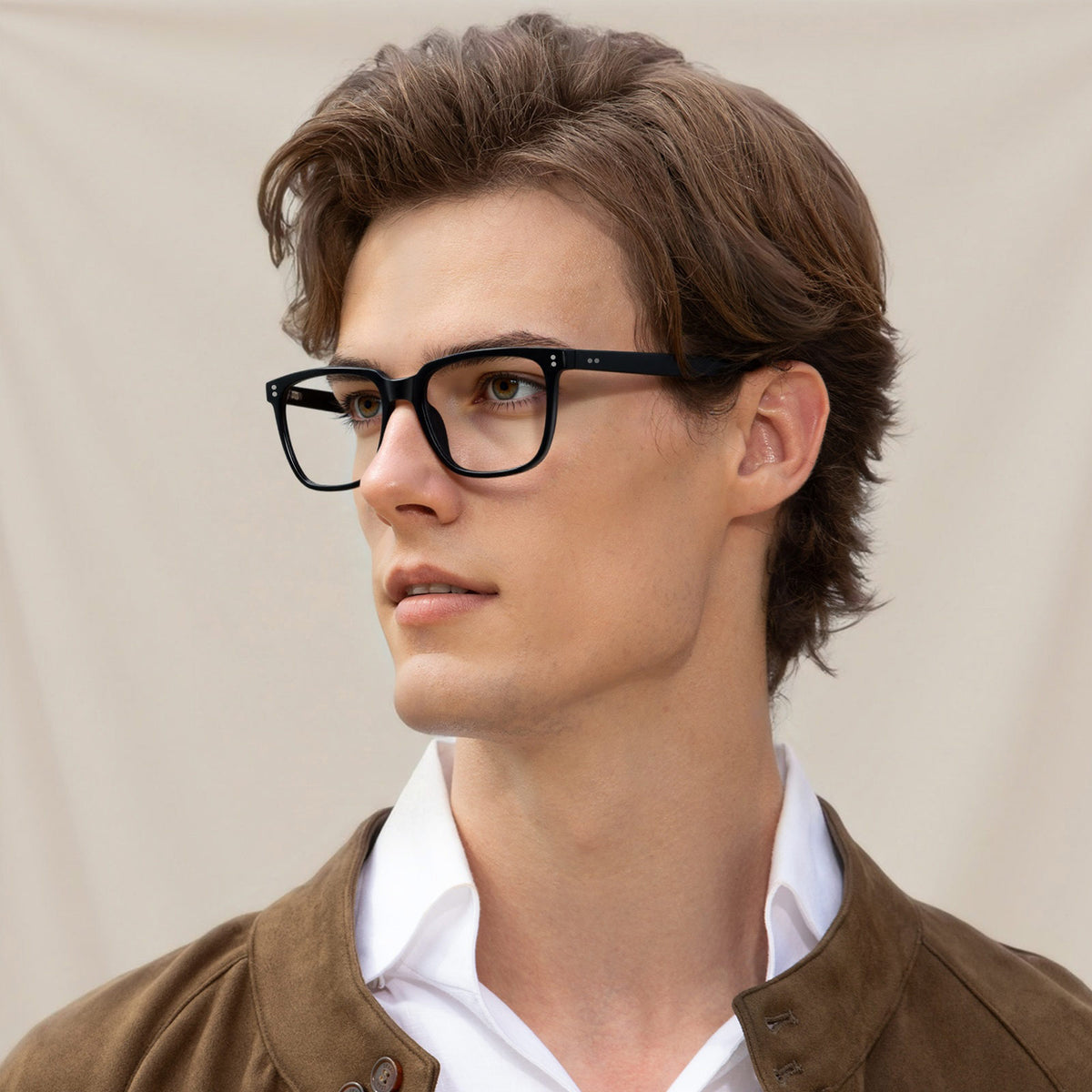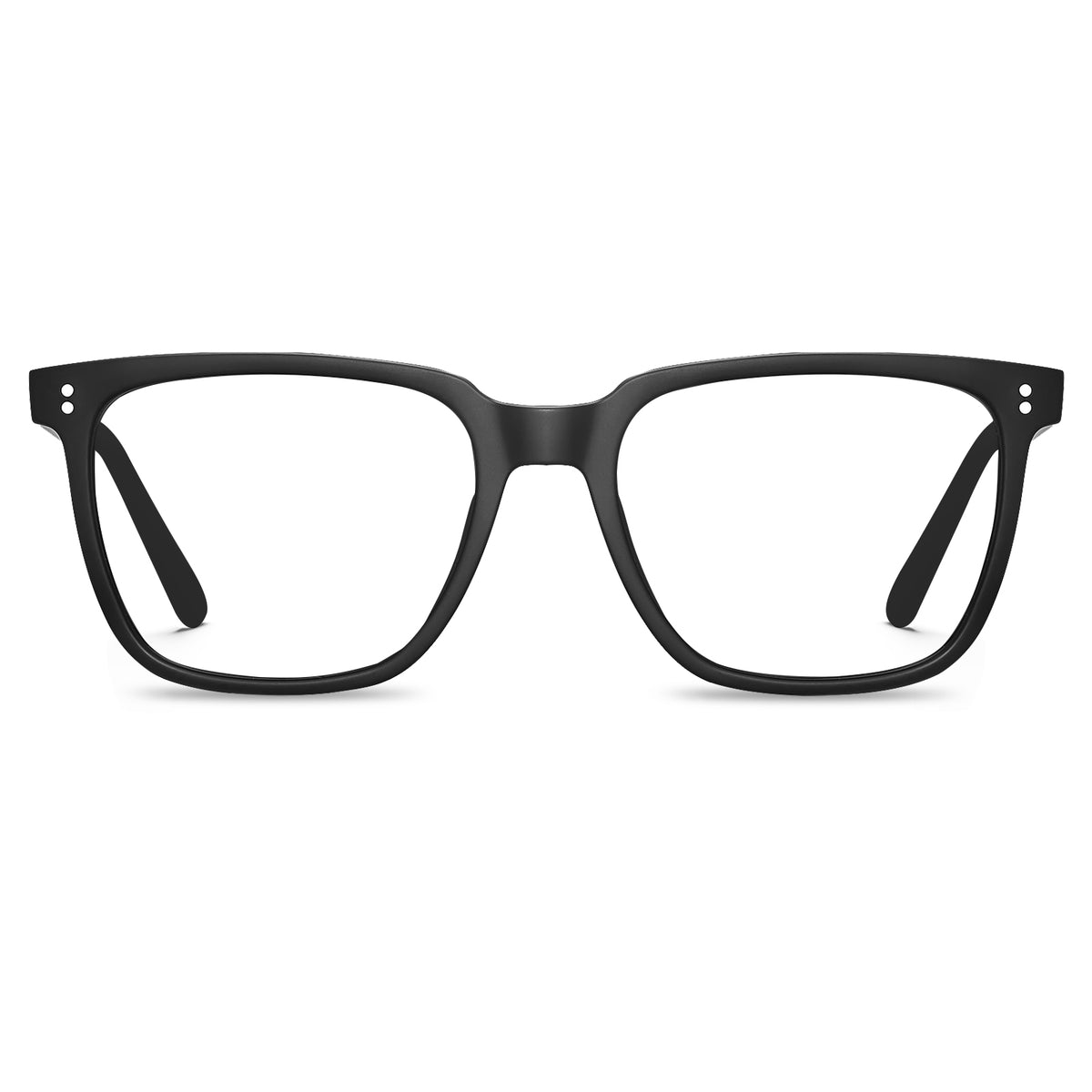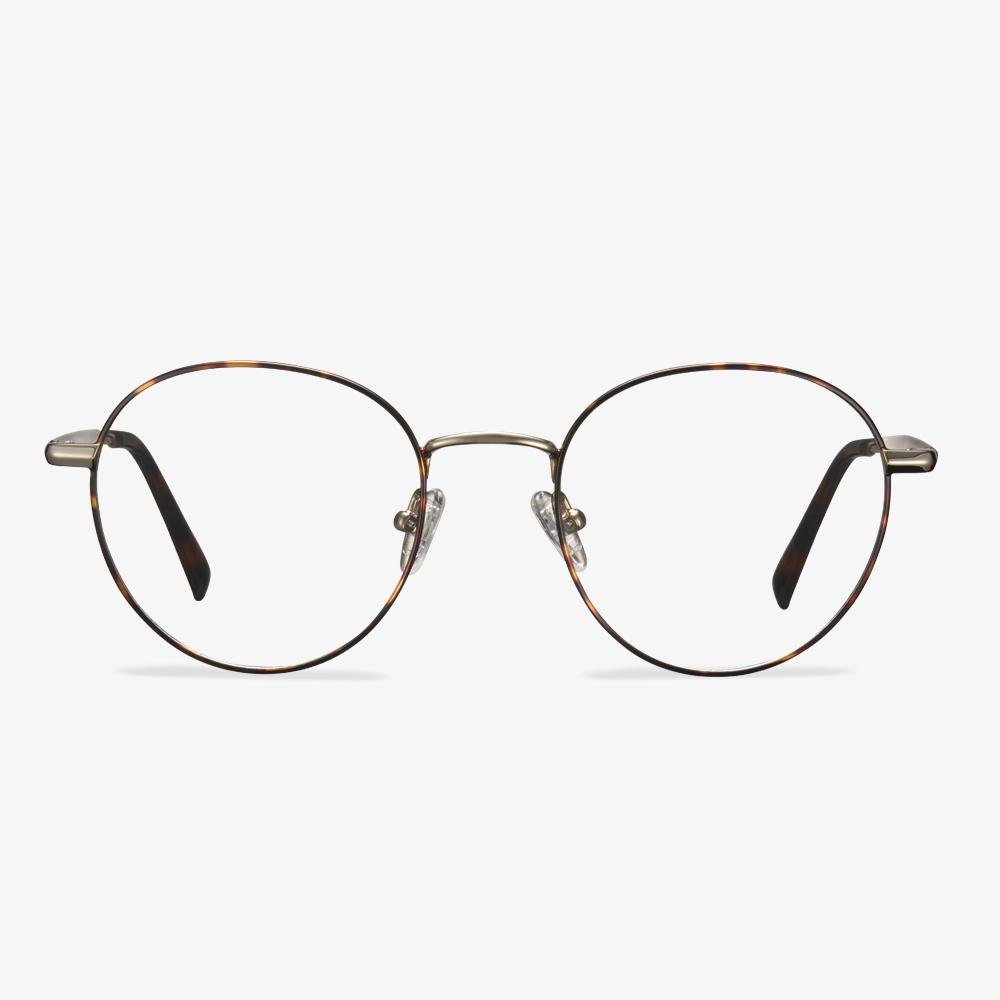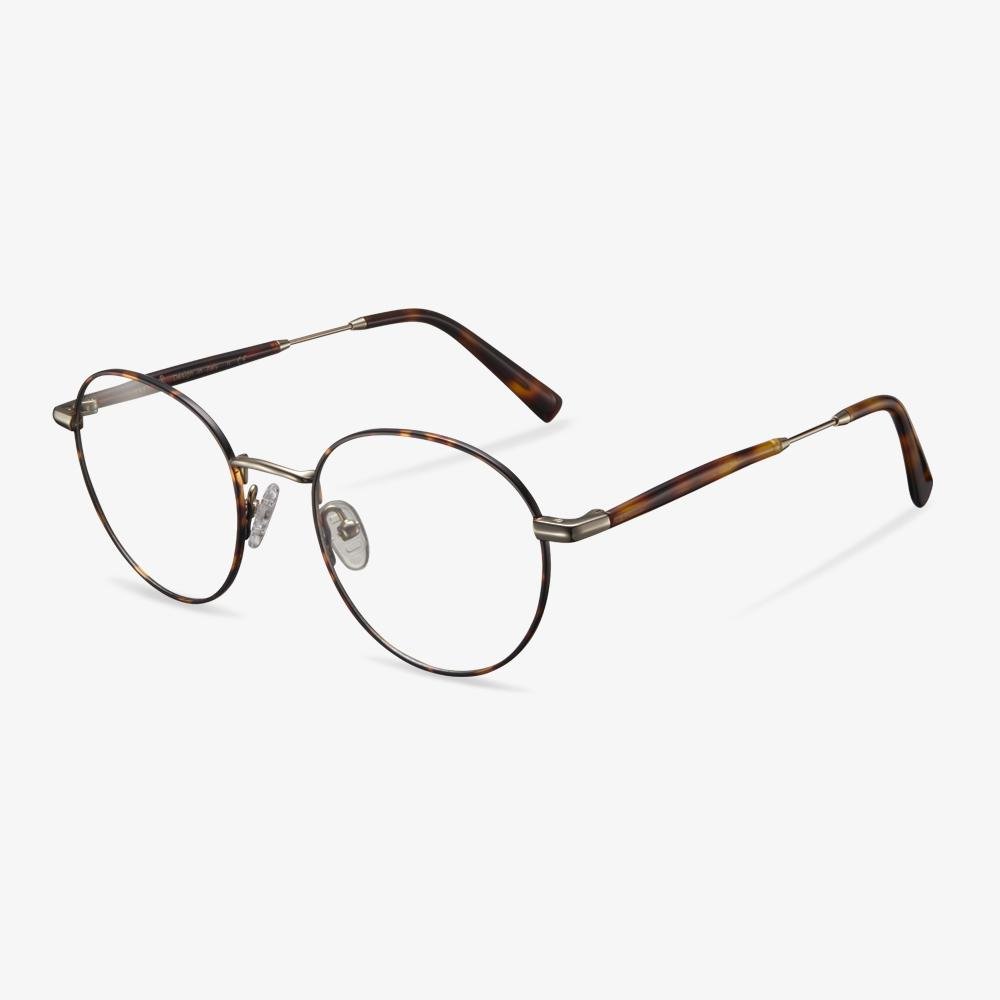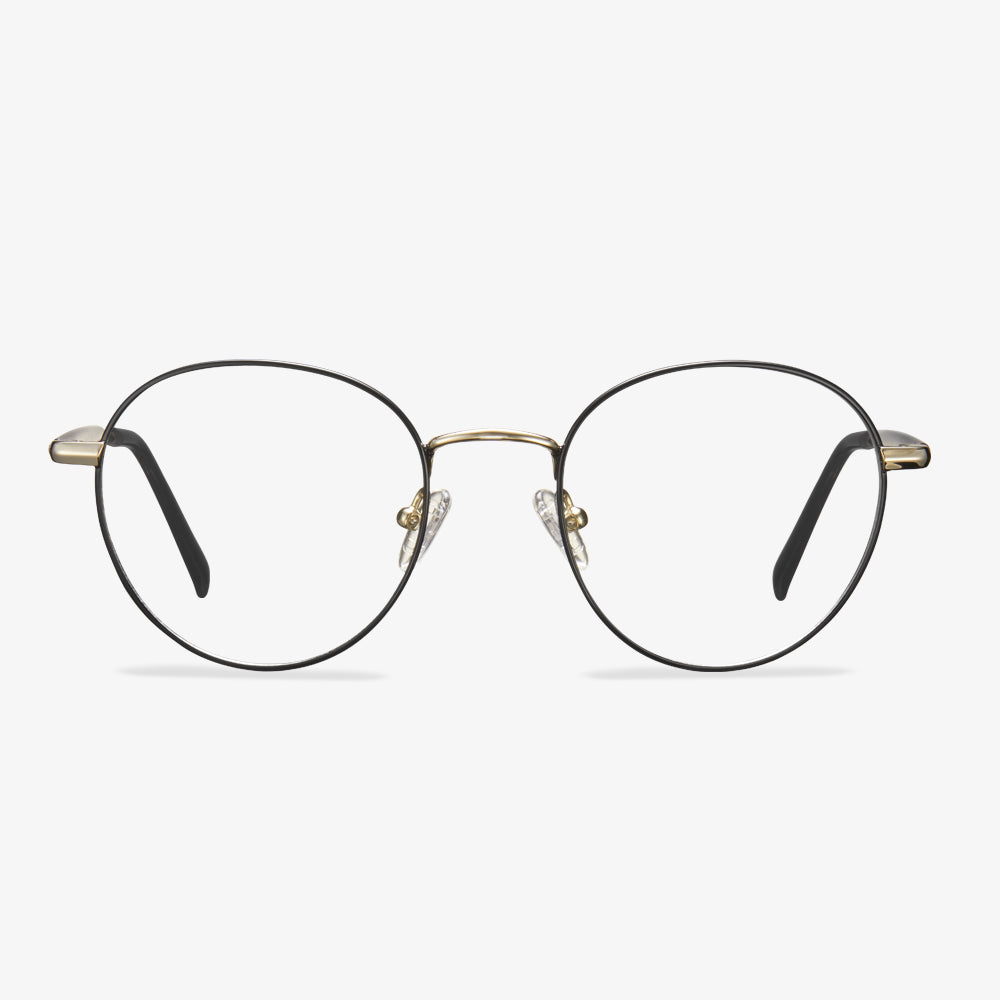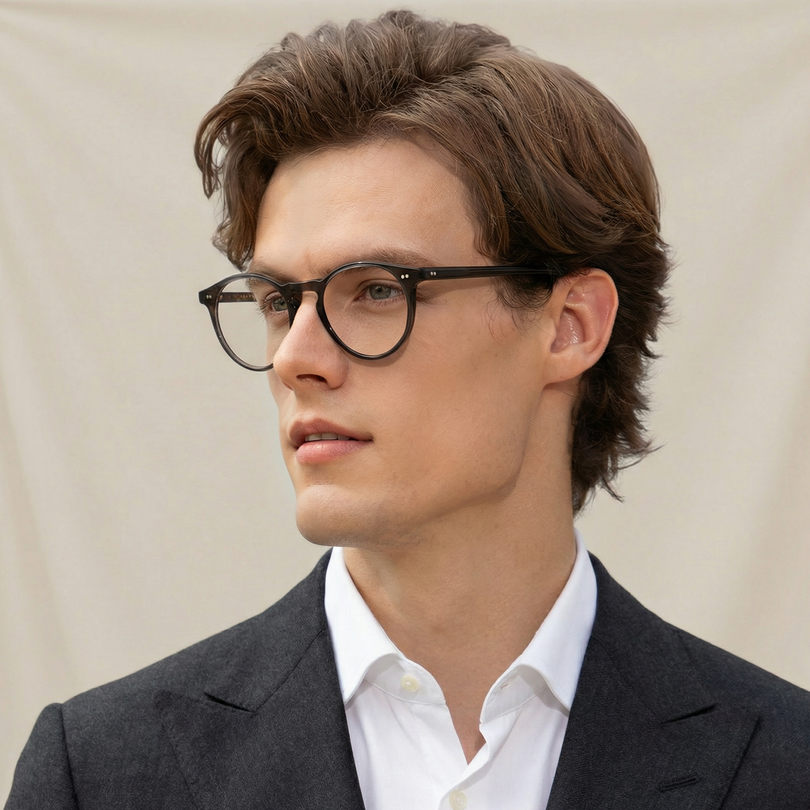
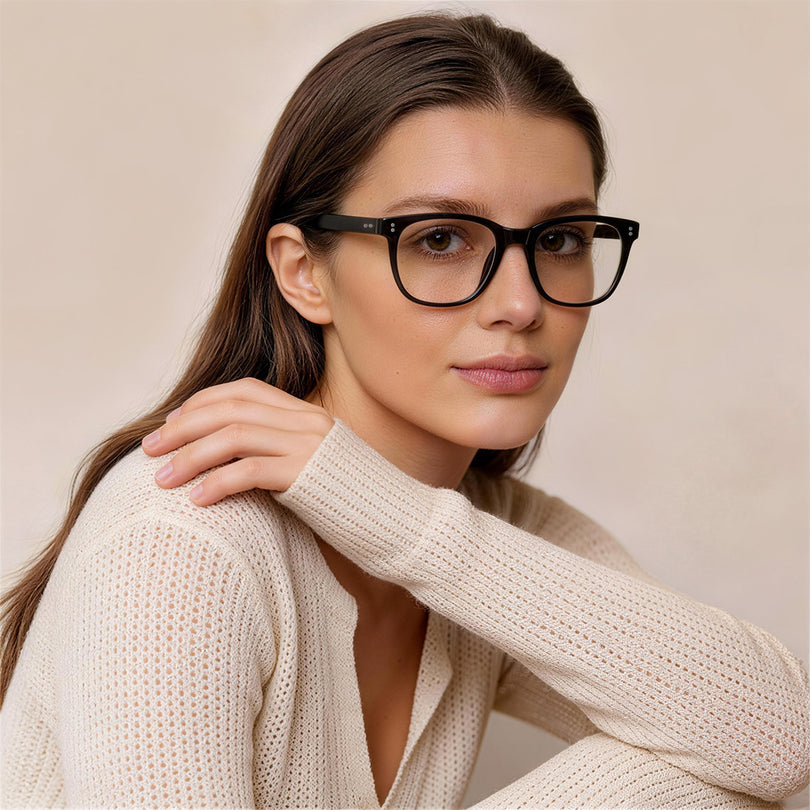
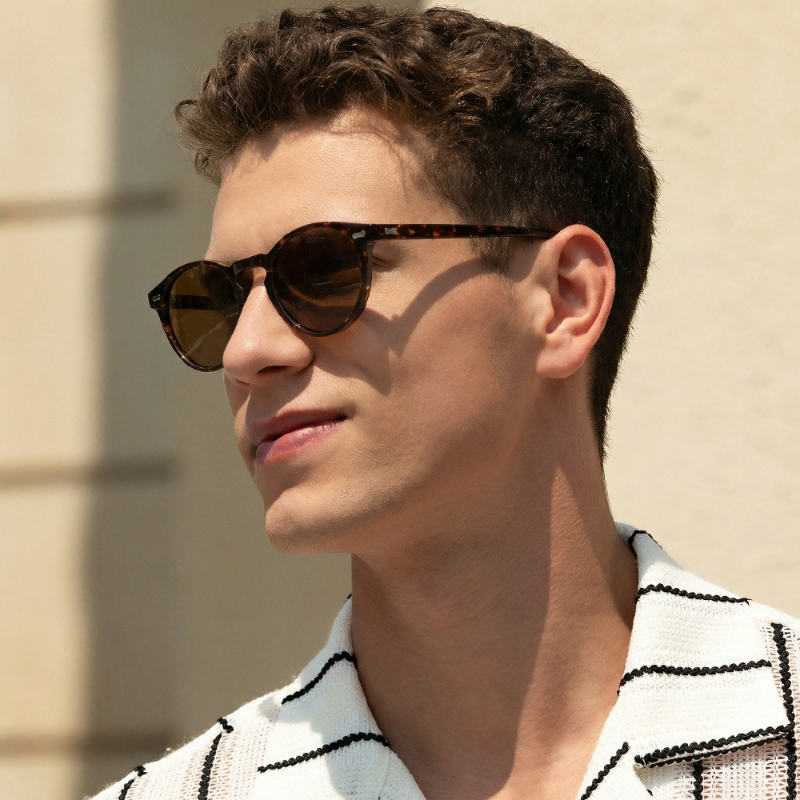


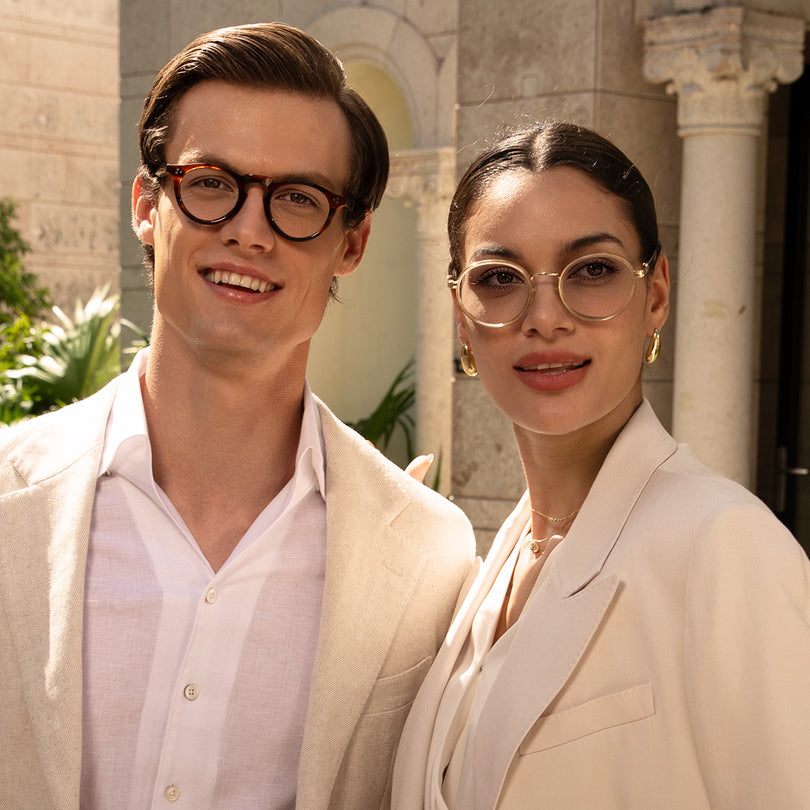

Frame colour is the last decision people make and the first one they regret. Not because they choose badly, but because a colour that looks right on a shelf looks different on a face — and because the lens colour sits on top of the frame colour and changes it again.
This drop has four frames in the colours that survive more than one season: tortoise, warm brown, smoke grey and black. They are all square or rectangular, all in the 142–148 mm range, and all made from acetate, which is the material that holds colour in the sheet rather than on the surface. You can see them together on the new arrivals page, and the difference between them is mostly a difference in how much contrast they create against skin.
|
01
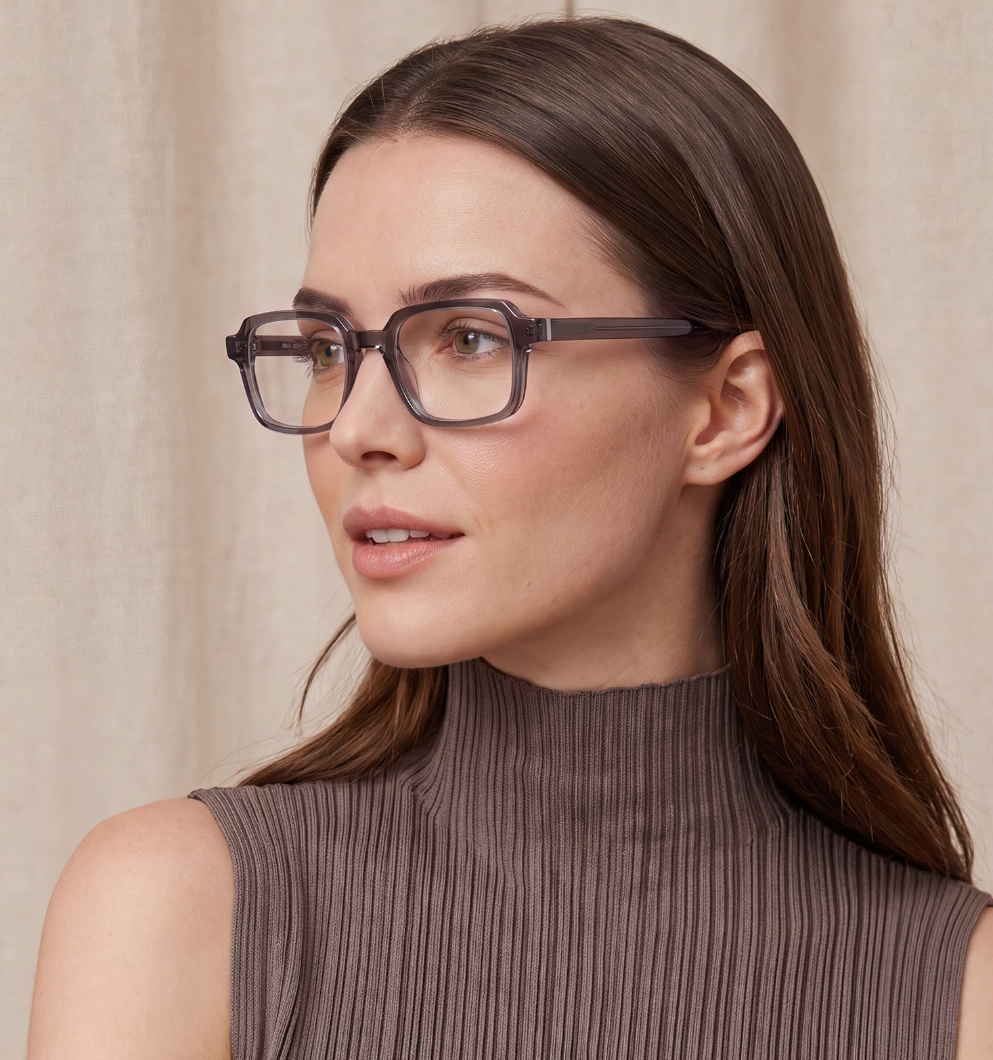
Sedona-C06
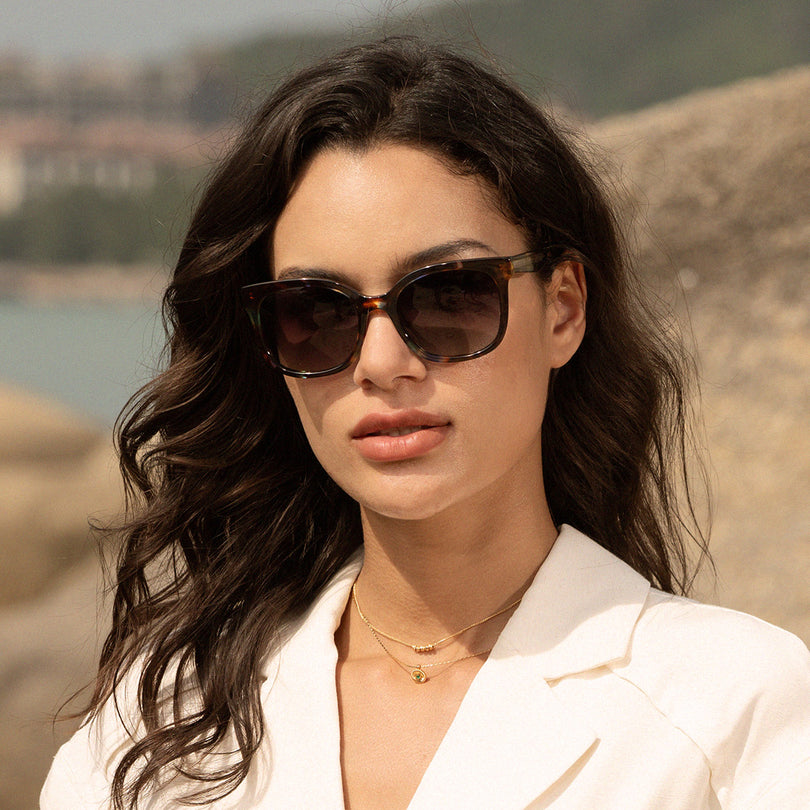
Soft square · 142 mm · smoke grey
|
02
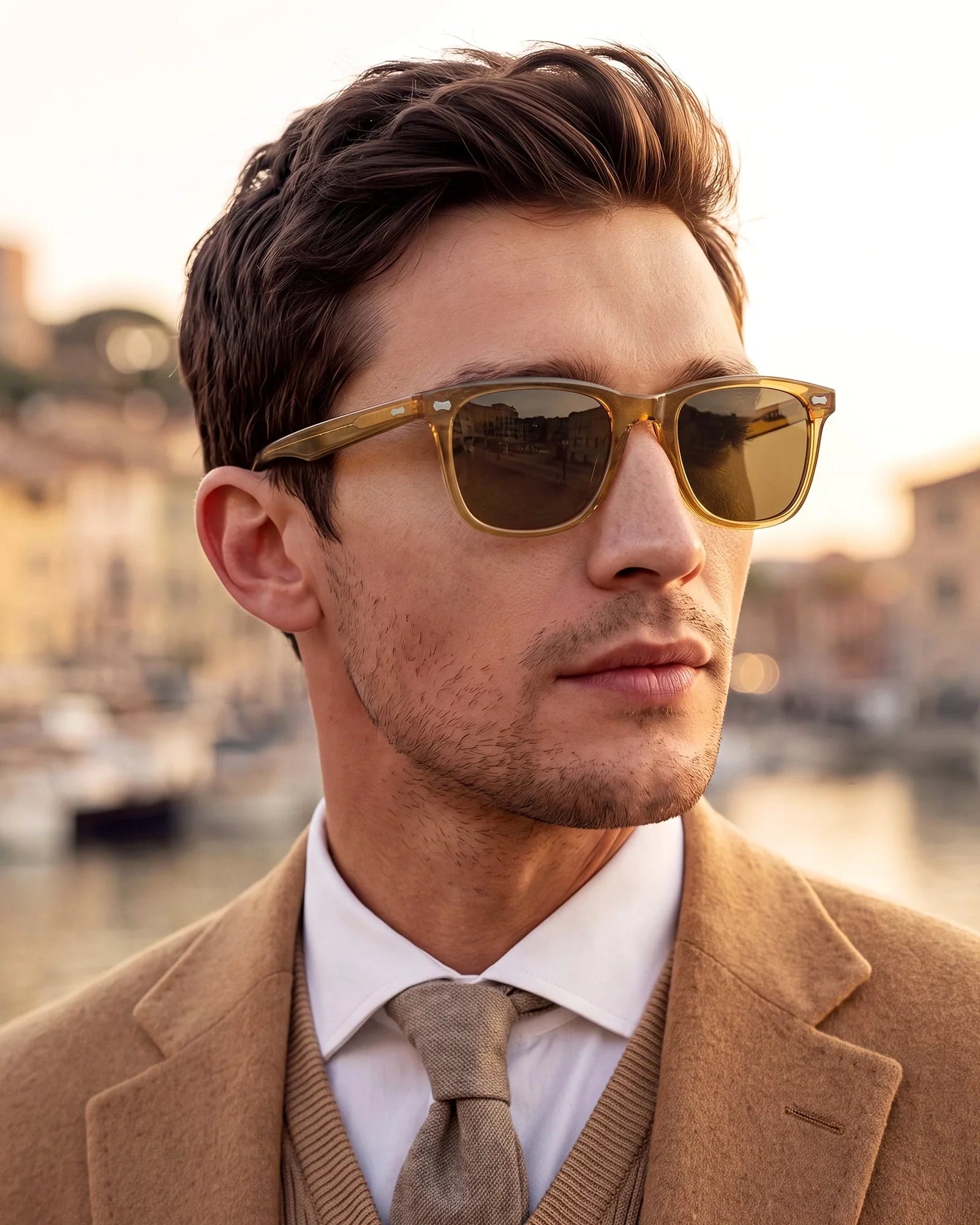
Simba-C13
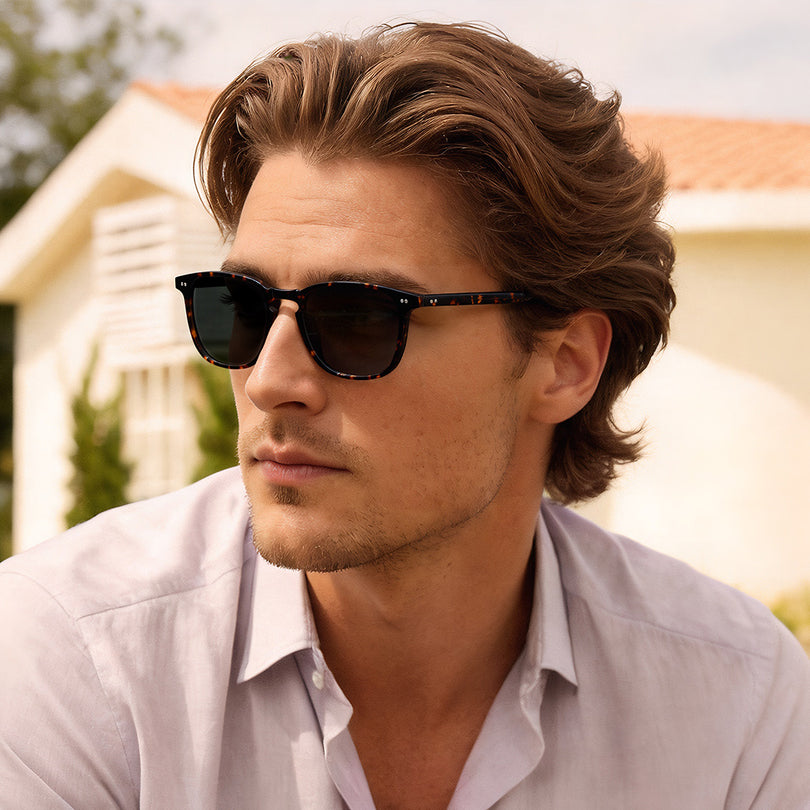
Square · 148 mm · tortoise
|
03
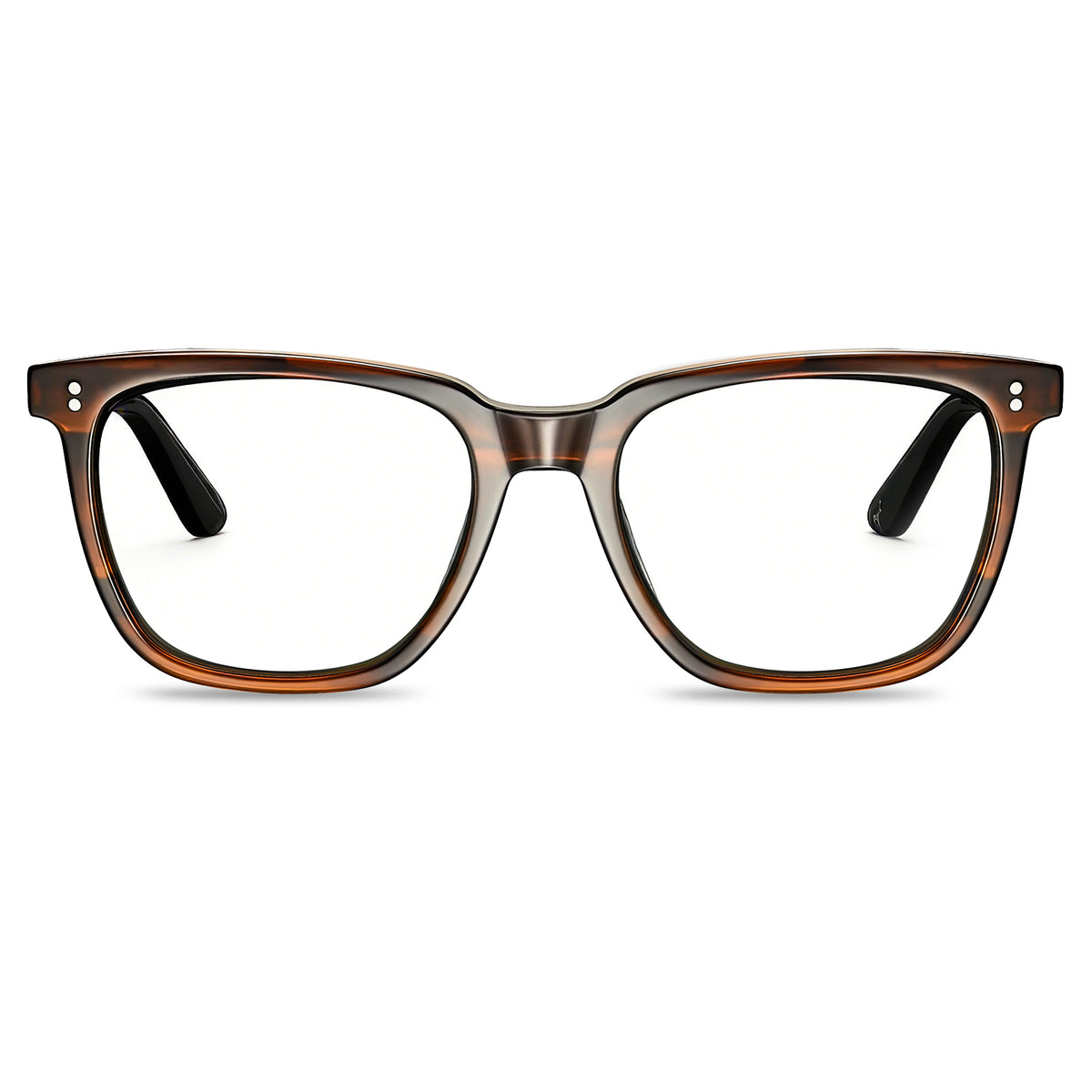
Arnect-C12
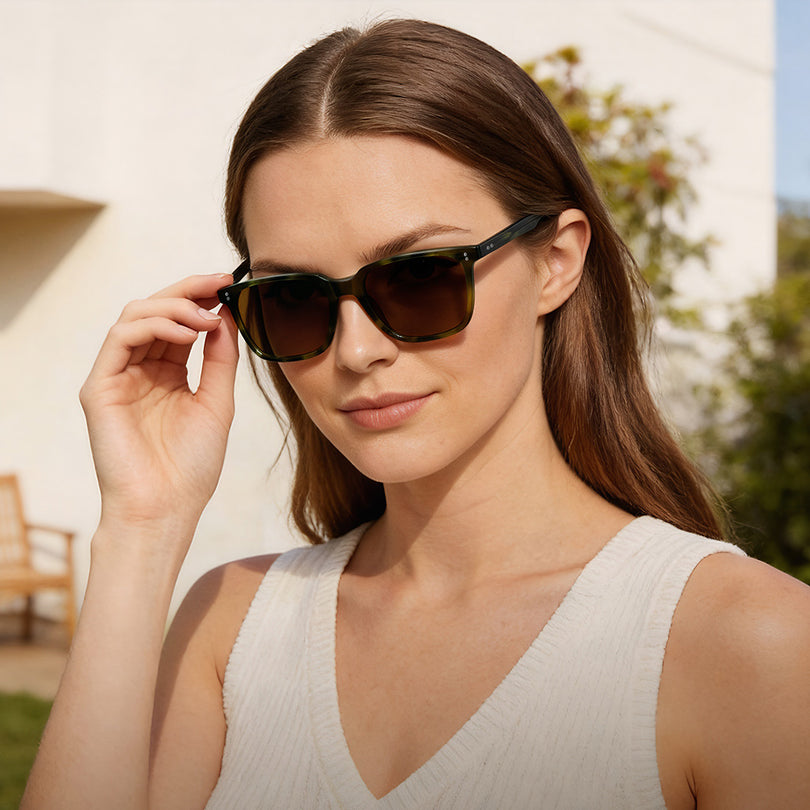
Rectangle · 145 mm · warm brown
|
04
Downey-L20
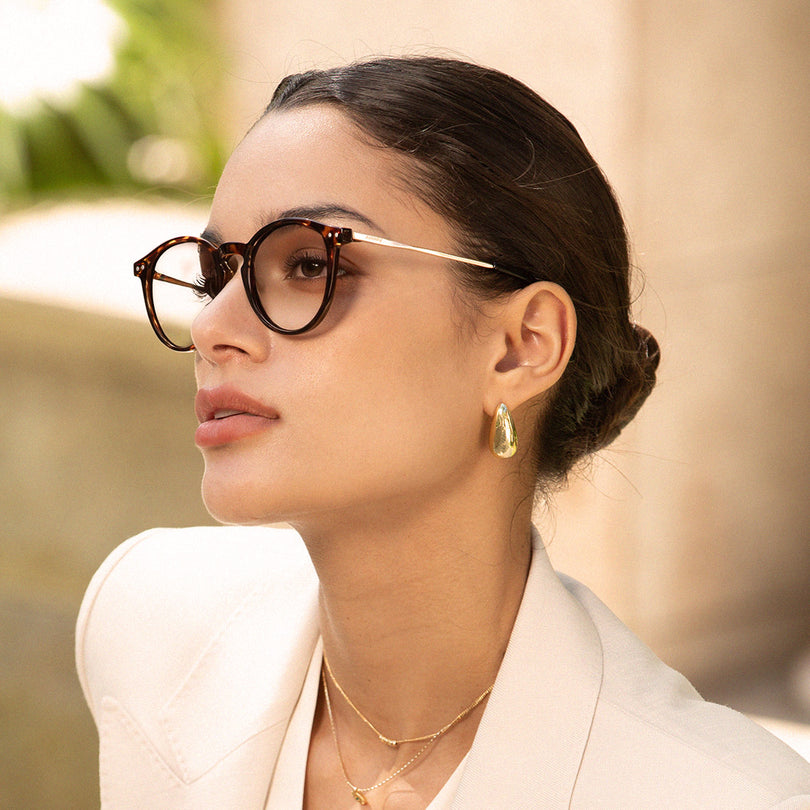
Square · 139.5 mm · black
|
Why acetate holds a colour differently
An injected plastic frame is moulded in one colour and then coated. An acetate frame is cut from a sheet that was pressed in layers, so the colour runs through the material. That is why a tortoise acetate frame has depth when light passes through it and a plastic one looks flat, and it is why a translucent finish is worth paying attention to — the frame is showing you its own structure. Why frame material matters goes into the manufacturing difference; the practical consequence is that these four frames will not fade into a single tone the way a coated frame does.
The four frames


What each colour does to a face
Tortoise: the one that flatters most skin tones
Tortoise is not one colour. It is amber, honey and dark brown pressed into a single sheet, which is why it picks up the warmth in a face without matching it exactly. Simba-C13 uses it on a 148 mm square front, so the warmth is carried by a frame with real presence — this is the least neutral of the four and the easiest to wear with almost anything.
Warm brown: tortoise's quieter sibling
Arnect-C12 is a single brown rather than a mottled one, on a 145 mm rectangle with a 36 mm lens height. That combination — warm colour, shallow lens — reads more formal than tortoise, because the colour is even and the frame profile is flat. If you want a brown frame that does not look retro, this is the one.
Smoke grey: the translucent option
Sedona-C06 is a grey frame with a translucent finish, which means the colour deepens where the frame is thick and lightens where it is thin. In practice that makes a 142 mm front look lighter than a solid grey of the same size. It also means the frame will pick up whatever is behind it, so it is the most adaptable of the four in photographs and the least noticeable in a mirror.
Black: still the default for a reason
Downey-L20 is black on a 139.5 mm square front — the smallest of the four, and the only one that creates a hard line against the face. On a narrow face that line is what makes the frame read as deliberate; on a wide face it can read as a stripe. It is also the only one of the four that will not change at all with the light.
Then the lens changes it again
| Frame | Frame colour | Lens colour | Effect |
|---|---|---|---|
| Sedona-C06 | smoke grey, translucent | dark | Lowest contrast of the four; the frame nearly disappears |
| Simba-C13 | tortoise | listed per variant | The strongest colour presence here; the frame carries it |
| Arnect-C12 | warm brown | glacier | Tonal from frame to lens; reads as one object |
| Downey-L20 | black | listed per variant | Maximum definition; no colour interaction at all |
The rule worth remembering: a warm frame with a cool lens creates contrast, and a warm frame with a warm lens creates tone. Neither is better, but they are not interchangeable on a face that already has a lot of warmth in it. If you have a warm undertone and want the frame to recede, choose the tonal pairing; if you want it to stand out, choose the contrast. The tortoise sunglasses collection is the fastest way to see both pairings side by side.
Choosing between four colours without seeing them on
- If your wardrobe is mostly navy, grey and white, tortoise and black will both work; smoke grey will look like the frame is not there.
- If you wear warm tones — olive, camel, rust — warm brown and tortoise reinforce them.
- If you have a high-contrast face (dark hair, light skin), black and tortoise hold up; smoke grey can lose the frame entirely.
- If you want one pair for everything, choose the tonal pairing over the contrast one.
All four frames are acetate, so all four sit in the acetate sunglasses collection alongside the translucent and clear finishes. If you want to stay within one silhouette while you choose a colour, the square collection holds three of these four and the rectangle collection holds the fourth.
A note on what changes with the light
Translucent acetate looks different in daylight and indoors — the smoke grey on Sedona-C06 will read almost clear under a shop light and distinctly grey outdoors. That is not a defect; it is what the material does. If you are ordering a translucent frame for the first time, expect to like it more outside than in a photograph, and expect the tortoise and black frames to look more or less the same wherever you are.
Colour is the one thing a product photograph cannot settle. If you are between two, the 14-day Fit & Style window exists for exactly this — and the frame you keep is usually the one that was your second choice on screen.
Match the frame to your hair, not your skin
Most colour advice is about skin tone, which is the harder variable to judge from a photograph. Hair is the easier one, and it predicts the same thing. High-contrast hair — black, dark brown, red — holds a black or tortoise frame without the frame winning. Low-contrast hair, especially light brown or grey, tends to be overwhelmed by black and flattered by brown, tortoise and smoke. If you are between two colours and cannot decide, choose the one closer to your hair rather than the one closer to your clothes.
The exception is deliberate contrast: a black frame on light hair is a statement, and it works if that is what you want. The 2026 trend notes on the 2026 eyewear trend report put translucent and warm-toned acetates ahead of high-contrast blacks for exactly this reason, and frames by face shape explains how the same colour reads differently on a long face and a round one.
More colours, including clear and blue, are in the polarized collection, which narrows the catalogue by lens rather than frame if that is the decision you have already made.