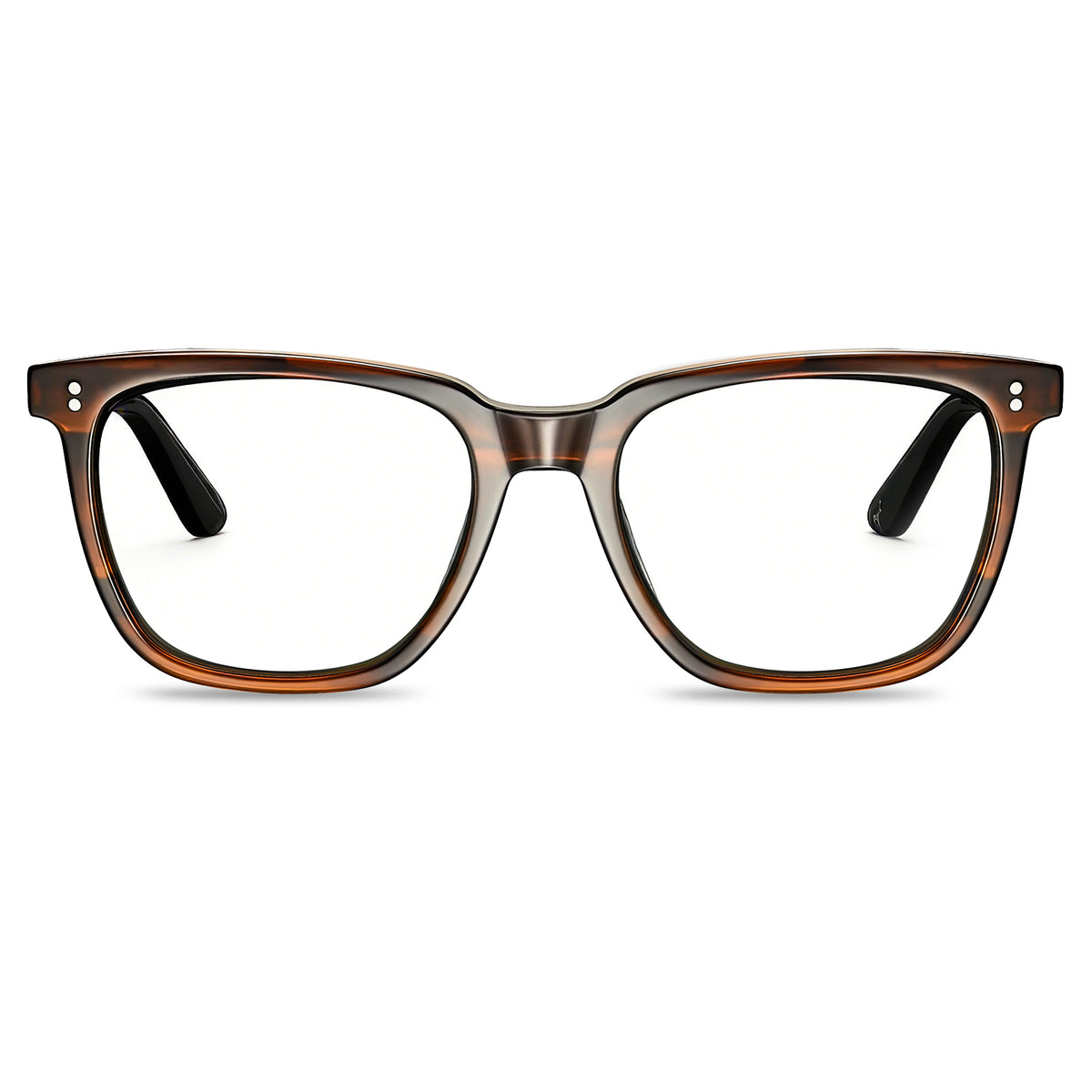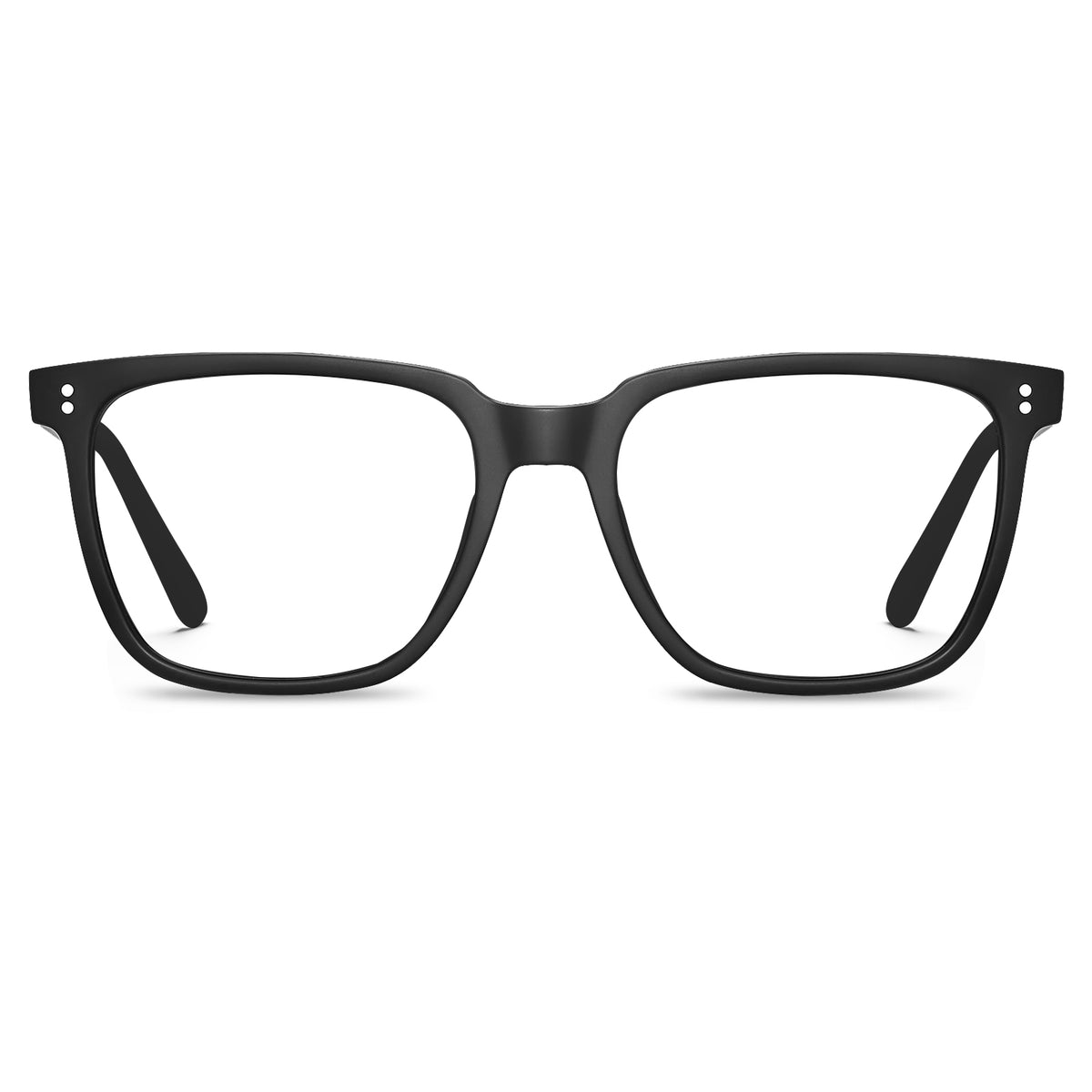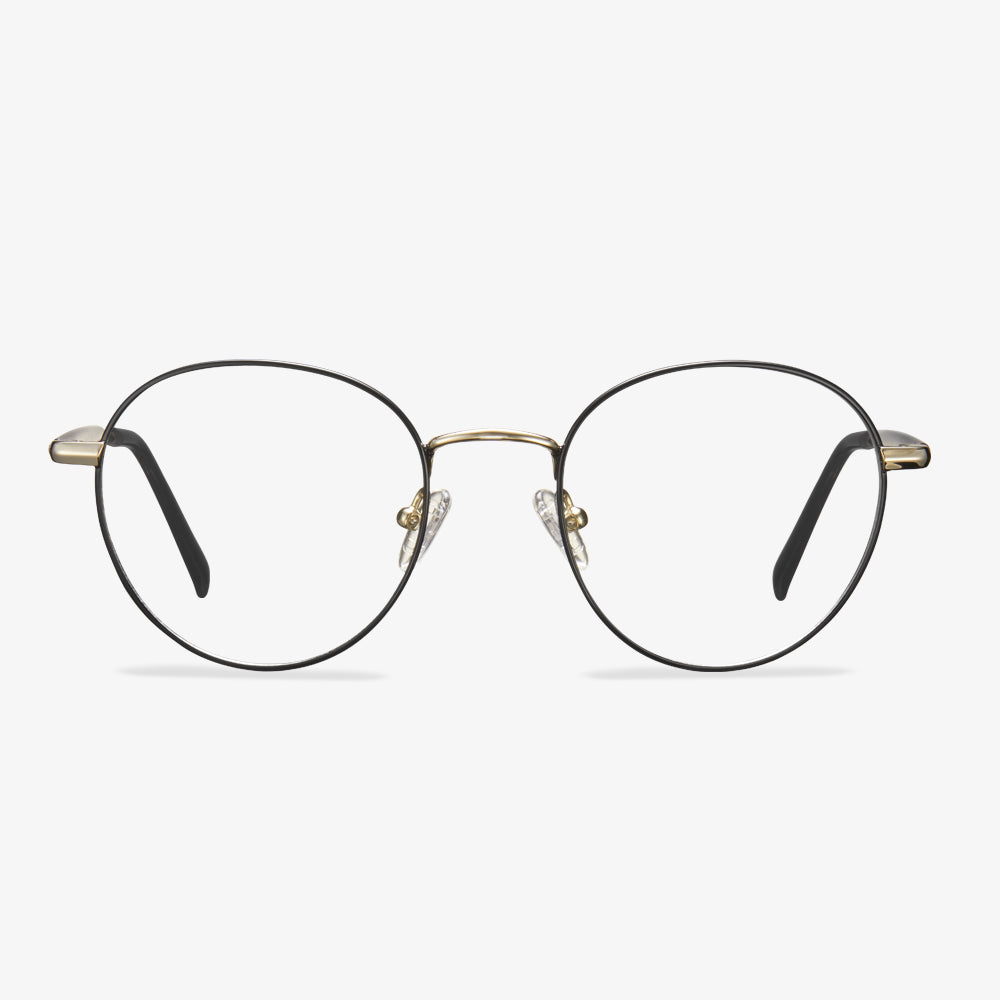










Two rectangle frames arrived this month, and they differ by a number most people never look at: lens height. Leoon holds 30.6 mm. Amory holds 41 mm. Everything else — the shape, the material, the medium fit — is close enough that the depth is the decision.
Ten millimetres does not sound like much. It is the difference between a frame that leaves your cheek visible and one that covers the top of it, between a lens that takes a progressive comfortably and one that squeezes the reading zone, and between a frame that looks analytical and one that looks familiar. Both are on the new arrivals page, and both are worth trying on in your head before you choose a colour.
|
01
Amory-FC01
Rectangle · 142 mm · 41 mm lens · black
|
02
Amory-FC04
Rectangle · 142 mm · 41 mm lens · blue
|
03
Leoon-FC02
Rectangle · 138 mm · 30.6 mm lens · brown
|
04
Leoon-FC01
Rectangle · 138 mm · 30.6 mm lens · black
|
What lens height actually controls
Three things. First, how much of your field of view is filtered through the lens rather than over the top of it — a shallow frame makes you tilt your head down to read, a deep one does not. Second, how much of your cheek the frame covers, which is the difference between a frame that reads as a line across the face and one that reads as a panel. Third, and most practically, how much vertical room a progressive lens has to work with, because the corridor between distance and reading has to fit inside the lens.
A 30.6 mm lens is at the shallow end for a progressive and comfortable for single vision. A 41 mm lens takes either without argument. If you already wear a progressive and want to keep the same reading position, changing depth by 10 mm will move it — that is worth knowing before you order, and single vision versus progressive explains what moves.
The four frames


The two depths, side by side
| Frame | Frame width | Lens | Lens height | Bridge | Temple | Character |
|---|---|---|---|---|---|---|
| Amory-FC01 | 142 mm | 54 mm | 41 mm | 18 mm | 145 mm | Deep panel, 26 g, spring hinges |
| Amory-FC04 | 142 mm | 54 mm | 41 mm | 18 mm | 145 mm | Same frame in blue |
| Leoon-FC02 | 138 mm | 52 mm | 30.6 mm | 18 mm | 142 mm | Shallow strip, lighter line |
| Leoon-FC01 | 138 mm | 52 mm | 30.6 mm | 18 mm | 142 mm | Same frame in black |
Why the shallower frame is not simply the cheaper-looking one
A shallow rectangle is the more difficult frame to cut well, because the lens has less vertical space to hide its edge in and the frame has less material to hold its shape. Leoon is 138 mm wide with a 30.6 mm lens, which means the frame is doing its work horizontally rather than vertically — the proportions are almost a strip. That reads as modern in a way the deeper Amory does not, and it is why the two are not interchangeable even in the same colour.
Amory, by contrast, is 142 mm with 41 mm of depth and a 54 mm lens — the classic proportions of a rectangle frame, closer to a square than a strip. At 26 grams with spring hinges it is the more forgiving of the two on a wide head, because the hinges give when the temples are pushed outward, which is the failure mode of a rigid acetate frame. The stud detail on the temples is the only decorative element on either frame.
Which one, by what you do all day
- Reading and screen work for hours: Amory, because the deeper lens keeps the reading zone inside the frame instead of at its edge.
- Switching between distances all day: Amory again if you wear a progressive — 41 mm gives the corridor room.
- Single vision only, and a frame you want to forget you are wearing: Leoon, which covers less of the face.
- A narrow face that a 142 mm front overhangs: Leoon at 138 mm, which is the smallest front in this drop.
Both are acetate and both are full-rim, so the material has the same properties: colour through the sheet rather than on the surface, and enough thickness at the corner to hold a lens cleanly. Why frame material matters covers why that changes how a frame ages, and high-index lenses is worth reading if your prescription is strong enough that the 54 mm lens on Amory would show edge thickness.
A note on the two widths
The 4 mm gap between 138 mm and 142 mm sounds negligible and is not. On a face that measures 140 mm at the temples, one frame sits inside the width of the head and the other sits on it, and the difference shows up as pressure behind the ears rather than as anything you can see in a mirror. frame measurement shows where to measure; frames by face shape shows which proportions suit which face.
If you want to compare within a shape rather than across depths, the rectangle eyeglasses collection holds both frames alongside the rest of the range, the acetate collection sorts by material, and the men's eyeglasses page is where the 142 mm fronts are grouped. For a lighter frame in the same shape, the lightweight eyeglasses collection is the other route, and the full eyeglasses catalogue has everything currently listed.
Where the reading zone actually sits
In a single-vision lens there is no reading zone to worry about: the whole lens is the prescription, and lens height only decides how much of your view it covers. In a progressive lens the corridor between distance and reading has to fit inside the frame, and a 30.6 mm lens leaves less room for it than a 41 mm one. That is not a reason to avoid the shallower frame — it is a reason to order it deliberately rather than by habit.
The practical test is where you look when you read. If you read on a phone at close range, you need the bottom of the lens to be low enough that you are not tilting your head back all evening. If you read on a monitor at arm's length, the middle of the lens does the work and depth matters less. Our progressive lenses explains the fitting heights, and single vision versus progressive covers whether you need the corridor at all.
Both depths are available now. If you are moving from a deep frame to a shallow one for the first time, expect to tilt your head down slightly for the first week — that is the frame doing its job, not a fit problem.